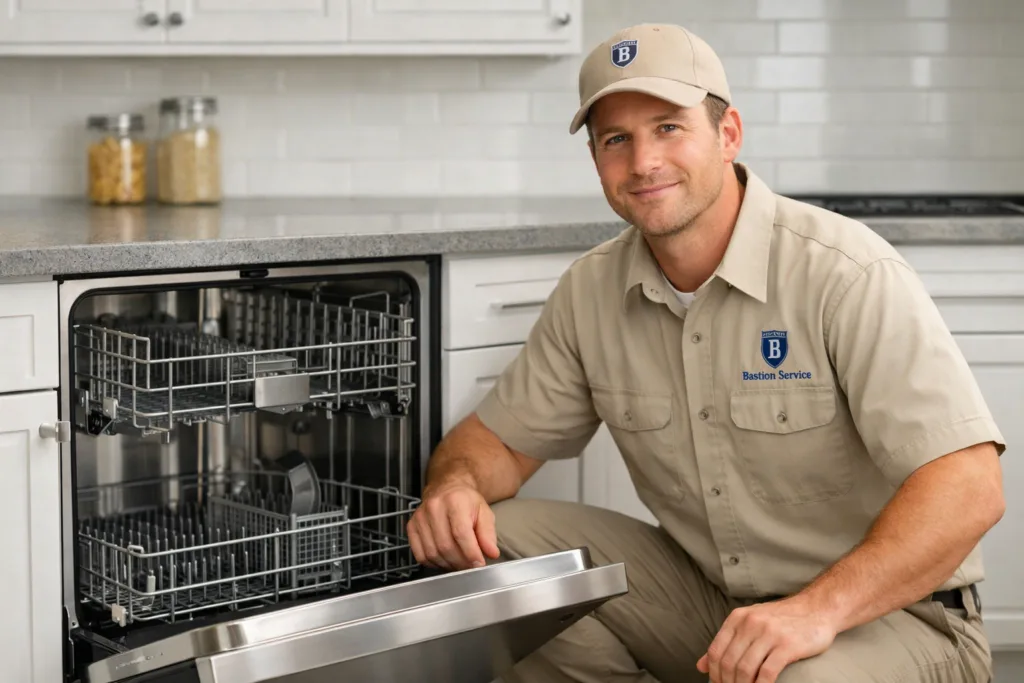
Dishwasher problems usually follow a pattern. A Samsung unit may still power on and run a cycle, yet leave water in the tub, produce poor cleaning results, or leak during wash and drain. Looking closely at that pattern helps narrow the fault before any repair decision is made.
For homeowners in El Segundo, the most important question is often whether the issue is isolated and repairable or a sign of wider wear inside the machine. Symptoms such as repeat draining trouble, unreliable starts, or water under the door are worth addressing early to avoid bigger kitchen cleanup problems and possible cabinet or flooring damage.
Common Samsung dishwasher symptoms and what they may mean
Standing water after the cycle
If water remains at the bottom after a wash, the dishwasher may have a drain pump problem, a restriction in the drain path, debris around the filter area, or a control issue that prevents a full drain sequence. Sometimes the unit seems to finish normally but leaves a shallow pool of dirty water behind.
This symptom should not be ignored. Ongoing use with poor drainage can create odor, reduce wash quality, and put extra strain on pump components.
Dishes are still dirty, cloudy, or gritty
When dishes come out with food residue or film, the cause is not always detergent. Samsung dishwasher performance can drop because of circulation issues, blocked spray arms, weak water fill, dispenser problems, or heating faults that affect how the cycle completes. If results vary from one load to the next, that inconsistency can point to a developing mechanical or electrical issue rather than loading alone.
Dishes stay wet at the end of the cycle
Poor drying may be related to low rinse temperature, heating problems, cycle interruption, or a sensor issue that changes how the dishwasher moves through the final stages. If the interior is cool and dishes remain unusually wet every time, the machine may not be reaching normal operating conditions.
Leaking from the door or underneath
Leaks can come from the door gasket, lower door seal area, hoses, sump components, or overfilling. Water may show up as a light drip near the front corners or as a larger puddle under the appliance. Even minor repeat leaks can damage surrounding materials over time.
If a Samsung dishwasher is leaking in El Segundo, it is usually best to stop routine use until the source is identified.
Will not start or stops mid-cycle
When the controls light up but the cycle does not begin, the issue may involve the latch, interface, power supply, or main control system. If the dishwasher starts and then shuts off, the failure may be tied to sensing, overheating, water movement, or an intermittent electrical fault. These are not problems that are solved well by guessing at parts.
Humming, grinding, or unusual drain noise
New sounds during wash or drain often suggest debris in the pump area, a struggling motor, spray arm interference, or an internal component wearing out under load. A repeated hum without proper draining is especially important to check, since the dishwasher may be trying to move water without succeeding.
How symptom patterns help guide repair
Two dishwashers can show the same complaint for very different reasons. A no-drain condition might be caused by a blocked path, a weak pump, or a control problem. Poor cleaning may come from circulation trouble, low fill, or incomplete heating. That is why symptom-based testing matters more than replacing parts based on assumption.
A useful service visit focuses on what the dishwasher does during fill, wash, heat, and drain. Once that sequence is verified, it becomes easier to tell whether the problem is mechanical, electrical, or related to water flow.
When service should be scheduled promptly
Some performance issues can begin gradually, but certain signs deserve fast attention. Water where it should not be, repeated cycle failure, or electrical inconsistency can lead to secondary damage or leave the appliance unusable without warning.
It makes sense to schedule service when:
- Water is left in the tub after every cycle
- The dishwasher leaks onto the floor or into nearby cabinetry
- The door will not latch properly or the cycle will not start
- The unit shuts off, flashes errors, or behaves unpredictably
- Cleaning and drying performance have dropped noticeably
- The machine makes harsh or unfamiliar sounds during operation
Signs continued use may make the problem worse
Running extra cycles to “see if it clears up” is not always harmless. A leak can spread moisture under the appliance. A pump that is struggling may fail completely. Repeated incomplete draining can cause dirty water to remain in the system and affect each load that follows.
It is generally smarter to stop using the dishwasher if you notice any of the following:
- Visible leaking
- Burning smell or hot electrical odor
- Loud grinding or harsh buzzing
- Mid-cycle shutdowns
- Standing water that does not clear
Repair versus replacement for a Samsung dishwasher
Whether repair is worthwhile depends on the failed part, the age and condition of the appliance, and whether there have been repeated issues in a short period. Many Samsung dishwasher problems are still sensible to repair when the unit is otherwise in solid condition and the fault is limited to one system such as drainage, latching, sealing, sensing, or circulation.
Replacement becomes a more serious consideration when there are multiple active problems, a history of repeat leaks, major electronic failure combined with wear, or signs that repair costs are stacking up beyond the value of keeping the current machine. The right choice depends on the actual condition of the dishwasher, not just the symptom that first appeared.
What homeowners in El Segundo should expect from the repair process
A well-handled appointment should move from symptom review to testing, then to a clear explanation of what is failing and whether the repair path makes sense. That includes identifying any risk in continued use, especially when water leakage or power-related behavior is involved.
For households in El Segundo dealing with poor wash results, drain problems, pump issues, low rinse temperature, or cycle failures, the goal is simple: determine the real cause and choose the next step with confidence instead of trial and error.