
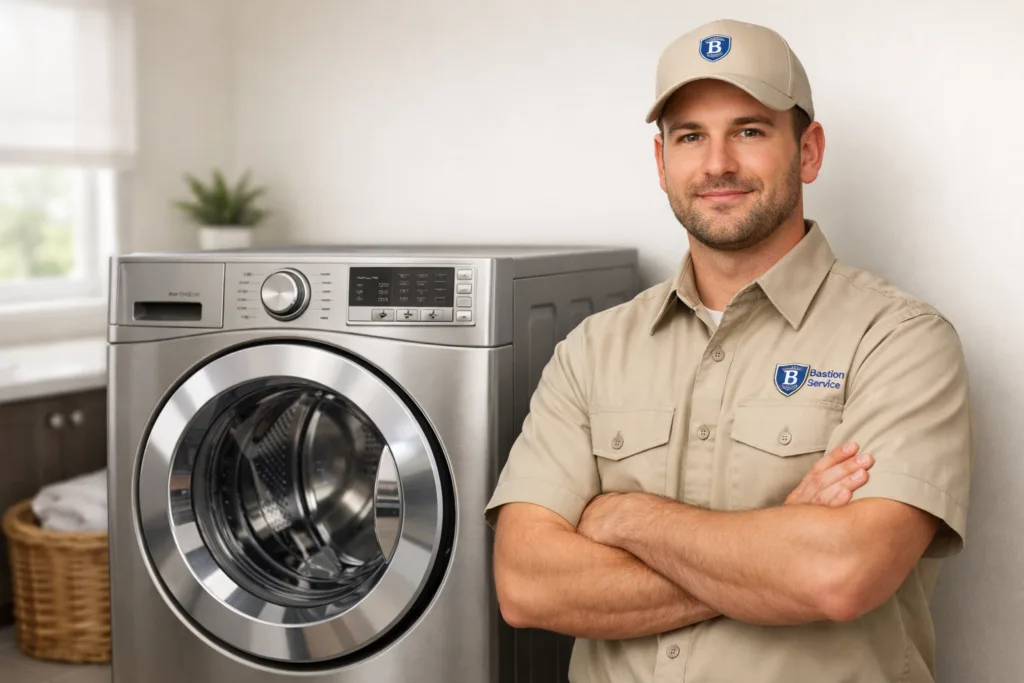




Most Electrolux appliance problems begin with a pattern, not a single failure. A refrigerator may seem fine in the morning and warm by evening. A washer may drain on one load and stop on the next. An oven may preheat, yet still cook unevenly. Looking at those patterns early helps separate a minor service issue from a problem that can affect food storage, laundry results, or kitchen safety.
For specific Electrolux appliance paths in Palms, review Electrolux Refrigerator Repair in Palms, Electrolux Freezer Repair in Palms, and Electrolux Washer Repair in Palms.
Start with the symptom pattern
It is easy to assume the visible symptom explains the repair. In practice, one complaint can come from several different components. Poor dishwasher cleaning may point to wash circulation, water fill, drain restrictions, or sensor trouble. A dryer that takes too long may have an airflow issue, a heating fault, or moisture-sensing trouble. Identifying the exact failure matters because repeated resets and continued use can sometimes add wear or create damage around the appliance.
For homeowners in Palms, the most useful approach is to pay attention to what the appliance is doing consistently, what changed recently, and whether the problem affects basic operation such as cooling, heating, draining, spinning, or ignition.
Refrigerator and freezer issues that deserve quick attention
Electrolux refrigerators and freezers often show trouble through uneven temperatures, frost buildup, water under crisper drawers, loud fan sounds, or an ice maker that slows down or stops. Sometimes the unit is technically running but no longer holding food safely. In other cases, one section overcools while another warms up.
Common causes can include airflow restrictions, evaporator fan problems, defrost system faults, drain clogs, worn door gaskets, sensor issues, or control failures. More serious cooling complaints may involve compressor or sealed-system concerns.
- Fresh food feels warmer than normal even though the display looks correct
- Heavy frost forms on the freezer wall or around stored items
- The refrigerator runs almost constantly
- Water appears inside the cabinet or on the floor nearby
- Clicking, buzzing, or fan noise becomes noticeably louder
If food temperatures are unstable or frost is building quickly, it is best not to wait too long. Cooling issues can progress from an inconvenience to food loss or added strain on major components.
Washer problems that often worsen with continued use
Electrolux washers commonly develop spin problems, drain failures, door lock errors, leaks, excessive vibration, or cycles that stop before completion. One of the most useful clues is whether clothes come out wetter than usual. That often points to drainage, balance, or spin-speed trouble rather than a simple cycle selection issue.
Possible causes include a blocked drain path, weak drain pump, suspension wear, door latch failure, pressure-sensing fault, inlet valve problem, or electronic control issue. A leak may come from a hose, tub seal area, detergent oversudsing, or a problem during specific parts of the cycle.
It makes sense to pause use if the washer is leaking onto the floor, banging hard during spin, or repeatedly stopping with water left inside. Those signs can lead to cabinet damage, flooring issues, or added wear on the machine itself.
Dryer symptoms that should not be ignored
Electrolux dryers usually give warning signs before complete failure. Long dry times, no heat, overheating, early shutoff, a drum that will not turn, or scraping and thumping noises all point to different repair paths. A dryer can still appear to work while performing poorly enough to waste energy and stress internal parts.
Some complaints come from restricted airflow, while others involve the heating element, thermostat, thermal cutoff, belt, idler, rollers, motor, or moisture sensors. When the dryer suddenly needs two or three cycles to finish a load, that change is worth taking seriously.
- Clothes remain damp after a normal cycle
- The dryer gets hot but does not dry efficiently
- The unit shuts off too soon with laundry still wet
- There is a burning smell or unusual metal-on-metal sound
- The drum hums but does not start turning
Overheating, burning odors, and loud mechanical noises are especially important warning signs. Those symptoms should be checked before regular use continues.
Dishwasher faults that are more than a nuisance
An Electrolux dishwasher may fail by leaving residue on dishes, not draining completely, leaking from the door area, stopping mid-cycle, or showing standing water at the end. Because several wash and drain components work together, similar results can come from different failures.
Wash pump trouble, blocked spray arms, drain restrictions, inlet valve problems, door seal wear, float issues, and sensor or control faults can all affect cleaning and cycle completion. If dishes are still dirty after normal loading and detergent use, the problem is often mechanical rather than routine maintenance alone.
Leaks and repeated mid-cycle shutdowns usually justify service sooner rather than later. Water under the appliance can damage nearby flooring or cabinets, and repeated power interruptions or tripped breakers should not be dismissed as a minor glitch.
Cooktop, oven, and range problems
Cooking appliances tend to show problems through inconsistent heat, burner ignition trouble, repeated clicking, weak flame, temperature drift, display errors, or an oven that takes too long to preheat. In homes that cook often, even a small temperature issue can quickly become a daily frustration.
Electric units may have trouble related to surface elements, switches, relays, bake or broil components, temperature sensors, or electronic controls. Gas-equipped products may develop ignition faults, burner blockages, or oven heating problems that affect both safety and performance.
If a burner clicks repeatedly without igniting, if the oven is noticeably underheating, or if a surface element cycles strangely, the issue should be assessed before relying on the appliance for normal meal preparation. If there is a persistent gas smell, stop using the appliance and address safety first.
How to tell when repair is worth scheduling
Service is usually the better choice when the appliance has moved beyond a minor annoyance and is no longer doing its basic job reliably. That includes cooling failures, standing water, no-spin washer loads, no-heat dryer cycles, and ovens that cannot maintain usable temperature.
You should also consider scheduling an inspection when:
- The same error or failed cycle keeps returning
- The unit works only intermittently
- There is leaking, frost buildup, grinding, scraping, or burning odor
- A reset temporarily helps, but the problem always comes back
- You are unsure whether repair or replacement makes more financial sense
Partial operation can be misleading. An appliance that still runs is not always an appliance that is safe or economical to keep using in its current condition.
Repair versus replacement for Electrolux appliances
Replacement is not automatically the right answer every time an appliance fails. Many Electrolux problems come down to serviceable parts such as pumps, sensors, valves, heating components, latches, igniters, fan motors, or control-related parts. When the appliance is otherwise in good condition, repair can restore normal household use without the cost and disruption of replacing the unit.
Replacement becomes a stronger consideration when there are multiple expensive failures at once, severe structural wear, repeated major breakdowns, or more serious refrigeration system issues. The real question is whether the repair solves the current problem in a way that makes everyday use dependable again.
For households in Palms, that decision is easiest when based on the actual failed system rather than guesswork. A proper diagnosis shows whether the issue is isolated, whether other components are being affected, and whether the machine still has solid remaining life.
What to note before service
A few observations can make troubleshooting much faster. If possible, write down when the problem happens, whether it is constant or intermittent, and whether any sounds, odors, leaks, or error codes appear. It also helps to note whether the issue begins at startup, during heating, during draining, or near the end of the cycle.
Useful examples include:
- “Freezer is cold, but fresh food section is warm”
- “Washer fills and tumbles but will not spin out”
- “Dryer heats for a few minutes, then stops heating”
- “Dishwasher runs, but standing water remains at the end”
- “Oven preheats slowly and food finishes unevenly”
Those details often reveal more than a general statement like “it stopped working.” They help narrow the fault and make the next step more straightforward.
Household-focused Electrolux help in Palms
Whether the problem affects a refrigerator, freezer, washer, dryer, dishwasher, cooktop, oven, or range, the goal is the same: understand what failed, how urgent it is, and whether repair is the sensible path. When an Electrolux appliance starts behaving differently, paying attention to the symptom pattern usually leads to a better outcome than waiting for a total breakdown.


