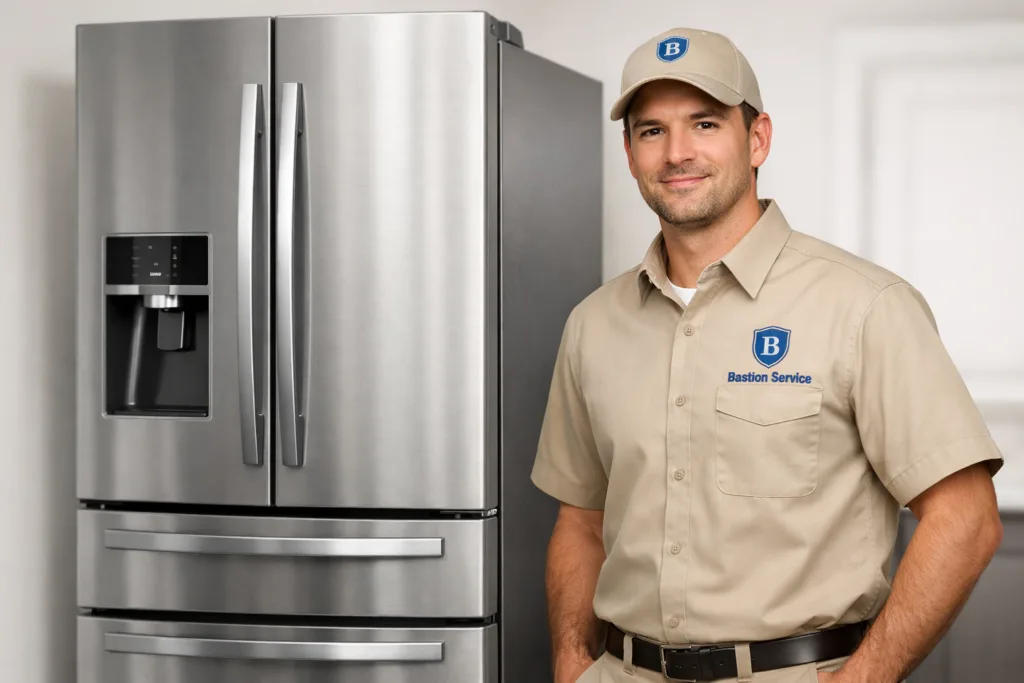
Temperature problems in an EdgeStar refrigerator rarely come from just one obvious cause. A unit that seems warm, noisy, or wet around the base may be dealing with airflow restriction, a defrost problem, failing fans, control issues, or trouble in the cooling system itself. The fastest way to avoid spoiled food and unnecessary part replacement is to match the repair plan to the exact symptom pattern.
What certain refrigerator symptoms usually point to
Some problems show up gradually, while others appear overnight. Paying attention to how the refrigerator behaves can help narrow down what needs attention.
Fresh food section is warm
If milk, produce, or leftovers are not staying cold enough, the issue may be poor air movement from the freezer side, frost buildup around the evaporator, a weak fan motor, a stuck damper, or a sensor problem. Homeowners sometimes notice that the back of the refrigerator feels cool while the shelves near the door feel much warmer, which often suggests uneven airflow rather than a complete cooling shutdown.
Freezer works better than the refrigerator compartment
This is a common pattern when cold air is not circulating correctly. An EdgeStar refrigerator can still make some cooling in the freezer while the refrigerator section warms up because frost, a fan issue, or an airflow control problem is keeping that cold air from reaching the fresh food side.
Both sections are too warm
When neither compartment is holding temperature, the problem may be more serious. Possible causes include dirty condenser coils, compressor-start issues, control faults, or sealed-system performance loss. If the unit is running but not pulling temperatures down, continued use can put more strain on the cooling components.
Water under drawers or on the floor
Leaks often come from a clogged defrost drain, a loose or damaged water connection, excess condensation, or an ice maker fill issue. Even small leaks matter because moisture can damage flooring, create odor problems, and leave hidden ice inside panels or beneath bins.
Frost buildup where it should not be
Heavy frost on interior walls, around vents, or behind access panels usually means the refrigerator is not defrosting properly or is pulling in warm, moist air through a sealing problem. A worn gasket, a door not closing evenly, or a failed defrost component can all create the same visible symptom.
Constant running or unusual noises
A refrigerator that rarely cycles off may be trying to recover from warm air entering the cabinet, blocked coils, failing fans, or weak cooling output. Buzzing, clicking, rattling, or squealing can come from the compressor area, fan blades contacting ice, loose panels, or motor wear. The sound itself is only part of the clue; when it happens and how often it repeats matters too.
Why EdgeStar refrigerator issues are easy to misread
Different failures can produce nearly identical symptoms. A refrigerator that feels warm could need a simple airflow correction or could have a deeper cooling-system problem. A leak could be a minor drain blockage or a water supply fault that keeps returning. That is why EdgeStar refrigerator repair in Santa Monica is most useful when the inspection confirms the cause instead of jumping straight to the most common part.
Misdiagnosis is expensive in two ways: it can waste money on the wrong repair, and it can allow food loss, moisture damage, or extra wear on major components to continue in the background.
Problems that often affect daily household use
Refrigerator trouble is not always a total breakdown. Many households in Santa Monica first notice smaller changes that become more disruptive over time.
- Food spoils faster than expected even though the display looks normal
- Items near the back freeze while door shelves feel warm
- The refrigerator seems louder at night than it used to
- Puddles appear only every few days, making the leak easy to dismiss
- Frost keeps coming back after manual cleanup
- The ice maker slows down, clumps ice, or stops producing consistently
These partial-performance problems often point to a system that is still operating, but not correctly. That is usually the stage when repair is easiest to define before the issue grows into a full cooling loss.
When service should not wait
Some symptoms deserve prompt attention because the risk of food spoilage or secondary damage rises quickly. It is smart to schedule service when:
- Cabinet temperatures are clearly above normal
- The compressor keeps running for long periods without recovering
- Water is reaching the floor more than once
- Frost buildup is spreading across vents or rear panels
- The refrigerator shuts off and restarts unpredictably
- New clicking or grinding sounds appear during cooling cycles
Even if the refrigerator starts cooling again after a reset or after the doors stay closed for a while, repeated symptoms usually mean the underlying fault is still present.
Repair versus replacement for an EdgeStar refrigerator
Most homeowners decide based on the appliance’s age, overall condition, previous repairs, and which system has failed. A repair is often reasonable when the issue is limited to a fan motor, drain blockage, gasket, thermostat or sensor, control component, or another targeted part and the cabinet and cooling system remain in good shape.
Replacement becomes a stronger consideration when there are repeated major failures, severe sealed-system concerns, or several worn components at once. The key is understanding whether the current symptom comes from an isolated repairable defect or from a broader decline in performance.
What a thorough refrigerator service visit should cover
A productive visit should do more than verify that the refrigerator feels warm. It should connect the symptom to the failed part or system and explain the repair path in plain language. Depending on the complaint, that may include:
- Checking actual temperature performance in each compartment
- Inspecting airflow and vent circulation
- Looking for frost patterns that suggest defrost or fan trouble
- Examining condenser condition and compressor behavior
- Testing fan operation, controls, and related components
- Inspecting drain paths, door gaskets, hinges, and water connections
This kind of diagnosis helps determine whether the fix is straightforward, whether more than one issue is developing, and whether continued use could lead to more spoilage or water damage.
Helpful steps to take before service
While waiting for repair, a few simple steps can reduce stress on the refrigerator and help protect food:
- Keep door openings short and infrequent
- Move highly perishable items if temperatures are rising
- Do not block interior vents with containers or large platters
- Check whether the door is sealing fully on all sides
- Note when noises, leaks, or warming happen during the day
Avoid forcing frozen panels, scraping heavy frost aggressively, or repeatedly unplugging and restarting the appliance unless needed for safety. Those temporary measures can hide the original symptom and make the problem harder to trace.
Related EdgeStar refrigeration issues in the home
Some households in Santa Monica also notice problems in closely related cooling appliances, especially when the home uses multiple EdgeStar units. Similar symptom-based service may be needed for freezer temperature loss, slow or overflowing ice production, or wine cooler cooling instability. Looking at the exact behavior of each appliance helps determine whether the issue is isolated to one unit or part of a broader maintenance concern in the kitchen or bar area.
When an EdgeStar refrigerator begins warming, leaking, frosting up, or running louder than normal, timely diagnosis usually gives homeowners the best chance of preserving food, preventing extra damage, and choosing the most sensible repair path.