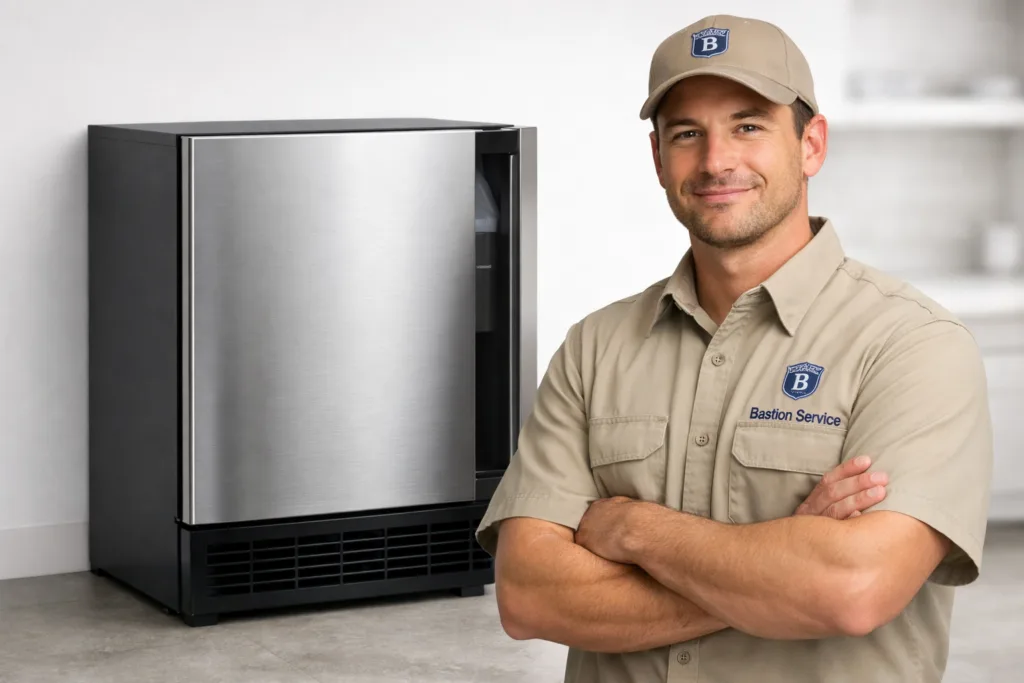
An EdgeStar ice maker that suddenly stops keeping up with household use can create more than a small inconvenience, especially when the problem shifts from occasional missed batches to no ice at all, leaking, or messy clumps in the bin. The most effective repair path starts with matching the symptom to the part of the machine that is actually failing, because water supply issues, drainage faults, temperature problems, and control errors can all look similar at first.
Common EdgeStar ice maker problems and what they may indicate
No ice production
If the unit powers on but produces no ice, several faults are possible. Water may not be entering the machine correctly, the inlet valve may be weak or stuck, the fill path may be restricted, or the system may not be reaching the temperature needed to begin a proper freeze cycle. Some units also stop mid-process because of a sensor, float, or control issue that prevents the harvest sequence from finishing.
Homeowners sometimes notice this problem after the machine has been working intermittently for days. That pattern can point to a part that is failing rather than a simple on-off problem.
Slow ice production
Slow output often means the machine is still running but struggling to complete each cycle efficiently. Restricted airflow, scale buildup, warm ambient conditions, partial water flow, or a developing cooling problem can all reduce production. In a home setting, this usually shows up as a bin that never seems to fill or a machine that takes much longer than usual to recover after use.
Leaking water
Leaks can come from a loose water connection, overfilling during the fill cycle, a clogged or restricted drain, cracked tubing, or a unit that is not sitting level. Even a minor leak should be taken seriously, since repeated moisture can affect nearby flooring, trim, or cabinetry. If you see water collecting under the appliance, it is best to stop using it until the source is identified.
Clumped ice or irregular cubes
When cubes freeze together, appear unusually small, come out cloudy, or form in partial sheets, the machine may be dealing with uneven water distribution, mineral buildup, poor temperature control, or trouble releasing ice during harvest. This symptom can also appear when the machine makes ice but does not manage the cycle timing correctly.
Buzzing, clicking, or repeated cycling
Unusual sounds can point to a pump problem, fan issue, valve strain, or a harvest mechanism that is trying and failing to complete its movement. A repeated click or buzz does not always mean a major failure, but it does usually mean the machine is struggling with one specific step in the cycle and should be checked before additional wear develops.
Why symptom-based diagnosis matters
Two EdgeStar ice makers can show the same outward symptom and need completely different repairs. A unit that seems to have a bad pump may actually have a drain blockage. One that makes poor-quality ice may be dealing with water flow or temperature instability rather than a major sealed-system failure. That is why diagnosis should focus on what happens during fill, freeze, harvest, and drain instead of jumping straight to parts replacement.
For Del Rey homeowners, this matters because it helps answer the questions that usually come first: is the issue minor, is it likely to get worse if ignored, and is the repair worth doing based on the age and condition of the appliance?
When to schedule EdgeStar ice maker service
It is usually time to schedule service when any of the following is happening consistently:
- The machine has stopped making ice entirely
- Ice production is much slower than normal
- Water is leaking from or under the unit
- Cubes are clumping, melting, or forming unevenly
- The machine makes new noises during operation
- The cycle starts but does not complete
These symptoms rarely correct themselves for long. Waiting often allows a small valve, drain, or sensor problem to create added stress on other components.
What you can check before a repair visit
There are a few basic things homeowners can safely confirm before service:
- Make sure the unit has power and has not been switched off accidentally
- Confirm the water supply is turned on
- Check whether airflow around the appliance is blocked
- Look for visible kinks in the water line if accessible
- See whether a filter, if your model uses one, is overdue for replacement
- Note whether the problem is constant or only happens at certain times of day
These checks can help narrow the issue, but deeper troubleshooting is usually not a good do-it-yourself project when leaks, inconsistent freezing, or electrical behavior are involved.
Repair or replace?
Repair is often the better choice when the problem is limited to a serviceable part such as a valve, pump, drain component, sensor, control-related fault, or water delivery issue, especially if the rest of the machine is in good shape. Replacement becomes more likely when there are multiple failing systems, repeated breakdowns, heavy overall wear, or a high-cost issue in an older unit.
In Del Rey homes, the decision usually comes down to the appliance’s age, how well it has been performing overall, and whether the current issue appears isolated or part of a broader decline.
Signs the problem may be getting worse
Some warning signs suggest the machine should not be left in service much longer:
- Leaks are becoming more frequent or more severe
- The unit starts and stops without finishing a cycle
- Ice output drops sharply over a short period
- The machine hums or clicks repeatedly without producing ice
- The bin contains slushy ice, melted refrozen clumps, or very thin cubes
When these symptoms appear together, the issue may be moving beyond a single minor fault. Stopping use can help prevent water damage and reduce additional strain on the appliance.
Residential repair focused on restoring normal kitchen use
Household ice makers are small appliances, but the disruption feels immediate when they stop working properly. A successful repair is not just about getting one batch of ice to drop again. It is about identifying why the EdgeStar unit changed behavior in the first place and choosing the repair path that makes sense for the machine you already have.
For homeowners in Del Rey, that means looking closely at the symptom pattern, the condition of the appliance, and whether the fault appears isolated or part of a larger performance issue. That approach helps reduce repeat problems and makes the next step easier to judge with confidence.