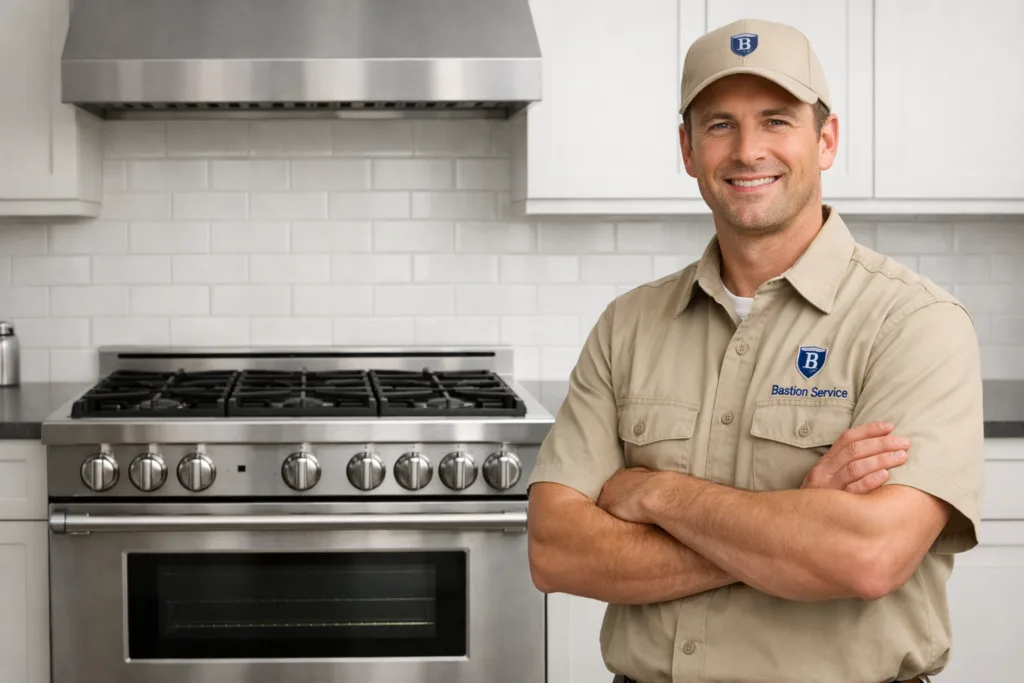
Cooking problems often begin with small warning signs rather than a complete failure. A burner may click longer than usual before lighting, the oven may need extra time to preheat, or one side of a pan may heat differently than the other. On a Wolf range, those symptoms can come from ignition components, burner assembly issues, sensors, controls, wiring, or airflow problems inside the oven, so symptom-based testing matters before any repair decision is made.
How Wolf range problems usually show up at home
Most homeowners notice performance changes during normal meal prep. The range still works, but not the way it used to. That is often the stage where repair is most straightforward, because the symptom pattern can help narrow down the likely cause before additional components are affected.
- Burners click repeatedly or fail to ignite on the first try
- Oven temperature runs high, low, or varies during baking
- Preheat takes longer than expected
- Flames look uneven or weaker than normal
- The display shows errors or the controls respond inconsistently
- The oven door does not seal well, affecting heat retention
Even if the range is still usable, inconsistent cooking results usually mean the appliance is no longer operating within normal performance. Addressing the problem early can help prevent wasted food, unreliable timing, and further wear from repeated failed ignition or extended heating cycles.
Burner ignition issues and repeated clicking
One of the most common service calls involves a burner that clicks but does not light, lights late, or keeps sparking after ignition. On a Wolf range, that can point to a few different causes. Burner caps may be misaligned, ports may be blocked by residue, moisture may be affecting the igniter area, or a spark-related component may not be functioning correctly.
If the clicking happens only on one burner, the problem may be isolated to that burner assembly or its ignition path. If multiple burners begin acting up, the issue can involve shared ignition components or related electrical faults. A burner that eventually lights is still worth checking, because delayed ignition can become more disruptive over time.
If you notice a strong or persistent gas smell, stop using the appliance and handle safety first. That is different from a simple ignition delay and should not be treated as a routine cooking inconvenience.
Oven heating problems, slow preheat, and temperature drift
When the oven portion of a Wolf range does not maintain the selected temperature, the symptom often shows up in cooking results before it becomes obvious on the display. Food may brown too fast on top, remain underdone in the center, or require longer bake times than the recipe suggests.
Common causes can include:
- A weak or failing igniter on gas oven models
- A sensor that is no longer reading temperature accurately
- Electronic control issues affecting heat regulation
- Heating circuit problems that interrupt normal operation
- Door seal or closure issues that allow heat to escape
Slow preheating is often dismissed at first, but it can be an early sign that a component is weakening. If the oven reaches temperature eventually but cooking remains inconsistent, that still points to a repairable performance issue rather than normal variation.
Uneven flame, weak burner output, and poor stovetop performance
Surface burner performance should be stable and predictable. If a flame looks patchy, seems lower than usual, or does not distribute heat evenly across cookware, the issue may not be with the pan at all. Restricted burner ports, ignition alignment problems, valve concerns, or wear in the burner assembly can all affect how the flame behaves.
These problems are especially noticeable during everyday tasks such as simmering sauces, boiling water, or using larger cookware that depends on even heat spread. A mild change in flame quality can still interfere with cooking control, particularly on a premium range where precision is expected.
Control panel and display faults
Electronic issues can appear in several ways. The display may go blank, controls may fail to register settings correctly, or the oven may behave unpredictably after a command is entered. Some homeowners in Inglewood first notice this as a keypad that feels inconsistent or an oven cycle that does not start normally every time.
Because control-related symptoms can overlap with sensor and wiring faults, replacing parts based on appearance alone is rarely the right first step. Model-specific testing helps determine whether the problem is in the interface, the control board, a connection point, or another related component.
Door, seal, and internal heat retention issues
Not every temperature complaint starts with a burner or electronic part. If the oven door does not close properly, the gasket is worn, or the hinges no longer hold alignment, heat can escape during cooking. That can make the oven seem weak or inconsistent even when the heating system itself is still operating.
Signs to watch for include:
- Heat escaping around the door
- Longer bake times than normal
- Uneven browning from front to back
- A door that feels loose, misaligned, or does not shut firmly
These issues are easy to overlook because the range may still power on and heat. But poor sealing changes how the oven cavity retains and circulates heat, which directly affects cooking results.
When a repair is usually worth considering
Many Wolf range problems make sense to repair when the issue is limited to a specific failed component and the rest of the appliance is in good condition. If the burners, oven structure, and major operating systems are otherwise solid, targeted service is often the practical path.
Repair tends to make more sense when:
- The symptom is isolated to one burner, one oven function, or one control issue
- The appliance has been performing well aside from the current fault
- The problem has a defined cause rather than widespread wear across the unit
- Restoring normal heating and ignition would return the range to reliable daily use
Replacement becomes more likely when several major systems have failed, the unit shows extensive wear, or the overall condition no longer supports a sensible repair path. The best choice depends on the confirmed fault, not just the symptom you notice first.
Signs it is time to schedule service
If the same problem happens more than once, it is usually time to stop monitoring it and have the range checked. Intermittent problems are especially important because they often become full failures later, and they can be harder to sort out after more components are affected.
It is smart to schedule service when you notice:
- Repeated clicking during ignition
- Burners that only work intermittently
- Unexpected temperature swings in the oven
- Food cooking unevenly across multiple uses
- Error codes or inconsistent control response
- Any new change in normal operation that continues for more than a single use
What homeowners in Inglewood should keep an eye on
In many homes, the first clue is not a complete breakdown but a change in routine: dinner takes longer, baking becomes less predictable, or a burner needs a second attempt to light. Those smaller symptoms are often the most useful ones to report, because they help identify whether the issue involves ignition, heat regulation, control behavior, or a mechanical problem such as door alignment.
For households in Inglewood, the most helpful next step is a clear diagnosis and a repair plan based on what the range is actually doing. That keeps the process focused on restoring safe, consistent cooking performance without unnecessary parts replacement or guesswork.