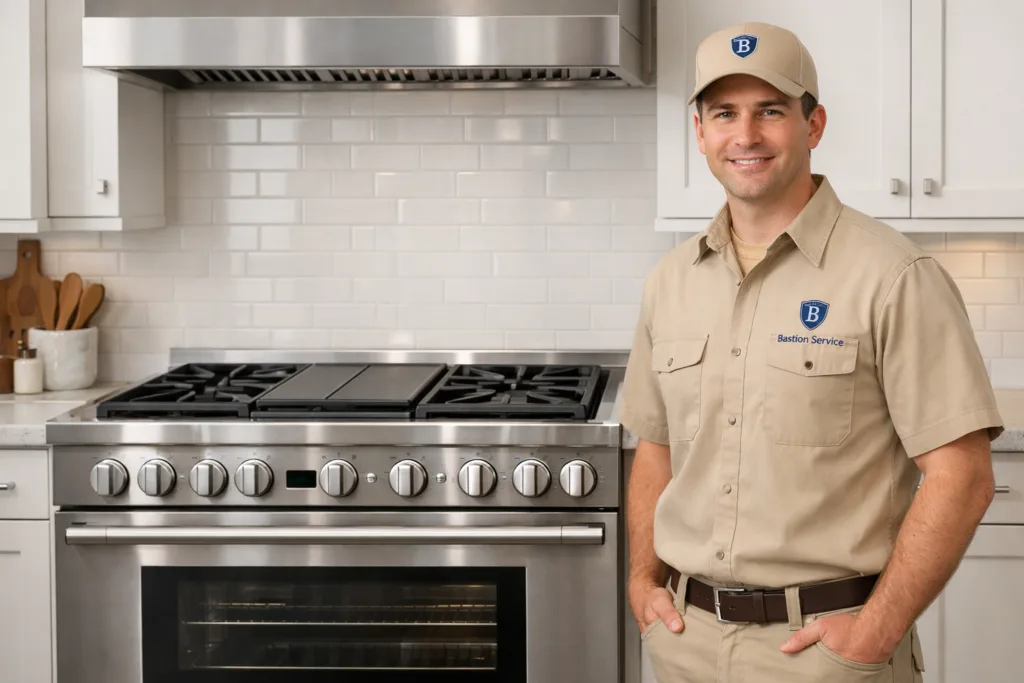
Range problems are easiest to solve when the symptoms are separated into surface cooking issues, oven heating issues, and control-related faults. On a Monogram unit, those systems work together, so a burner problem may stay isolated while an oven complaint can involve sensors, igniters, elements, relays, airflow, or the main control. For homeowners in Inglewood, that distinction matters because it helps narrow down whether the repair is likely to be simple, moderate, or part of a larger appliance decision.
Start with the exact symptom pattern
A range that fails completely is uncommon compared with one that works inconsistently. That is why the most useful clues usually come from what the appliance does before it stops performing well. If the problem happens only during preheat, only on one burner, only with convection, or only after the oven has been running for a while, those details often point toward a specific part of the system.
Examples that help narrow the issue include:
- One burner clicks constantly while others work normally
- The oven eventually heats, but preheat takes much longer than before
- Food bakes unevenly even when pans are rotated
- The display works, but heating functions do not respond correctly
- The range trips power during baking or broiling
- Temperature seems accurate at first, then drifts during longer cook times
Noting when the symptom appears, whether it is getting worse, and which cooking modes are affected can make service much more efficient.
Common Monogram range problems and what they often mean
Burner clicking that will not stop
Repeated clicking usually points to an ignition-related issue. In some cases, the cause is simple, such as moisture after cleaning, food debris around the burner head, or a cap that is slightly out of position. In other cases, the igniter switch, spark module, or related wiring may be involved. If the clicking continues after the burner is dry and correctly assembled, the problem typically needs closer inspection.
When only one burner is affected, the fault is often local to that burner assembly. When several burners act up at once, the issue may be tied to shared ignition components.
Burner lights late or not at all
Delayed ignition can make everyday cooking frustrating and can also signal a burner that is not operating as intended. Common causes include clogged burner ports, ignition misalignment, or a weakening spark system. If a burner lights only after several attempts, flame spread is uneven, or it works one day and not the next, the problem is usually past the point of routine cleaning.
Electric burner heats unevenly or cycles strangely
On ranges with electric surface elements, inconsistent heat may come from a failing element, switch, or wiring connection. Homeowners often notice this when water takes longer to boil, a pan develops obvious hot spots, or the burner does not respond normally to setting changes. If the problem repeats with different cookware, the range itself is the more likely source.
Oven not heating properly
When the oven stays cold, heats very slowly, or fails to hold temperature, the causes can vary by configuration. A gas oven may have an igniter that glows but no longer draws enough strength to open the gas valve reliably. An electric oven may have a weakened bake or broil element, a wiring issue, or a relay problem. In both cases, a bad temperature sensor or control fault can create similar cooking results.
This is one reason guessing from symptoms alone often leads to the wrong repair. “Not heating” can describe several different failures that behave almost the same from the outside.
Oven overheating or burning food unexpectedly
If dishes come out darker than normal, the oven smells unusually hot, or recipes that used to be predictable now burn early, the appliance may be running above the selected temperature. A temperature sensor reading incorrectly, a control board issue, or a relay that is not cycling properly can all cause overheating. This is a problem worth addressing promptly because excessive heat can affect performance, safety, and surrounding components.
Uneven baking and inconsistent roasting
Uneven results are often blamed on pans or recipes, but ranges with weak heating performance or poor airflow can produce the same pattern again and again. If one side browns faster, the back cooks hotter than the front, or convection no longer improves results, the issue may involve the fan system, heating circuit, sensor feedback, or door seal. These symptoms are especially noticeable in homes that use the oven frequently for family meals and baking.
Display problems and control failure
A Monogram range with an unresponsive display, intermittent buttons, random resets, or fault codes may have an interface or control problem rather than a heating component failure. Sometimes the oven and burners still operate partially, which can make the issue seem minor at first. But intermittent control problems tend to become more disruptive over time, especially if they affect temperature selection, cooking modes, or timer functions.
Signs the problem is getting worse
Some range issues stay stable for a while, but many become more obvious with daily use. Warning signs that the condition is progressing include:
- Preheat times that keep getting longer
- Burners that require repeated attempts to ignite
- Oven temperatures that vary from one use to the next
- Error codes appearing more often
- Controls that work intermittently instead of failing once
- Breaker trips that start happening under normal cooking loads
When a pattern is worsening, delaying service can make diagnosis harder and may put more stress on related components.
When to stop using the range
Some symptoms allow time to plan a repair, while others call for immediate caution. Stop using the range and arrange service if the oven overheats, a burner does not regulate correctly, or the appliance trips the breaker during normal use. Continued operation in those conditions can lead to further damage or unreliable cooking performance.
If a burner clicks repeatedly without lighting, avoid repeated attempts to force operation. If there is a strong or persistent gas smell, stop using the appliance right away and follow appropriate gas safety steps before pursuing repair. A gas odor is not the same as a routine ignition complaint and should be treated more seriously.
Repair or replacement: what usually makes sense
Many Monogram range problems are worth repairing when the appliance is otherwise in solid condition and the failure is limited to a specific system. Burner ignition parts, sensors, elements, switches, and some control-related components can often be addressed without turning the situation into a full kitchen replacement decision.
Replacement becomes more likely when the range has multiple major issues at once, has a history of recurring control problems, or shows heavy wear beyond the current complaint. The age of the unit, availability of parts, and the total repair path all matter. For many Inglewood households, the most sensible choice depends less on the brand tier and more on whether the current problem is isolated or part of a larger decline.
What a useful service visit should clarify
Good service should do more than identify a bad part. It should explain which cooking functions are affected, whether the issue is likely to spread, and whether the repair is expected to restore normal day-to-day performance. That is especially important on a range used for both stovetop meals and oven cooking, where one symptom can mask a second problem.
A helpful assessment should answer practical questions such as:
- Is the failure limited to one burner, one oven function, or the main control?
- Is the range safe to use before repair?
- Are the symptoms consistent with one failed component or several?
- Is the repair likely to restore normal temperature accuracy and burner response?
- Does the condition of the appliance support repair as a reasonable next step?
How homeowners in Inglewood can prepare before scheduling service
A few simple observations can make the diagnosis more accurate. Write down any fault codes, note whether the problem affects bake, broil, convection, or surface burners, and pay attention to whether the issue is constant or intermittent. If oven temperature is the concern, keep track of whether the problem shows up during preheat, midway through cooking, or across every recipe.
It also helps to mention if the problem began after a self-clean cycle, after a power interruption, or after cleaning around the burners. Those details do not always explain the failure, but they can provide useful context.
Focused help for Monogram range issues
Monogram ranges are built for regular household cooking, but they still depend on precise ignition, heat regulation, and control response to perform well. When one of those systems starts to slip, symptom-based evaluation is the best way to decide what to do next. Whether the issue is poor burner ignition, unstable oven temperature, clicking, error codes, or intermittent controls, the goal is to restore reliable cooking without unnecessary parts replacement or guesswork.