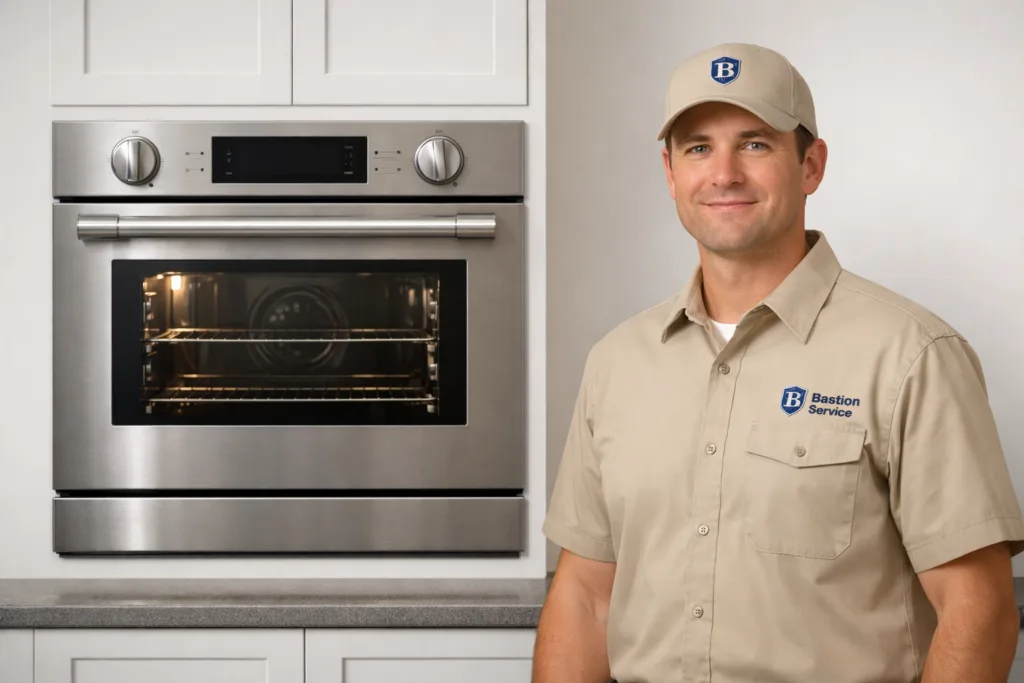
Performance problems in a built-in oven usually show up before a complete failure. You may notice longer preheat times, food that bakes differently from one week to the next, a control panel that behaves unpredictably, or a door that no longer closes as tightly as it should. On a Wolf wall oven, those changes are worth addressing early because one symptom can trace back to several different components.
Common Wolf wall oven symptoms and what they often point to
The fastest way to narrow down a repair path is to start with the symptom you see most often. That helps separate a heating problem from a sensor problem, a control fault, or an access and door-related issue.
Not heating at all
If the display powers up but the oven cavity stays cold, the problem may involve a failed bake element, broil element, relay, temperature sensor, wiring issue, or electronic control fault. In some cases, the oven appears normal on the screen while the heating circuit never fully engages.
This is also a symptom that should not be guessed at. Replacing one visible part without testing the rest of the circuit can leave the real cause untouched.
Slow preheat
When preheat starts taking much longer than usual, the oven may still be heating but not at full strength. A weakened heating component, inaccurate sensor feedback, or control problem can all create sluggish preheat. Homeowners often first notice this when recipes that used to be routine suddenly need extra time.
Uneven baking or roasting
If the top browns too quickly, the bottom lags behind, or one rack cooks faster than another, heat is not being regulated the way it should be. That may come from sensor drift, calibration issues, a weak heating circuit, or airflow problems inside the oven cavity. Premium ovens are expected to cook consistently, so even moderate unevenness is a sign to have the unit checked.
Temperature swings during cooking
All ovens cycle heat, but noticeable swings can point to a problem. If dishes come out overdone one day and underdone the next at the same setting, the oven may not be reading temperature accurately or may be struggling to maintain it. This is especially frustrating with baking, where stable temperature matters more than raw heating power.
Control panel errors or random beeping
Error codes, nonresponsive touch controls, unexplained beeping, or a cycle that starts and stops on its own usually indicate an electronic issue rather than a basic heating failure. Sometimes the fault is in the main control. Other times it is caused by a sensor input, a communication issue between components, or a condition triggered after a self-clean cycle.
Door not closing, locking, or unlocking properly
A poor door seal can affect temperature, preheat, and cooking consistency. If the door sits unevenly, will not stay fully shut, or will not unlock after a cycle, the problem may involve the latch, hinges, seal, or heat-related stress on surrounding parts. Continued use with a door problem can make heating complaints appear worse than they really are.
Why symptom-based diagnosis matters
Two ovens can show the same complaint and need completely different repairs. An oven that seems underpowered might have a weak element, but it could also have a sensor sending the wrong readings or a control that is not cycling heat correctly. A unit that will not start might have an internal failure, but it could also be dealing with a power supply issue or a door-related fault.
That is why the most useful service visit begins with a clear diagnosis and a practical repair plan based on the exact symptom pattern. In Redondo Beach homes, built-in wall ovens are often installed in finished cabinetry where access takes care and precision, so getting the diagnosis right first helps avoid unnecessary part replacement and repeat labor.
Signs the problem is getting worse
Some issues stay relatively stable for a short time, while others tend to spread. If you notice any of the following, it is usually better to stop waiting and schedule service:
- Preheat times keep increasing
- The set temperature no longer matches actual cooking results
- The oven shuts off mid-cycle
- The breaker trips during operation
- The same error code returns after a reset
- The door latch or lock issue appears more than once
- The control panel responds inconsistently
These symptoms often begin as intermittent problems, then become harder failures once heating or control components are stressed further.
When to stop using the oven
Some complaints are inconvenient but not immediately dangerous. Others should be treated as stop-use conditions until the oven is inspected. Discontinue use if you notice burning odors from wiring, visible sparking, repeated breaker trips, or signs that the unit is overheating around the control area or door.
If the oven will not regulate temperature and appears to run too hot, continued operation can damage nearby components and create poor cooking results at the same time. A door that does not latch correctly or unlock as expected after a cycle also deserves prompt attention, especially if it affects safe operation.
Repair or replacement: what usually makes sense
Many Wolf wall oven problems are repairable when the issue is isolated to a sensor, heating element, latch assembly, control-related component, or another defined failure. Repair is often the better choice when the oven is otherwise in good condition and the fault is specific rather than widespread.
Replacement becomes more worth considering when there are multiple major failures, recurring electrical problems, significant structural damage, or repair costs that no longer support reliable long-term use. The decision should be based on the actual condition of the appliance, not just the frustration of the moment.
What homeowners in Redondo Beach usually want to know
Most people are trying to answer a few straightforward questions: Is the oven safe to use? What is most likely causing the issue? Is this a focused repair or the start of a larger problem? And is fixing it still practical?
For a household kitchen, the goal is not simply getting the display to light back up. It is restoring steady heat, predictable cooking performance, and confidence that the oven will work normally day to day. That is especially important with a built-in Wolf unit, where fit, finish, and proper operation all matter.
A few examples of symptom patterns that deserve service
- Cookies are overbrowning on top but pale underneath: often points to uneven heating, sensor inaccuracy, or partial element failure.
- The oven says it is preheated, but food is still undercooked: may indicate a temperature reading or control issue.
- The screen works, but bake mode does not produce heat: can suggest a heating circuit or relay fault rather than a full power failure.
- The oven works sometimes, then suddenly stops: intermittent controls, wiring, or thermal stress may be involved.
- The self-clean cycle is followed by a new error or lock problem: latch and control components should be checked before using the oven normally again.
Focused help for a built-in cooking appliance
Wall ovens are different from freestanding ranges in both access and repair planning. Because they are integrated into the kitchen, the right approach needs to consider surrounding cabinetry, safe handling, and whether the failure is isolated or part of a broader wear pattern. For Redondo Beach homeowners, that means service should be centered on the actual symptom, the condition of the oven, and the repair path that makes the most sense for everyday use.