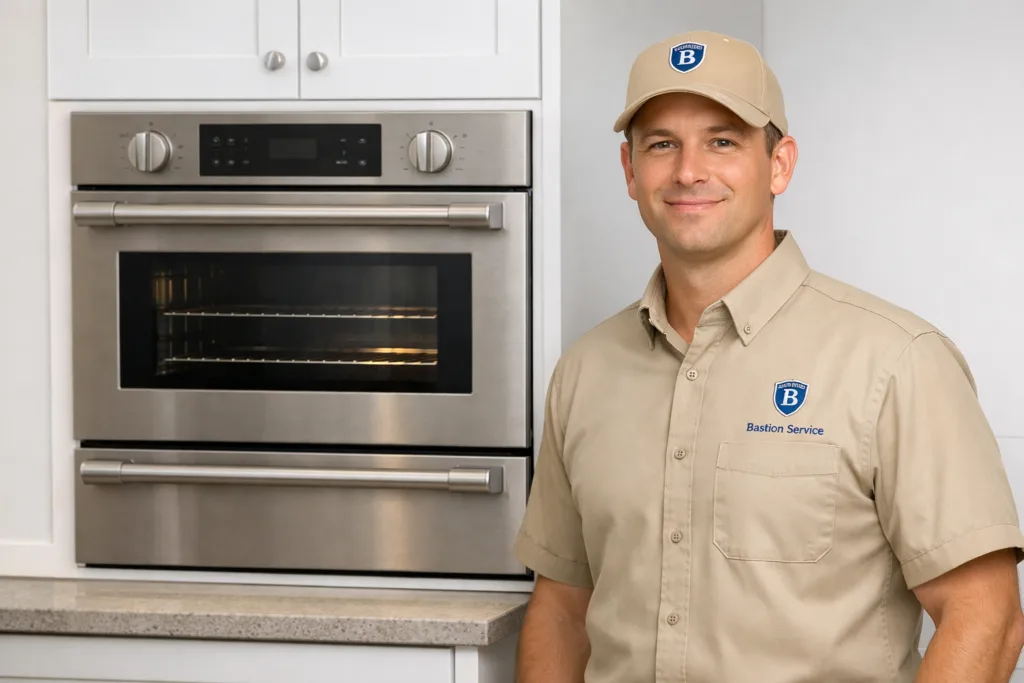
Cooking problems in a Wolf oven often start subtly. A roast takes longer than usual, cookies brown unevenly, or the oven seems to preheat without ever cooking the way it used to. Those patterns matter because oven problems rarely show up as only one failed part. Heating performance, temperature feedback, door sealing, controls, and ignition can all affect the final result.
What common Wolf oven symptoms usually mean
When a Wolf oven changes behavior, the most useful clue is the exact symptom pattern. An oven that is completely cold points in a different direction than one that heats inconsistently or overshoots the set temperature. Paying attention to how the problem appears during preheat, baking, broiling, or longer cook cycles helps narrow down the likely cause.
Not heating at all
If the oven stays cool or only gets slightly warm, the issue may involve a failed bake element, broil element, igniter, wiring problem, sensor fault, or electronic control problem. On some gas models, the igniter may glow but still be too weak to open the gas valve properly. That can make the oven look active without producing enough heat to cook.
Slow preheat
Slow preheat is often one of the first signs that something is off. A weak element, aging igniter, sensor issue, or control problem can all stretch preheat times. If the oven eventually gets hot but takes much longer than before, it is usually worth checking before the problem turns into a full no-heat condition.
Uneven baking or roasting
Food that comes out overdone on one side and underdone on the other usually points to poor heat regulation rather than a recipe problem. Partial heating failure, temperature sensor drift, weak broil or bake performance, or airflow issues inside the cavity can all create hot and cool zones. This is especially noticeable when results vary between racks or when the same dish no longer cooks evenly from one use to the next.
Temperature swings
Some cycling is normal, but wide temperature swings are not. If the oven seems too hot, then too cool, or burns one batch and undercooks the next, the problem may be related to the sensor, control board, relay response, or calibration drift. In households that cook often, this kind of inconsistency tends to show up quickly in baking performance.
Control and display issues
If the display resets, buttons stop responding, or error codes keep returning, the fault may be electronic rather than mechanical. A control issue can interrupt heating cycles, prevent proper temperature regulation, or cause the oven to shut down during use. Repeated resets may temporarily hide the problem, but they rarely solve it.
Door not sealing properly
A worn gasket, bent hinge, or misaligned door can let heat escape. This often shows up as longer cook times, higher exterior heat around the oven, or food that never quite finishes as expected. A poor seal can also make the oven work harder than it should during preheat and normal cooking.
Why symptom-based diagnosis matters
Many Wolf oven complaints overlap. Slow preheat, uneven baking, and temperature drift can all come from different failures that look similar on the surface. Replacing parts based on guesswork can waste time and still leave the original problem unresolved.
Testing should match the symptom. For example, an oven that does not reach temperature may need heating output checked, while an oven that overshoots may point more toward sensing or control response. That is why a practical repair plan starts with how the oven behaves in real use, not just the error code or the most common part failure.
Signs it is time to stop using the oven
Some problems are inconvenient. Others are a signal to stop and schedule service before using the oven again. Continued use can worsen damage or create safety concerns.
- Repeated breaker trips
- Sparks, smoke, or burning smells
- The oven shutting off mid-cycle again and again
- Persistent error codes that affect operation
- Delayed ignition or inconsistent ignition on gas models
- Visible element damage or severe overheating
If a gas oven has a strong or lingering gas smell, stop using it immediately. Leave the area if needed and contact the gas utility or emergency service before arranging appliance repair.
How these issues affect everyday cooking in Redondo Beach homes
For many households in Redondo Beach, an oven is not only for occasional baking. It may be used for weeknight dinners, meal prep, family gatherings, and holiday cooking. When the oven becomes unreliable, the problem is not just inconvenience. It can affect timing, food quality, and confidence in every meal that goes into it.
That is why performance changes should not be brushed off as minor. A Wolf oven is designed for precise cooking, so noticeable changes usually mean something in the heating or control system is no longer working the way it should.
Repair or replace?
In many cases, repair makes sense when the oven is otherwise in good condition and the issue is tied to a serviceable component. Problems involving an igniter, heating element, sensor, gasket, hinge, or certain control-related failures are often repairable if the rest of the appliance remains sound.
Replacement becomes more likely when there are multiple major failures at once, severe cavity damage, extensive electronic issues, or a repair path that no longer matches the overall condition of the unit. The best decision usually comes after the source of the problem is identified, because the symptom alone does not always tell you whether the repair will be straightforward or more involved.
What to prepare before service
If you are scheduling Wolf oven repair in Redondo Beach, a few details can make the visit more productive:
- Note whether the oven is electric or gas
- Write down any error codes exactly as shown
- Track whether the issue happens during preheat, baking, broiling, or self-cleaning
- Notice if the problem is constant or intermittent
- Be ready to describe sounds, smells, or shutoffs during operation
These details help connect the symptom to the likely failure path and reduce the chance of chasing the wrong issue first.
What a useful service visit should accomplish
A focused oven service visit should determine why the unit is not heating properly, why temperatures are unstable, or why the controls are not responding as expected. That includes confirming whether the problem is tied to heating components, ignition, temperature sensing, door sealing, wiring, or the control system.
From there, the next step should be easy to understand: what failed, whether the repair is practical, and what to expect once the oven is working normally again. For Redondo Beach homeowners, that kind of straightforward explanation is what helps turn a frustrating cooking problem into a decision that makes sense for the appliance and the household.