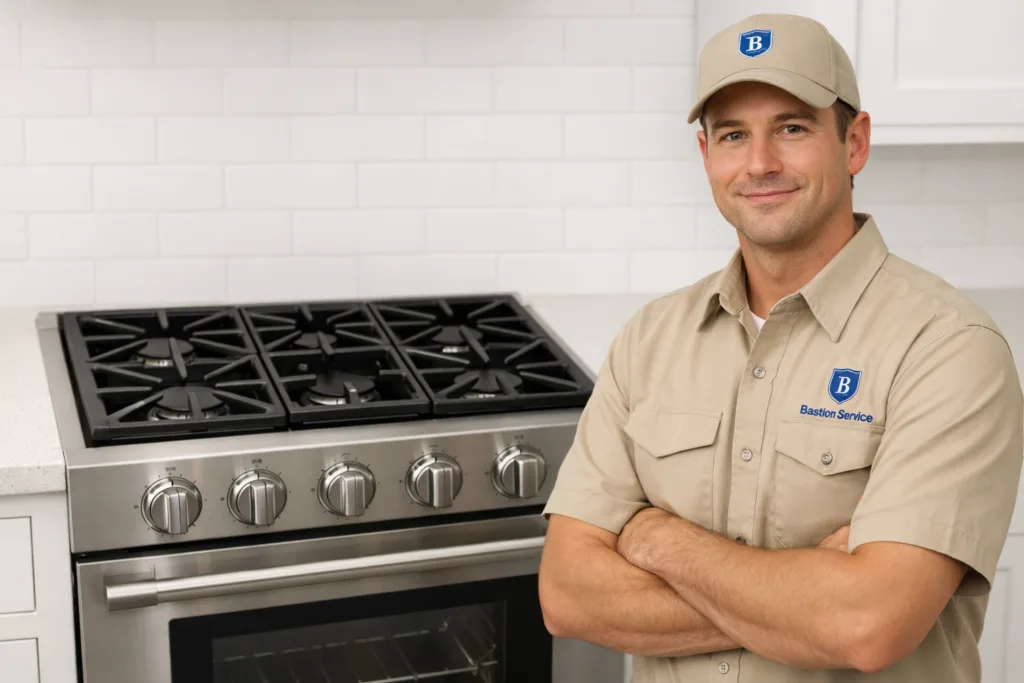
Cooktop problems rarely stay “minor” for long. A burner that lights on the second or third try, a control that responds only sometimes, or a zone that heats unpredictably can quickly turn routine cooking into a daily frustration. With Wolf units, the visible symptom does not always identify the failed part, so the most useful starting point is to match the pattern of behavior to the likely system involved.
Common Wolf cooktop symptoms homeowners notice
Some issues are immediate and obvious, such as a burner that will not ignite or a cooking zone that stays cold. Others show up gradually: longer ignition times, weak flame, uneven heating, repeated clicking, delayed response from the knobs or touch controls, or a burner that behaves differently after cleaning or a spill.
On gas models, a single burner problem often points to a localized issue around the burner cap, electrode, igniter path, switch, or valve area. When several burners begin acting up at once, it can suggest a shared electrical or ignition-system fault. On electric or induction configurations, symptoms like flashing indicators, cookware not being detected, intermittent heat, or sudden shutoffs may involve sensors, power components, or control boards rather than the surface element alone.
Signs the problem should be checked soon
- Clicking continues after the burner is lit
- A burner lights only occasionally
- Heat output changes without adjusting the setting
- The cooktop shuts off during use
- Controls do not respond consistently
- The unit trips a breaker or loses power unexpectedly
- Glass is cracked or the surface shows visible damage
These symptoms can affect both performance and safety, especially when the appliance is used every day in a busy household.
What specific symptom patterns can mean
Burner will not ignite
If you hear clicking but the burner does not light, the problem may involve the igniter, electrode position, burner assembly, moisture intrusion, debris, wiring, or a switch issue. If there is no clicking at all, the fault may be farther back in the ignition circuit or control system. The difference matters because the repair path is not the same.
Continuous clicking after ignition
Persistent clicking is often tied to trapped moisture, contamination around the burner, a misaligned cap, or a switch that is not resetting correctly. If the clicking continues after the area is dry and properly assembled, the issue usually needs a closer inspection. Repeated use in this condition can put extra strain on ignition components.
Weak flame or uneven heating
A weak, unstable, or uneven flame can point to burner component issues, restricted gas flow, valve problems, or regulation faults. On electric-style cooking zones, uneven heating may come from a failing element, sensor, relay, or temperature-control issue. This type of symptom often shows up first in cooking results before the fault becomes more obvious mechanically.
Cooktop will not power on
When the unit appears dead or powers up only partway, the source may be incoming power, wiring, fuse protection, interface components, or the main control board. In some cases, one section of the cooktop may fail while another still appears normal, which can make the problem seem smaller than it is.
Cooktop shuts off during use
Unexpected shutdowns can be linked to overheating protection, power instability, failing controls, or internal component breakdown. If the cooktop restarts later, that does not necessarily mean the issue has resolved. Intermittent faults are often early warnings of a larger failure developing.
Cracked glass or damaged surface
If a glass cooking surface is cracked, continued use may not be advisable. Damage to the surface can affect heat transfer, cookware stability, and the protection of internal components below. Even if the cooktop still seems to work, the repair decision should account for both safety and the condition of related parts underneath the surface.
Why diagnosis matters with Wolf cooktop repair
Wolf cooktops are performance-oriented appliances, and symptom overlap is common. For example, one burner not heating may be caused by the burner itself, the switch feeding it, a control issue, a wiring fault, or a problem in a shared circuit. Replacing the obvious part without confirming the cause can lead to unnecessary expense and no real fix.
That is why homeowners in Redondo Beach are usually better served by pinpointing the failure first, then deciding whether the repair is straightforward, whether multiple parts are involved, and whether the appliance is otherwise in good enough condition to justify the work.
When to stop using the cooktop
It is wise to limit use if you notice recurring sparking, delayed ignition, overheating, a breaker tripping, a burning smell, a cracked surface, or controls behaving erratically. A cooktop that only fails “sometimes” can still have an underlying electrical or ignition issue that worsens with repeated use.
This is especially true after spillovers. Liquid around switches or control areas can create intermittent behavior at first and more serious component damage later if the problem is ignored.
Repair or replacement: how homeowners usually decide
Repair is often the sensible option when the fault is isolated and the rest of the cooktop is in solid condition. That is commonly the case with individual ignition components, switches, certain controls, or burner-related failures. Replacement becomes more worth considering when there are multiple major problems, severe surface damage, repeat breakdowns, or limited parts support for the exact model.
The decision usually comes down to a few practical questions:
- Is the current problem isolated or part of a larger pattern?
- Is the cooktop otherwise performing well?
- Has it needed repeated repairs for related issues?
- Will the repair restore normal daily use with reasonable confidence?
What to note before scheduling service
A few details can make the issue easier to identify. Try to note whether the problem affects one burner or several, whether it started after cleaning or a spill, whether the clicking is constant or intermittent, and whether the unit loses power entirely or only certain functions stop working. If the symptom appears only when the appliance is warm or only after a longer cooking session, that pattern can also be useful.
For households in Redondo Beach, these symptom details often help separate a burner-specific problem from a control or power issue and make the repair path more efficient.
Focused help for recurring cooktop issues
When a Wolf cooktop no longer lights, heats, or responds the way it should, the best next step is to identify the failed system rather than guess at parts. Whether the issue involves ignition, temperature control, power loss, surface damage, or intermittent operation, a careful diagnosis helps determine if repair is the right move and what that repair should actually address.