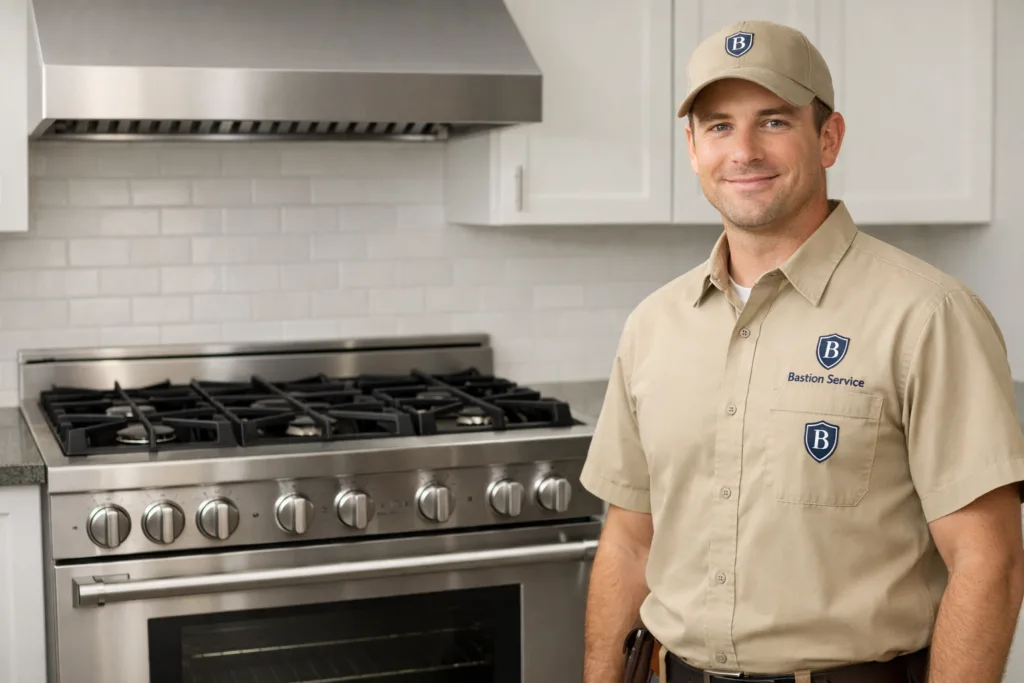
Cooking problems rarely start as complete failure. More often, a Wolf range begins with a pattern: a burner that clicks longer than usual, an oven that takes too long to preheat, or temperature results that seem different from one meal to the next. Paying attention to that pattern helps narrow down whether the issue is related to ignition, heat production, gas flow, sensors, controls, or normal wear in a specific assembly.
Common Wolf range problems in Redondo Beach homes
Many service calls begin with surface burner trouble. A burner may click repeatedly, ignite late, produce an uneven flame, or fail to light at all. In some cases, the cause is residue around the burner ports or a cap that is not seated correctly. In others, the problem is deeper in the ignition system, spark module, switch, or gas delivery components.
Oven complaints are just as common. Homeowners may notice slow preheat, uneven baking, temperature drift, or a broiler that does not respond normally. Those symptoms can point to a weak igniter, a failing sensor, a control problem, or a heating issue that only shows up once the range is under load. When meals come out inconsistent even though settings appear correct, the range usually needs testing rather than guesswork.
Control-related problems also show up in everyday use. Displays may behave erratically, knobs may feel loose or stop responding as expected, and some ranges may work normally for several days before acting up again. Intermittent faults can be especially frustrating because they often involve more than one possible cause, including wiring, switches, or heat-related wear in the control system.
What specific symptom patterns can mean
Clicking that continues after ignition
If a burner lights but the clicking keeps going, the range may have moisture around the ignition area, debris affecting flame recognition, or a switch issue that is not resetting correctly. This is not just a noise problem. Continued clicking can point to a system that is no longer operating the way it should and may become less reliable over time.
Burner will not light or lights very slowly
Slow or failed ignition may come from blocked burner ports, misalignment, weak spark, or a gas-flow issue. If one burner is affected and the others are normal, the fault may be isolated to that burner assembly. If several burners show the same behavior, the diagnosis may need to look beyond a single igniter.
If there is a persistent gas smell, stop using the appliance and address that safety concern before scheduling normal repair.
Oven preheats slowly or does not hold temperature
An oven that struggles to reach temperature can produce uneven baking, undercooked centers, and inconsistent roasting results. On a Wolf range, this may involve an igniter that is no longer drawing properly, a sensor reading inaccurately, or a control issue affecting heat regulation. If the oven gets warm but never seems fully correct, the problem is often performance-related rather than total failure.
Uneven flame or weak heat on the cooktop
A flame that looks patchy, low, or stronger on one side can indicate blocked ports, burner wear, or gas distribution problems. This affects more than appearance. Uneven flame changes pan heating and can make simmering, searing, and boiling less predictable.
Display or controls work intermittently
When settings change unexpectedly, the display fades, or the range responds inconsistently, the fault may involve the control board, user interface, wiring, or a heat-stressed component. Intermittent operation usually needs a careful symptom review because replacing one visible part may not solve the actual cause.
Signs the problem is getting worse
Some range issues stay minor for a while, but others tend to progress. Homeowners in Redondo Beach often decide to schedule service when they notice changes such as:
- Burners needing multiple tries to ignite
- Clicking becoming more frequent or spreading to other burners
- Preheat times getting longer week by week
- Food browning unevenly on familiar settings
- Control problems returning after seeming to stop
- Flame quality changing without an obvious cleaning issue
These signs matter because they often show the range is moving from occasional annoyance to everyday unreliability.
When repair is usually the practical choice
Repair is often worthwhile when the range is otherwise in good condition and the problem can be traced to a specific ignition, heating, sensor, or control component. Premium cooking appliances are frequently worth repairing when the core structure, burners, oven cavity, and overall performance history are still strong.
This is especially true when the symptom is limited and repeatable, such as one burner failing to ignite, an oven that is consistently slow to preheat, or a broiler that has stopped operating correctly while the rest of the range remains functional.
When replacement may deserve consideration
Replacement becomes a more serious discussion when multiple systems are failing at once, when major control and heating problems overlap, or when the appliance has a longer history of recurring repairs without lasting improvement. The decision is usually less about age by itself and more about overall condition, repair scope, parts involved, and whether the unit can realistically return to dependable daily use.
If a range has one isolated problem, repair is often straightforward. If it has several unrelated issues affecting both cooktop and oven performance, the long-term value of continued repair may need a closer look.
What to check before scheduling service
A few simple observations can help make a service visit more productive:
- Note whether the issue affects one burner, several burners, the oven, or the full range
- Pay attention to whether the symptom is constant or intermittent
- Check whether burner caps are seated correctly after cleaning
- Notice if the problem appears only during preheat, only at higher temperatures, or throughout use
- Write down any display behavior or error pattern you have seen
These details can make it easier to match the symptom to the right repair path and avoid unnecessary parts replacement.
What homeowners usually want from Wolf range service
Most households are not looking for a complicated explanation. They want to know why the range is acting up, whether it is safe to keep using, and what repair will restore consistent cooking. For a Wolf range in Redondo Beach, the most useful service outcome is a clear diagnosis tied to the real symptom pattern, followed by a practical recommendation that fits the appliance’s condition and everyday use.