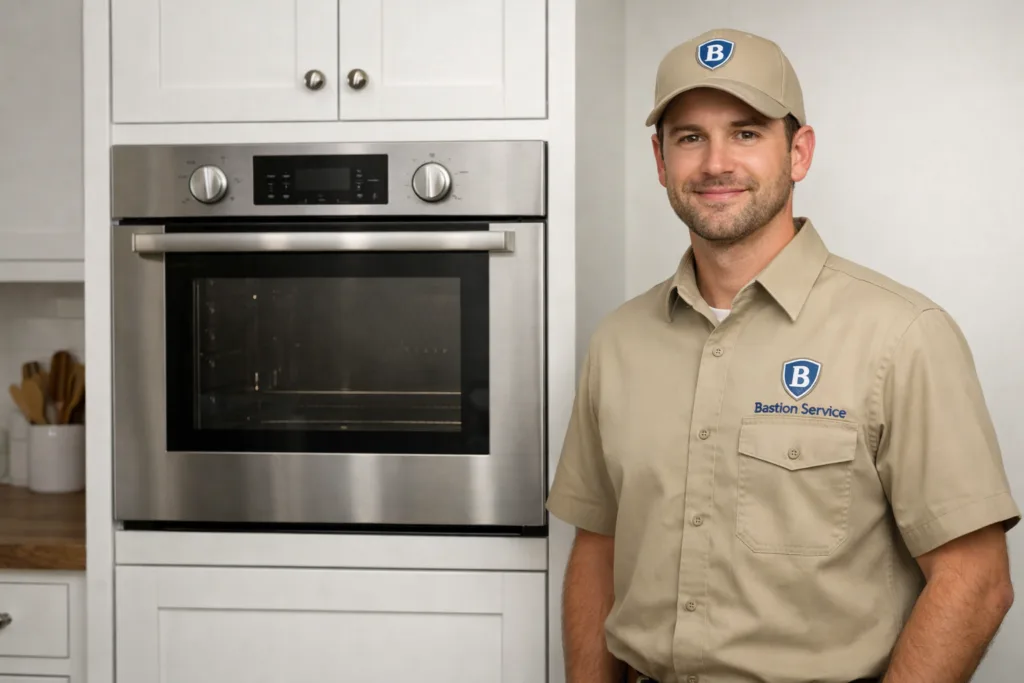
Wall oven problems tend to show up first in everyday cooking: preheat takes longer than usual, cookies brown unevenly, or the control panel starts acting unpredictably. With Bosch units, those symptoms can come from heating components, sensors, door-lock parts, wiring, or electronic controls, so the most useful approach is to match the repair plan to the exact behavior of the oven.
Symptom patterns that help narrow down the problem
Not every oven failure looks dramatic. In many homes, the early warning signs are subtle and easy to work around for a while. Paying attention to when the problem happens can make the issue easier to identify.
The oven turns on but does not heat
If the display works and the oven appears to start but never gets hot, likely causes include a failed bake element, a broil circuit problem, a faulty temperature sensor, or a control board issue. On some Bosch wall ovens, a door-latch or safety-related fault can also prevent normal heating.
Preheat is much slower than before
A long preheat cycle often points to weak heating output rather than a complete failure. One element may still be working while another is not reaching full temperature, or the sensor may be feeding the control inaccurate readings. Homeowners often notice this issue before they notice major baking inconsistency.
Food cooks unevenly
Hot spots, pale areas, and unpredictable results can come from poor temperature regulation, a convection fan problem, or a sensor that has started to drift. If one rack position suddenly cooks very differently than another, that usually suggests more than simple recipe variation.
Temperature rises too high or swings during cooking
An oven that overshoots the set temperature or cycles too far up and down may have trouble reading or controlling heat accurately. Sensor faults, relay problems, and electronic control issues are common possibilities. This can affect roasting, baking, and any dish that depends on stable heat.
The display shows an error code or the controls stop responding
Bosch wall ovens use electronic diagnostics to flag certain sensor, latch, or communication issues. If the panel flashes, resets, beeps unexpectedly, or ignores button presses, the fault may be in the user interface, control board, wiring, or incoming power to the appliance.
The door will not close, lock, or unlock correctly
A poor door seal can let heat escape and make cooking results inconsistent. If the latch system fails, the oven may refuse to start, stay locked after a cycle, or act normally one day and not the next. Hinges, switches, latch motors, and alignment issues are all worth checking.
Why Bosch wall oven issues should be tested, not guessed
Two ovens with the same symptom can need completely different repairs. An oven that will not reach temperature might need a sensor, a control, or a heating component. An oven that seems dead could have a power-supply issue rather than a failed main board. That is why symptom-based testing matters more than replacing parts based on appearance alone.
For homeowners in Redondo Beach, that usually means looking at the full operating pattern: whether the broil function works, whether the display stays stable, whether the unit fails only during preheat, and whether the problem started after a self-clean cycle or electrical interruption.
Problems that often get worse with continued use
Some oven issues are inconvenient but manageable for a short time. Others can turn into larger repairs if the appliance keeps running under strain.
- Repeated overheating can damage controls and surrounding components.
- Slow or incomplete heating can place extra stress on elements and relays.
- Door-latch problems can become worse after repeated self-clean attempts.
- Intermittent shutdowns may point to wiring or control faults that should not be ignored.
- Breaker trips, sparking, or burning smells are signs to stop using the oven until it is checked.
When service makes sense
Scheduling service is usually the right move when the oven is no longer reliable for routine cooking, when errors keep returning, or when temperatures are too inconsistent to trust. Households in Redondo Beach often call for help once the oven starts affecting meal timing, baking results, or safe operation rather than waiting for a total breakdown.
It is also smart to have the oven evaluated if the issue appears only on certain modes, such as bake working poorly while broil still functions, or convection running with weak heat. Those details can help narrow the failure and avoid unnecessary part replacement.
Repair or replace?
Many Bosch wall oven problems are worth repairing, especially when the issue is limited to a sensor, heating element, latch component, fan motor, or selected control-related part. Replacement becomes a more serious consideration when there are multiple major failures, severe internal damage, or a repair cost that no longer fits the age and condition of the unit.
A good decision usually comes down to three things:
- the exact failed part or system,
- the overall condition of the oven, and
- whether the expected repair restores dependable everyday use.
What homeowners usually want to know first
Most people are trying to answer a few simple questions: Is the oven safe to use right now? What is actually causing the problem? Is this a repairable issue or the start of a larger decline? A focused service visit should answer those questions in plain terms and identify the next step that makes sense for the household.
For Bosch wall oven repair in Redondo Beach, the goal is not just getting heat back on. It is restoring consistent, usable performance so the oven works the way it should for everyday cooking at home.