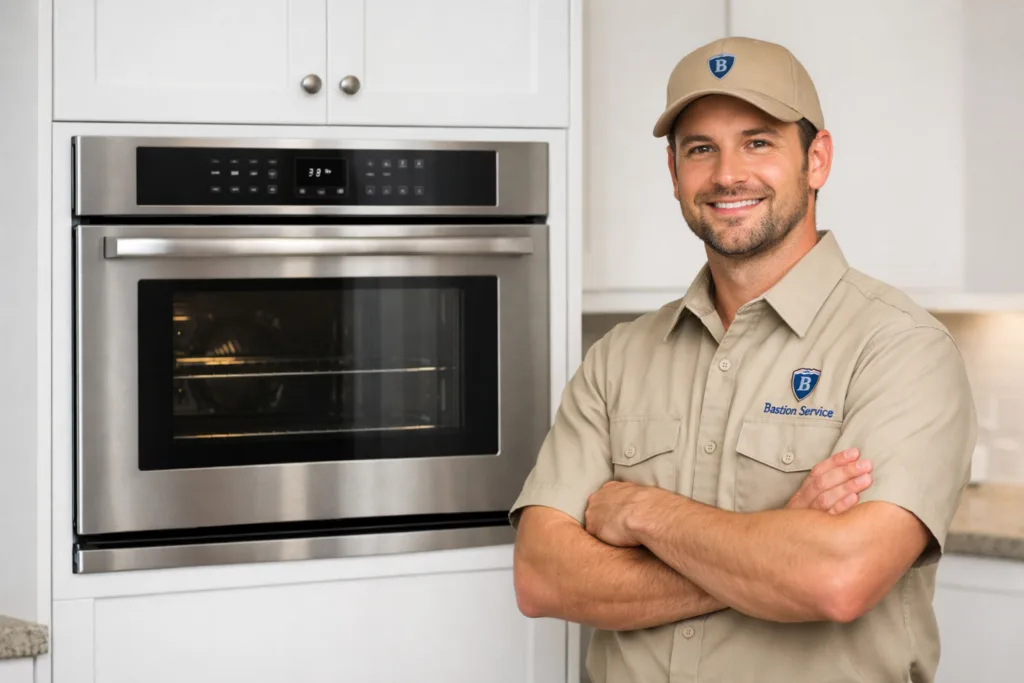
Wall oven failures usually show up as cooking problems before they become complete breakdowns. One day the oven takes much longer to preheat, then cookies brown unevenly, casseroles stay cool in the center, or the display starts acting unpredictably. With Frigidaire wall ovens, those symptoms can come from several different components, so the most useful next step is identifying which system is actually failing.
Common Frigidaire wall oven symptoms and what they can mean
Many issues look similar at first, but the pattern matters. An oven that never heats is a different problem from one that heats sometimes, overheats after preheat, or loses temperature halfway through a cycle.
Oven will not heat at all
If the control appears to turn on but the oven cavity stays cold, likely causes include a failed bake element, broil element, thermal protection issue, control board fault, or a power supply problem. On some units, one failed circuit can make the oven seem completely dead from a cooking standpoint even though the clock and lights still work.
Slow preheat
A long preheat often points to a weak heating element, a sensor sending inaccurate temperature feedback, or a control problem that is not cycling heat correctly. Homeowners sometimes notice this first with simple meals that suddenly take much longer than normal.
Uneven baking or roasting
If the top rack browns too fast while the lower rack lags behind, or one side of the dish finishes earlier than the other, heat distribution may be off. That can be caused by an underperforming element, sensor drift, convection fan trouble on equipped models, or a door gasket that is no longer sealing well.
Temperature swings
All ovens cycle on and off, but wide swings that affect cooking results can signal a sensor issue, a relay problem, or control failure. This is often why recipes that used to be reliable suddenly become inconsistent.
Oven shuts off during use
An oven that starts normally and then powers down during baking may be overheating internally, losing electrical continuity, or developing a control board fault that shows up once the unit gets hot.
Door locked after self-clean
A locked door after the clean cycle often involves the latch assembly, switch feedback, or the electronic control. Forcing the door can damage the latch system further, so this is usually a problem to diagnose before trying repeated resets.
Keypad, display, or error code problems
Flashing codes, nonresponsive buttons, partial display failures, or controls that beep unexpectedly can point to a failing interface, moisture-related damage, ribbon connection issues, or a deeper board problem.
Breaker trips during operation
If the breaker trips when the oven starts heating or during preheat, stop using the appliance until the fault is checked. A shorted element, damaged wiring, or another electrical failure may be involved, and continued use can make the problem worse.
Why symptom patterns matter with built-in wall ovens
Built-in ovens are not as simple to evaluate as countertop appliances. Access is tighter, the electrical setup matters, and several failures can produce nearly identical cooking complaints. For example, food coming out undercooked does not automatically mean the oven just needs recalibration. It could also mean one heating circuit is weak, the sensor is reading inaccurately, or the control is ending heat cycles too early.
That is especially important in Redondo Beach homes where a wall oven is part of the daily kitchen routine. A targeted diagnosis helps avoid replacing the wrong part and reduces the chance of repeated interruption once the oven is pulled from the cabinet for service.
Signs the problem is getting worse
Some oven issues stay mild for a while, while others tend to escalate quickly. It is smart to pay attention if you notice:
- Preheat times increasing from week to week
- Food browning too fast on top but not finishing inside
- The oven reaching the set temperature and then dropping sharply
- Intermittent error codes that clear and return later
- A hot control panel or unusual fan noise
- A door that no longer closes firmly
- Burning odors, buzzing, or breaker trips during heating
These patterns often suggest that a failing part is affecting other components or placing extra strain on the control system.
When to stop using the oven
It is usually best to stop using the wall oven right away if it trips the breaker, produces an electrical burning smell, overheats badly, will not shut off properly, or shows obvious wiring or control failure. Those symptoms move beyond normal inconvenience and into safety and damage concerns.
If the issue is limited to slow preheat, mild temperature inaccuracy, or inconsistent baking, the oven may still operate for a short time, but the problem should be addressed before it spreads. Continued use with a weak element or unstable sensor can lead to poor results and added wear on the control side of the unit.
Repair or replace: what usually makes sense
Many Frigidaire wall ovens are worth repairing when the failure is limited to a heating element, sensor, door latch assembly, fan motor, or another isolated component. In those cases, restoring normal heating and control response can be a sensible path.
Replacement becomes more likely when there are multiple electrical failures, severe board damage, hard-to-source parts, or overall condition issues that make the repair cost difficult to justify. Age matters, but so does the type of failure. An older oven with one straightforward problem may still be a better repair candidate than a newer unit with several interacting faults.
What a homeowner can observe before service
You do not need to disassemble anything to gather helpful information. Before scheduling Frigidaire wall oven repair in Redondo Beach, it helps to note:
- Whether the oven fails during preheat or after reaching temperature
- If broil works but bake does not, or vice versa
- Whether the issue happens on every cycle or only sometimes
- Any error codes shown on the display
- Whether the problem started after self-clean
- If the breaker trips immediately or later in the cycle
Those details can help narrow down whether the issue is in the heating circuit, temperature sensing, latch system, power supply, or electronic controls.
What homeowners usually want from wall oven repair
Most households are not looking for a complicated explanation. They want the oven to preheat normally, hold temperature, bake evenly, and run safely without guessing. Whether the problem involves no heat, erratic temperatures, a locked door, or an unresponsive panel, the goal is to match the repair to the actual failure so everyday cooking can return to normal with less uncertainty.