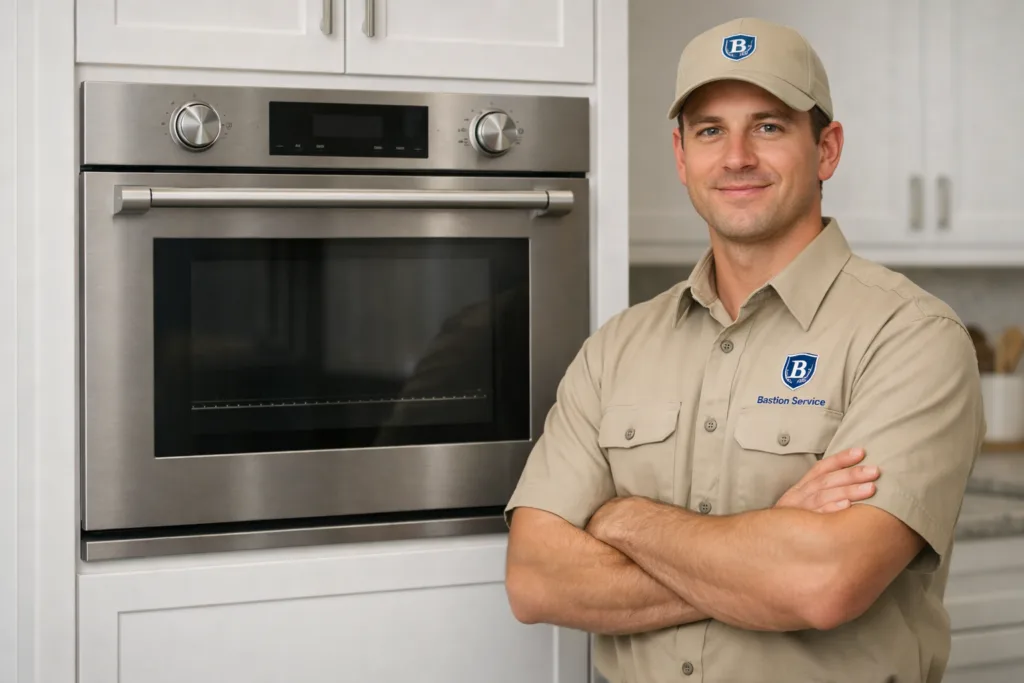
Temperature problems in a Wolf wall oven rarely have just one obvious cause. An oven that seems too cool, too hot, or unusually slow to preheat may be dealing with a weak heating circuit, a drifting sensor, a control issue, restricted airflow, or heat loss around the door. Looking at the exact behavior during preheat, bake, broil, and convection modes usually tells far more than the symptom alone.
Common Wolf wall oven symptoms in Rancho Palos Verdes homes
Wall ovens tend to show performance changes before they fail completely. Paying attention to those changes can help prevent a small repair from turning into a larger one.
Not heating at all
If the display powers on but the oven cavity stays cold, the problem may involve the bake element, broil circuit, thermal protection, wiring, relay activity, or the electronic control. In some cases, the oven starts a cycle but never actually energizes the heating system. That difference matters, because it changes the repair path.
Slow preheat
Slow preheat is one of the most common complaints with wall ovens that still appear to be working. A weakened element, inaccurate temperature feedback, or a control problem can lengthen preheat times and make weeknight cooking frustrating. If preheat has gradually become slower over time, that pattern is often useful during diagnosis.
Uneven baking
Cookies browning on one side, casseroles taking longer in the center, or one rack cooking faster than another can point to inconsistent heat distribution. Causes may include partial element failure, convection fan issues, sensor inaccuracy, or a door gasket that no longer seals well enough to hold stable heat.
Temperature swings
Some cycling is normal, but large temperature swings are not. If the oven overshoots the set point, drops too low, or produces inconsistent results from one use to the next, testing usually focuses on the temperature sensor, control response, and whether the heating circuits are operating as intended.
Fault codes or beeping
A recurring fault code is often the oven’s way of reporting a failed reading, communication problem, latch issue, or overheating condition. Even if the code clears after a power reset, repeated faults usually mean the underlying issue is still present.
Controls not responding
When buttons stop responding, settings change unpredictably, or the interface works only part of the time, the trouble may involve the user interface, control board, or power supply to the control system. These issues can be intermittent at first, which makes symptom history especially helpful.
What different symptoms often point to
Symptom-based testing is important because the same complaint can come from very different parts of the oven.
- Oven runs cool: sensor drift, calibration issues, weak bake performance, or heat escaping through the door seal.
- Oven runs hot: inaccurate sensor input, relay sticking, or control failure.
- Broil works but bake does not: bake circuit problems, failed element, or relay issues.
- Bake works but convection results are poor: fan or airflow problems.
- Self-clean will not start or finish: latch, control, or thermal protection concerns.
- Breaker trips during use: wiring faults, grounded elements, or electrical problems that should be checked promptly.
Door and seal issues can affect cooking more than expected
A wall oven door does more than close the cavity. It helps maintain the stable environment the oven needs for proper baking and roasting. If the door does not shut firmly, feels loose, or shows worn gasket material, heat can escape and create long preheat times, poor browning, and temperature inconsistency.
Homeowners sometimes assume a heating part has failed when the real issue is that the oven cannot retain heat efficiently. On a precision appliance like a Wolf wall oven, even modest heat loss can show up in daily cooking results.
Why repeated guessing is expensive
Replacing parts based only on the most obvious symptom can lead to repeat visits and continued downtime. An oven that will not heat may need an element, but it could also need sensor testing, control verification, or inspection of the power path to the heating circuit. The value of proper service is not just fixing what looks wrong first, but identifying what actually failed and what else should be checked before the repair is finalized.
When service should be scheduled sooner rather than later
Some oven issues are inconvenient but manageable for a short time. Others should be addressed quickly because they can affect safety, reliability, or repair cost.
- Preheat times have become much longer than normal.
- The oven no longer holds a steady temperature.
- Food repeatedly comes out undercooked or scorched.
- The same fault code keeps returning.
- The control panel freezes or responds inconsistently.
- The oven trips a breaker.
- There is a burning smell, visible wiring damage, or overheating around the door or controls.
If any electrical smell, smoke, or visible damage appears, it is best to stop using the oven until it has been inspected.
Repair versus replacement
Many Wolf wall oven problems are repairable, especially when the issue is isolated to a heating component, sensor, fan, latch system, or electronic control. Replacement tends to become the better discussion when the oven has multiple major failures, significant cosmetic or structural wear, or repair costs that no longer make sense for the appliance’s overall condition.
For Rancho Palos Verdes homeowners, the most useful approach is to look at the exact failure, the oven’s service history, current performance, and whether the repair is likely to restore consistent everyday use. A single failed part and an otherwise solid oven is a very different situation from an appliance with several overlapping problems.
What a useful wall oven service visit should include
A worthwhile service call should go beyond reading the complaint and swapping the first likely part. For Wolf wall oven repair in Rancho Palos Verdes, that usually means confirming the symptom during operation, checking actual heating behavior, evaluating sensor readings, reviewing control response, inspecting the door seal and latch where relevant, and interpreting any stored error behavior in context.
That process helps answer the questions homeowners actually care about: what failed, whether related parts were affected, what repair is needed, and whether the result is likely to bring the oven back to dependable cooking performance.
Practical steps before the appointment
Before service, it helps to note how the problem appears in real use. Useful details include whether the issue happens in bake, broil, convection, or self-clean; whether the oven eventually reaches temperature; whether the display shows a code; and whether the behavior is constant or intermittent. If certain foods started coming out differently, that is helpful information too.
Those details can make diagnosis faster and more accurate, especially with problems like temperature swings and intermittent control faults that may not show up the same way every time.