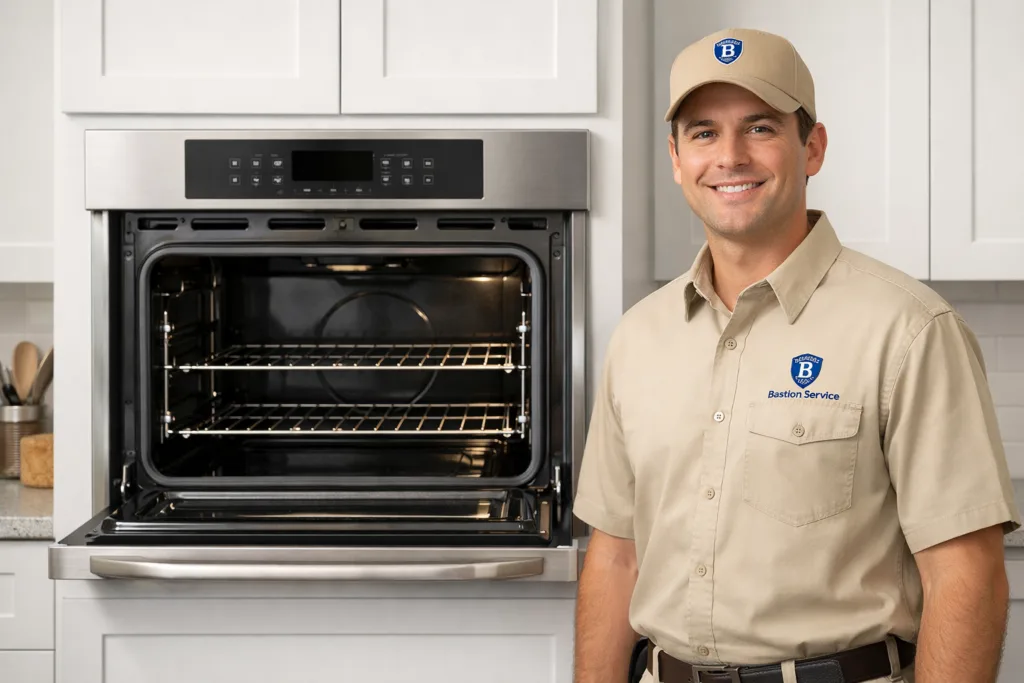
Built-in ovens tend to fail in ways that look similar at first but come from very different causes. A GE wall oven that will not heat, runs too hot, takes far too long to preheat, or stops mid-cycle may be dealing with a failed heating circuit, a sensor problem, a control issue, a door-related fault, or a power supply problem. Sorting out which system is actually failing is what makes the repair decision much easier.
Start with the exact symptom pattern
What the oven is doing matters more than the label on the display. If it never heats at all, the likely causes are different from an oven that heats once and then struggles to hold temperature. If broil works but bake does not, that points in a different direction than an oven that appears normal yet produces uneven results from rack to rack.
For homeowners in Rancho Palos Verdes, the most useful first step is to notice when the problem happens:
- During preheat only
- After the oven has been running for a while
- Only in bake mode
- Only in broil mode
- After self-clean
- Along with an error code, beeping, or a locked door
Those details often help narrow the issue before any parts are discussed.
Common GE wall oven heating problems
Oven will not heat
If the display comes on but the cavity stays cold, the problem may involve a bake element, broil element, temperature sensor, relay, control board, or a wiring failure inside the heating circuit. In some cases, the oven may look fully powered while one critical component is no longer sending or receiving the right signal.
If the unit is completely dead, the failure can be broader. Power supply issues, a tripped breaker, damaged terminal connections, thermal protection problems, or a failed control can all prevent operation.
Slow preheat
Slow preheat is often treated like a minor annoyance, but it can be an early warning sign. One weak or failed heating element may allow the oven to eventually warm up while taking much longer than normal. A sensor that is reading incorrectly can also cause the control to cycle heat at the wrong times. On some GE wall ovens, relay or control faults lead to sluggish temperature recovery and noticeably longer cooking times.
Uneven baking or temperature swings
If one side browns faster, the top cooks before the center, or familiar recipes suddenly become unreliable, the problem may be tied to temperature regulation rather than total heat loss. A drifting sensor, intermittent element operation, or an electronic control issue can all create uneven performance. Homeowners sometimes notice this first through food results rather than any obvious failure on the display.
Signs of temperature regulation problems include:
- Cookies baking unevenly on the same sheet
- Casseroles needing much longer than expected
- Food overbrowning on top while staying undercooked inside
- The oven seeming hotter or cooler than the selected temperature
Error codes, beeping, and touch control problems
When a GE wall oven starts flashing a fault code, beeping repeatedly, or freezing at the controls, the message is helpful but not always definitive. Some codes point directly to a sensor or latch problem. Others simply mean the control has detected abnormal operation somewhere in the circuit.
Common control-related complaints include:
- The keypad does not respond correctly
- The oven starts and then shuts off
- The display resets or goes blank
- The unit keeps beeping without completing a cycle
- The oven will not clear a fault state
These issues can come from the keypad interface, the electronic control, wiring connections, or related components that feed information back to the control.
Door lock and self-clean issues
Door problems are especially common after self-clean cycles. If the oven door will not unlock, will not close correctly, or the oven thinks the door is still open, the cause may be the latch motor, switch assembly, hinges, alignment, or control logic tied to the lock system.
Repeatedly forcing the door or trying multiple resets can make a smaller problem worse. A door that remains stuck in the locked position often needs proper testing of the latch and control circuit rather than guesswork.
When to stop using the oven
Some symptoms suggest it is better to stop using the appliance until it is inspected. That includes:
- Tripping the breaker
- A burning smell that does not quickly clear
- Sparking
- Visible overheating
- The oven shutting off unpredictably during use
- Error conditions that return immediately after reset
Continued use in these situations can turn one failed part into wiring damage or added stress on the control system.
Repair or replace for a built-in wall oven?
Whether repair makes sense usually comes down to the failed part, the oven’s overall condition, and whether the issue appears isolated or part of broader age-related wear. A failed sensor, heating element, latch component, or other single-function part is often a reasonable repair on a GE wall oven. The conversation changes when the appliance has repeated control failures, multiple electrical issues, or signs that more than one major component is aging out at the same time.
Built-in units also deserve a little extra thought because replacement is not always simple. Cabinet fit, trim compatibility, electrical setup, and installation timing can all affect the decision. That is why many homeowners in Rancho Palos Verdes prefer to understand the exact fault before choosing between targeted repair and full replacement.
What to note before service
A few observations can make troubleshooting more efficient:
- Whether bake, broil, or both are affected
- If the problem started suddenly or got worse over time
- Any fault code shown on the display
- Whether the breaker has tripped
- If the issue began after a self-clean cycle
- Whether the oven reaches temperature and then drops off
- How food results have changed from normal use
Even simple notes like “broil still works” or “preheat now takes twice as long” can help separate a heating element problem from a control or sensor issue.
What homeowners in Rancho Palos Verdes usually want to know
Most households are not looking for technical theory. They want to know why the oven is behaving this way, whether it is safe to keep using, and whether the fix is likely to be straightforward or expensive. With a built-in cooking appliance, that answer depends less on the symptom name and more on which function has actually failed.
For GE wall oven repair in Rancho Palos Verdes, the most practical approach is symptom-based diagnosis followed by a repair recommendation based on condition, repair scope, and whether the oven is likely to return to reliable daily use.