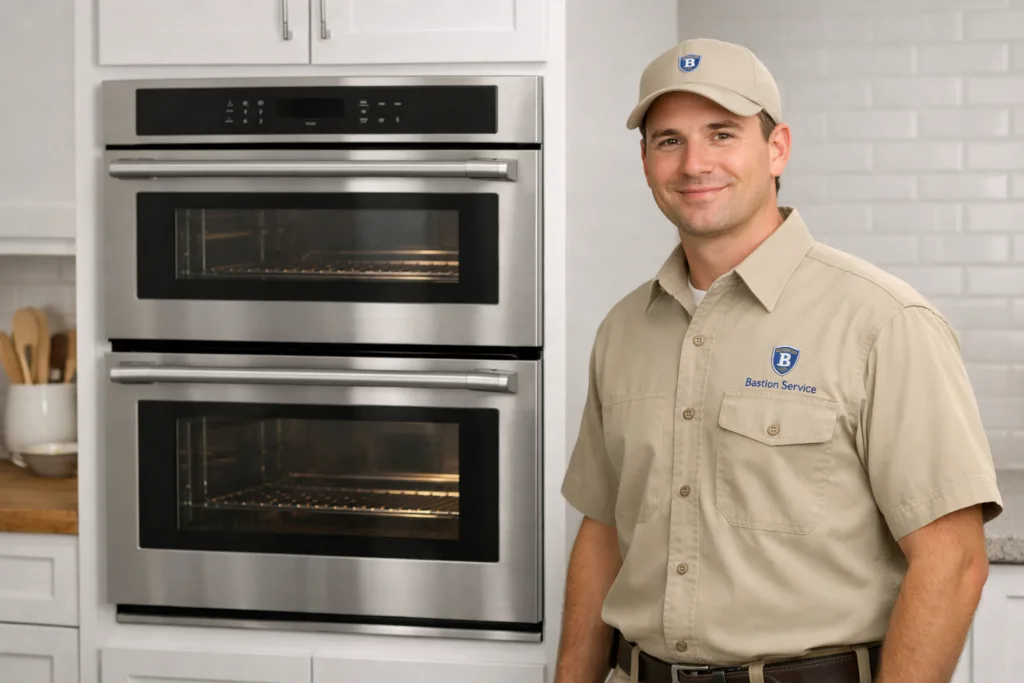
KitchenAid wall ovens can fail in ways that look similar on the surface but come from very different components. An oven that runs cool, one that overshoots temperature, and one that shuts off mid-cycle may all seem like “heating problems,” yet the repair path can involve the element circuit, sensor readings, control relays, door-lock assembly, or incoming power. For homeowners in Rancho Palos Verdes, understanding the symptom pattern is usually the fastest way to sort out what is likely repairable and what needs prompt service.
Start with the exact symptom, not just the model
Built-in ovens are less forgiving than freestanding units because access is tighter and failures can affect both cooking performance and surrounding cabinetry. That is why the most useful starting point is what the oven is actually doing:
- It turns on but does not heat
- It heats slowly or takes much longer to preheat
- It reaches temperature inconsistently
- It bakes unevenly from rack to rack
- The display is blank or the controls do not respond
- An error code appears or the oven keeps beeping
- The door will not lock or unlock after self-clean
Each of these patterns points to a different set of likely causes, and that matters when deciding whether a repair makes sense.
Common KitchenAid wall oven problems and what they often mean
Not heating at all
If the cavity stays cold even though the display appears normal, the problem may involve a failed bake element, a broil element that is not assisting during preheat, a thermal cutoff, a sensor circuit issue, or a control board that is not sending power where it should. In some cases, homeowners notice the clock and lights working and assume the oven has power, but the heating circuit itself may still have a separate failure.
Slow preheat
When preheat drags on far longer than usual, the oven may be operating with only part of the heating system working. A weak element, inaccurate sensor feedback, or a relay problem can all make the oven struggle to build and maintain heat. Slow preheat is often dismissed at first, but it is a common early warning sign before a more complete failure appears.
Uneven baking or temperature swings
Food that burns at the edges, stays pale in the center, or cooks differently depending on rack position often signals poor temperature regulation. That can come from a drifting sensor, a failing convection component on convection-equipped models, heat loss around the door, or a control issue that cycles the elements incorrectly. If recipes that normally work begin giving inconsistent results, the oven may be the reason rather than the cookware or the settings.
Display on, but cooking results are off
A wall oven can look fully operational while still performing poorly. Touch controls may respond, timers may run, and the unit may appear to preheat, but the actual cavity temperature can be significantly off from the selected setting. This kind of problem is especially frustrating because it tends to show up as ruined meals before it shows up as a complete breakdown.
Blank display or dead controls
If nothing responds, the issue may involve incoming power, a failed control, a fuse or thermal protection component, or a wiring problem. Since wall ovens are hardwired or installed in a dedicated electrical setup, a dead unit should not be treated as just a simple reset issue without checking the larger electrical picture.
Error codes and repeated beeping
KitchenAid wall ovens often store or display fault information when a sensor reads out of range, the control detects overheating, or the latch system does not complete a cycle correctly. Repeated beeping, flashing codes, or a door that stays locked after self-clean can all point to a fault that needs more than a power cycle. If the same code returns after resetting, the oven is usually telling you that a component is no longer operating within spec.
Signs the problem may be getting worse
Some oven issues remain stable for a short time, while others escalate quickly. It is smart to stop using the appliance and arrange service if you notice any of the following:
- The oven trips a breaker
- There is a burning electrical smell
- The unit shuts off during baking
- The door lock jams during or after self-clean
- The control panel flickers, resets, or behaves unpredictably
- Cabinet surfaces around the oven seem unusually hot
These symptoms can indicate more than a routine temperature issue and may lead to additional damage if the oven continues to be used.
Self-clean problems are especially common
Many wall oven service calls happen right after a self-clean cycle. High heat can stress door-lock components, sensors, thermal protection parts, and electronic controls. If the oven worked normally before self-clean but now shows an error, will not heat, or keeps the door locked, the failure may be tied to heat-related stress rather than a random coincidence.
That does not automatically mean the entire appliance is at the end of its life. In many cases, the issue is confined to a specific component or circuit affected during the cycle.
Built-in installation makes correct handling important
KitchenAid wall ovens are heavy, enclosed appliances that sit inside finished cabinetry. Proper inspection may require safely accessing the unit from the cabinet opening, checking connections, and confirming that the fault is not being caused by a hidden wiring or installation-related issue. Because of that, wall oven diagnosis is different from troubleshooting a countertop appliance or a freestanding range.
Repair or replace?
For many Rancho Palos Verdes households, the decision comes down to the scope of the failure rather than the inconvenience alone. Repair is often reasonable when the issue is limited to a heating element, sensor, latch assembly, fan motor, or a specific electrical component. Replacement becomes more likely when there are multiple failing systems, severe control problems, repeated overheating damage, or parts that are no longer practical to source.
A good decision usually considers:
- The exact component that failed
- The age and overall condition of the oven
- Whether the problem is isolated or part of a broader decline
- How reliably the oven was performing before this issue
What homeowners can note before service
Even without taking anything apart, a few observations can make the problem easier to identify. Helpful details include whether the broiler still works, whether preheat completes or stalls, whether the issue began after self-clean, and whether the display shows a consistent code. It also helps to notice if the problem affects every cycle or only certain settings like bake, broil, convection, or timed cooking.
That symptom history can reveal whether the fault is heat-production related, control related, or tied to a specific function of the oven.
KitchenAid wall oven repair focused on usable results
Most homeowners are not looking for theory; they want to know why the oven is misbehaving, whether it is safe to keep using, and whether a repair is likely to restore normal cooking. With KitchenAid wall oven repair in Rancho Palos Verdes, the answer usually comes from matching the symptom pattern to the failing system instead of replacing parts by guesswork.
When the cause is identified correctly, the next step becomes much clearer: repair the isolated fault, pause use until the issue is corrected, or consider replacement if the oven has entered a broader end-of-life stage.