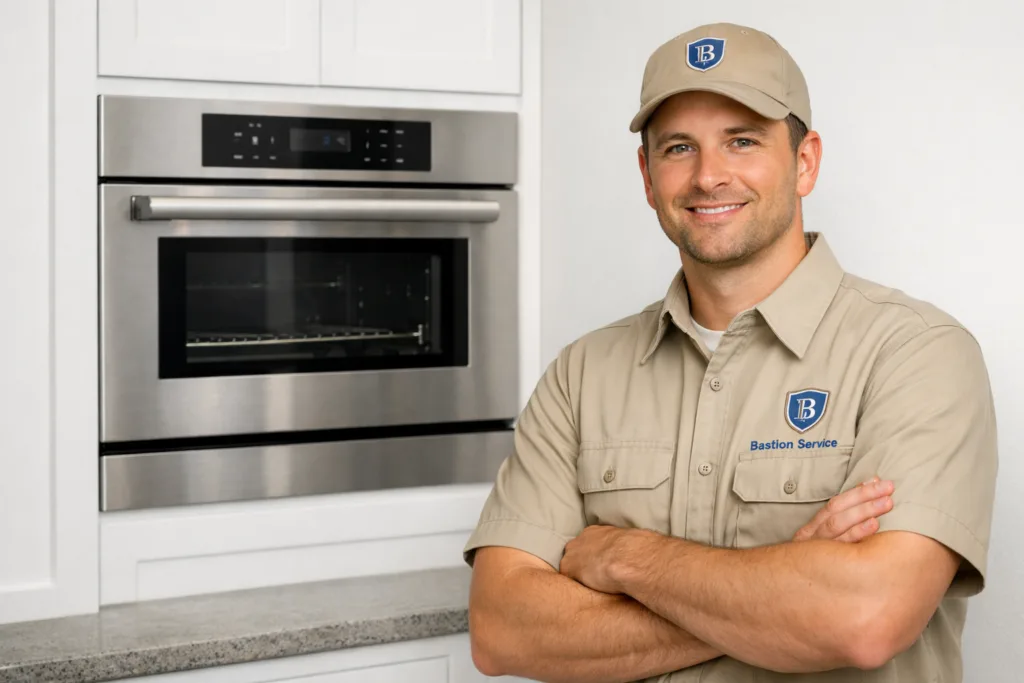
Wall oven problems are easiest to solve when the symptom is narrowed down before parts are discussed. A Thermador unit that seems to have a simple heating problem may actually be dealing with a sensor issue, a relay fault, a cooling problem, or a door-related safety interruption. Looking at the exact pattern of failure helps separate a minor repair from a larger electrical or control issue.
How Thermador wall oven problems usually show up
Most homeowners notice a wall oven problem through cooking results first. Food starts coming out unevenly, preheat takes much longer than usual, or the display behaves differently during normal use. In other cases, the oven may appear to run but never reach the selected temperature, or it may stop mid-cycle and leave meals unfinished.
With Thermador wall ovens, symptoms often overlap. A temperature complaint may come from a heating component that is weakening, but it can also come from a sensor reading incorrectly or a control board not sending power the way it should. That is why symptom-based testing matters more than guessing from one visible sign.
Common symptoms and what they may point to
Oven will not heat
If the display turns on but the cavity stays cold, likely causes include a failed bake element, broil element, thermal cutoff, sensor problem, wiring fault, or control failure. On some models, a door switch or latch-related problem can also interrupt normal operation. If the oven is completely dead, the issue may be tied to power supply, connections, or the main control.
Slow preheating
Long preheat times often mean the oven is producing some heat, but not enough. That can happen when one heating circuit is weak, when a sensor is drifting out of range, or when the control is not cycling the elements correctly. If preheat is slow and baking is uneven afterward, the problem is usually more than simple calibration.
Uneven baking or temperature swings
When one side browns faster than the other or recipes start finishing early one day and late the next, the oven may be struggling to regulate temperature. Causes can include sensor issues, failing relays, airflow problems in convection mode, or heat loss from door seal trouble. Temperature swings tend to become more noticeable with baking, roasting, and multi-rack cooking.
Error codes or display faults
Thermador wall ovens can report faults through flashing displays, beeping, locked functions, or specific codes. These alerts may relate to the sensor circuit, latch system, communication issues, or control board problems. The code is helpful, but it is only a starting point. The same code can still require testing to confirm what actually failed.
Door, hinge, or latch trouble
If the door will not close cleanly, will not unlock, or feels misaligned, the issue may involve hinges, the latch assembly, switches, or the control response to those components. A door problem can affect both safety and heating performance because some ovens will not operate normally unless the door position is recognized correctly.
Convection fan or cooling fan issues
A noisy, intermittent, or non-working fan can change how the oven cooks even when heat is present. Convection fan faults commonly lead to uneven baking. Cooling fan problems can be more serious because they can affect nearby controls and create shutdown behavior during or after cooking cycles.
Signs the oven should not keep being used
Some oven issues are mostly inconvenient, while others can worsen with continued use. It is smart to stop using the unit if it trips the breaker, overheats, shuts off unexpectedly, smells like hot wiring, shows recurring error codes, or has a door or latch condition that prevents normal operation. Repeated use in those situations can lead to added damage and a more expensive repair path.
If the oven is only slightly off temperature, many households try to work around it by changing cook times. That usually becomes frustrating quickly. Once temperature control becomes unreliable, meals are less predictable and the underlying issue rarely improves on its own.
What helps before a service visit
A few notes from normal use can make diagnosis more efficient. Helpful details include:
- Whether the problem affects bake, broil, convection, or every mode
- Whether the oven reaches temperature eventually or stays far below the setting
- Any error code, flashing message, or unusual beeping
- Whether the failure began suddenly or became worse over time
- Whether one cavity works and the other does not on a double wall oven
- Any recent self-clean cycle before the problem started
Those details can point the repair in the right direction much faster than a general description like “not working right.”
Repair decisions: when fixing the oven makes sense
Many Thermador wall oven problems are repairable, especially when the issue is limited to a sensor, heating element, fan motor, latch component, switch, or a contained electrical fault. In those cases, the best outcome often comes from confirming the failed part, checking related circuits, and verifying normal temperature performance after the repair.
Replacement becomes a more serious consideration when the oven has several major faults at once, has a pattern of repeat breakdowns, or needs costly control-related parts on top of significant wear. For homeowners in Rancho Palos Verdes, the useful question is not simply whether the oven can be fixed, but whether the repair cost and appliance condition make that fix worthwhile.
Why wall oven temperature complaints are often misread
Temperature complaints are easy to oversimplify. A homeowner may assume the oven needs calibration because it seems too hot or too cool, but calibration will not solve a weak heating circuit, a drifting sensor, or a fan problem that changes airflow across the cavity. In the same way, a unit that appears to have a bad control board may actually be reacting to a separate component sending the wrong signal.
That is why good diagnosis starts with the symptom pattern, then moves into testing. It prevents unnecessary part replacement and gives a much clearer picture of what the oven actually needs.
Thermador wall oven service for Rancho Palos Verdes homes
In Rancho Palos Verdes homes, wall ovens are often used heavily for everyday meals, weekend cooking, and holiday hosting, so even a small performance problem can become disruptive fast. A repair approach that focuses on the exact failure helps reduce trial-and-error and gives homeowners a better basis for deciding whether to proceed.
If your Thermador wall oven is not heating correctly, is baking unevenly, is taking too long to preheat, or is showing control or display issues, the next step is to identify the cause and match the repair to the actual condition of the appliance. That makes it easier to restore normal cooking performance and avoid spending money on the wrong fix.