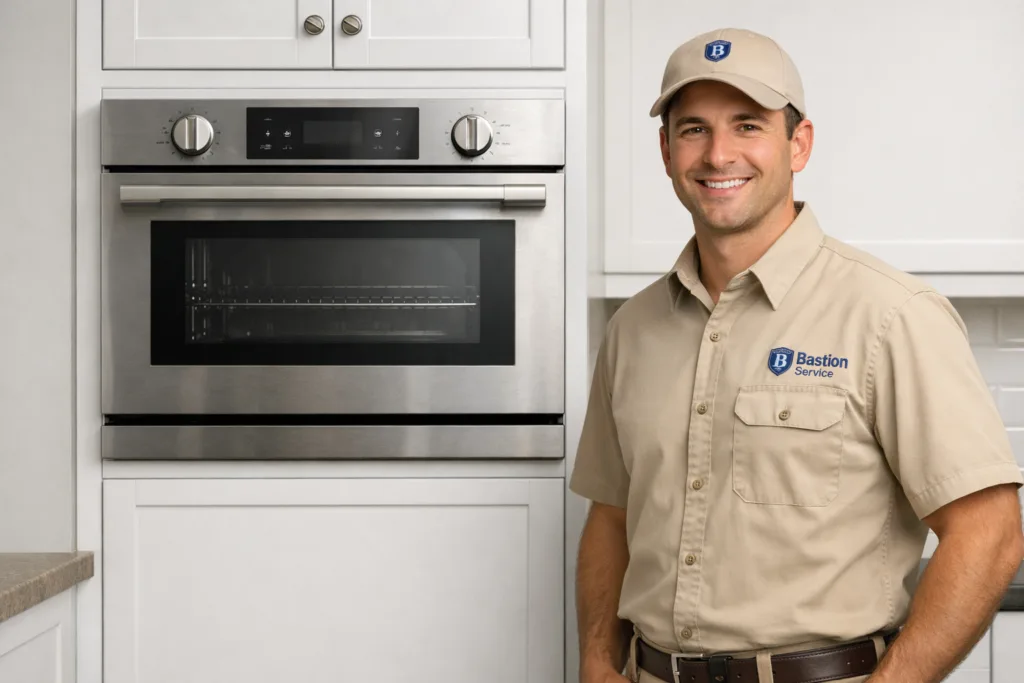
Cooking problems with a built-in oven are rarely random. The pattern usually tells the story: whether the oven never heats, heats too slowly, runs hotter than the setting, or works one day and fails the next. For Summit wall ovens in Rancho Palos Verdes homes, symptom-based troubleshooting is the fastest way to separate a minor issue from a more involved repair.
Start with the exact symptom pattern
A wall oven can fail in ways that look similar from the outside but come from different internal causes. An oven that is completely dead may have a power, fuse, control, or wiring issue. An oven that turns on but does not bake correctly may be dealing with a weak element, temperature sensor problem, relay failure, or control fault. Noting what the oven does before, during, and after preheat helps narrow the repair path.
Helpful details include whether the broil function still works, whether the display stays on during the problem, whether the unit trips a breaker, and whether the failure happens only after the oven gets hot. Those clues often matter more than the age of the appliance.
Common Summit wall oven issues in Rancho Palos Verdes homes
Oven will not heat
If the control panel lights up but the cavity stays cold, the problem may be in the bake circuit, broil circuit, sensor feedback, or electronic control. In some cases, one heating function fails while the other still works. That difference can point toward a specific failed component instead of a complete system breakdown.
Slow preheat
Long preheat times often mean the oven is heating, but not at full output. A weakened element, inaccurate sensor reading, or control issue can all cause preheat to drag on. Homeowners may first notice this as meals taking longer than recipe times or as an oven that seems to struggle reaching higher temperatures.
Uneven baking
When one tray browns faster than another or the back of the oven cooks differently from the front, the cause may be inconsistent heat production, temperature regulation problems, or poor airflow inside the cavity. This symptom is especially frustrating because the oven still appears to work, just not reliably enough for day-to-day cooking.
Temperature swings
Some normal cycling is expected, but wide swings can lead to overcooked edges, underdone centers, and unpredictable results. A drifting sensor, failing control board, or relay problem may cause the oven to overshoot or undershoot the selected temperature. If the issue appears across several recipes, it is usually more than simple calibration preference.
Controls not responding
Unresponsive buttons, a blank display, intermittent beeping, or random error codes can point to interface or control failures. Sometimes the oven starts normally but loses response mid-cycle. Other times the display works while temperature commands do not register correctly. These issues usually need electrical testing rather than guesswork.
Oven shuts off during use
If the oven starts heating and then powers down, the problem may involve overheating protection, unstable wiring connections, or a control fault that appears only once internal temperatures rise. This kind of intermittent failure can become more frequent over time and may eventually turn into a complete no-heat condition.
Door not sealing properly
A door that does not close evenly can let heat escape and make the oven seem weaker than it really is. Worn hinges, gasket problems, or latch issues can affect cooking performance and, on some models, self-clean operation. If you notice heat leaking around the frame or cooking times getting longer, the door assembly deserves attention.
What homeowners can safely observe before service
Without disassembling the appliance, a few simple checks can make the problem easier to describe:
- Confirm whether the display and interior light work.
- Test whether bake and broil fail the same way or differently.
- Notice whether preheat completes, stalls, or takes much longer than normal.
- Pay attention to error codes, flashing messages, or repeated beeping.
- Look for a door that sits unevenly or does not seal tightly.
- Note whether the issue started suddenly or became worse over several weeks.
These observations help distinguish a heating problem from a control problem and a temperature complaint from a door-seal or sensor issue.
When to stop using the wall oven
It is best to stop normal use if the oven is tripping breakers, shutting off during cooking, overheating, giving off an electrical burning smell, or failing to regulate temperature in a way that could scorch cookware or ruin food repeatedly. Continuing to use the appliance under those conditions can put extra stress on controls, wiring, and heating components.
If the unit is gas-powered and there is a strong or persistent gas odor, treat that as a safety issue first rather than a routine repair appointment. Once the immediate hazard has been addressed, the appliance itself can be evaluated.
Repair or replacement: how the decision usually works
Many wall oven problems are still worth repairing, especially when the failure is limited to a sensor, heating element, door component, or a single control-related issue. Built-in appliances are often replaced less casually than freestanding units because installation and fit matter as much as the appliance itself.
Replacement becomes more likely when there are multiple major failures, severe internal damage, repeated breakdowns, or parts limitations that make the repair path unreasonable. For most households in Rancho Palos Verdes, the better choice depends on the specific fault, the overall condition of the oven, and whether the repair is likely to restore consistent everyday performance.
Why accurate diagnosis matters with Summit wall ovens
Replacing parts based only on the most obvious symptom can get expensive quickly. A no-heat complaint might be caused by an element, but it could also come from a control that never sends power to that element. An oven that seems too hot may not need recalibration if the sensor reading is already inaccurate. Testing the actual failure is what prevents unnecessary parts replacement.
For homeowners trying to plan around meals, family schedules, and kitchen downtime, that matters. The right diagnosis helps set realistic expectations about repair scope, likely parts involved, and whether the best next step is service, temporary non-use, or full replacement.
What to note when scheduling service
Before booking Summit wall oven repair in Rancho Palos Verdes, it helps to have the model information ready and a short description of the symptom history. Mention whether the oven is completely dead, partially heating, showing an error code, or failing only after preheat. If food has been consistently undercooked or overcooked, say so. That kind of detail can make the service visit more efficient and keep the repair focused on the most likely causes first.