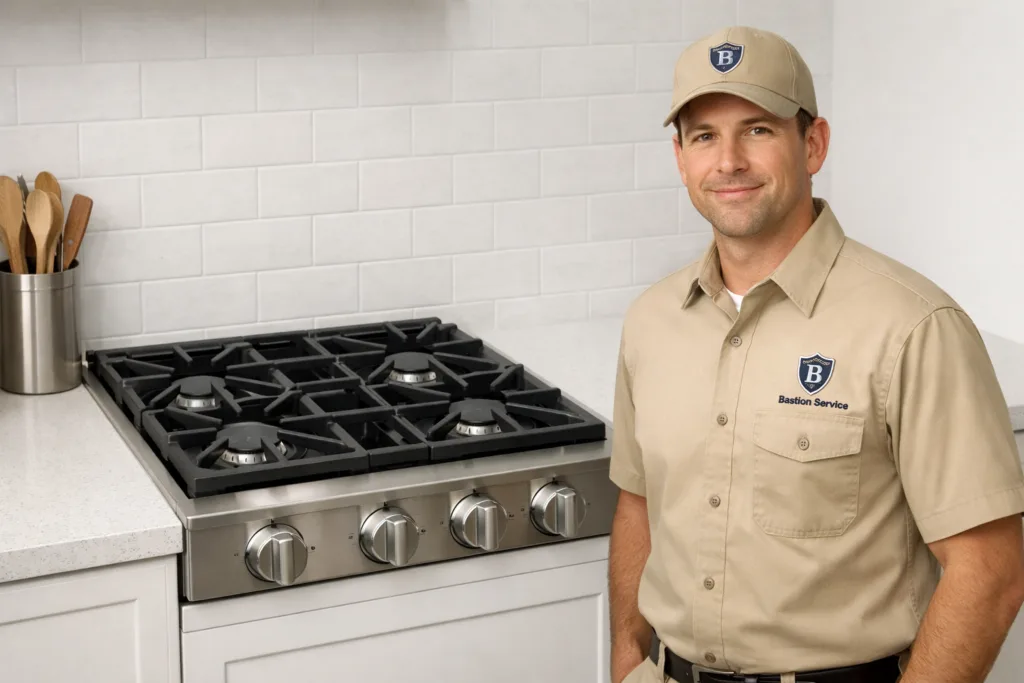
Cooktop problems rarely stay the same for long. A burner that only misfires once in a while can turn into a no-light condition, and a control that feels inconsistent can become a daily frustration when heat output no longer matches the setting. With Wolf units, the symptom pattern matters because ignition, burner performance, controls, and power issues can look similar from the outside while having very different repair paths.
Common Wolf cooktop symptoms and what they may mean
Most service calls start with one of a few recognizable issues. The helpful part is not just naming the symptom, but noticing when it happens, whether it affects one burner or several, and whether the problem is getting worse.
Burner clicks but will not ignite
If the burner keeps clicking without lighting, the issue may be as simple as moisture or misalignment, or it may involve the electrode, ignition switch, spark module, or another part of the ignition system. When only one burner is affected, the problem is often limited to that burner assembly. When multiple burners behave the same way, the fault may be tied to a shared component.
Repeated failed ignition attempts should not be ignored. If gas is present but the flame does not catch normally, stop trying to relight it over and over. A persistent gas odor should be treated as a safety concern first.
Burner lights, then keeps clicking
This is a common complaint on gas cooktops. In many cases, the burner ignites but the clicking does not stop, which can point to moisture after cleaning, residue around the ignition area, or a switch issue that keeps the spark system active. Sometimes the symptom appears only on one knob position; other times it continues until power is interrupted.
If the clicking started after a spill, the cooktop may need thorough drying and inspection. If the problem returns repeatedly, a deeper repair is usually needed.
Flame is weak, uneven, or too high
Uneven heating often shows up during normal cooking before it becomes obvious at a glance. Simmer settings may stop holding steady, one side of the pan may run hotter, or the burner may seem stronger than usual even at lower settings. Possible causes include blocked burner ports, an improperly seated cap, control-related issues, or gas flow problems within the appliance.
Even if the burner still works, inconsistent heat is worth addressing early. It affects cooking results and can signal wear that may spread to other components if the problem is left alone.
Electric element does not heat or cycles incorrectly
On electric Wolf cooktops, a dead zone, slow heating, or an element that cuts in and out may point to a faulty element, switch, wiring problem, or control issue. If the cooktop powers on but one section does not respond correctly, the failure is often isolated rather than a sign that the whole unit has failed.
Intermittent heating deserves attention because it tends to worsen over time. What starts as delayed heating can end with a burner that no longer works at all.
Controls do not respond normally
When knobs feel loose, settings do not match actual heat output, or touch controls respond inconsistently, the issue may involve the user interface, internal switches, or related electrical components. These problems can be easy to dismiss at first because the cooktop may still operate, just not predictably.
In a busy household, that unpredictability becomes the real problem. Reliable temperature control is part of normal cooking, especially when using low heat, simmer functions, or multiple burners at once.
Signs the problem is getting more serious
Some symptoms suggest the cooktop should be checked sooner rather than later. These include:
- burners that take multiple tries to light
- clicking that continues after the flame appears
- heat settings that no longer feel accurate
- one burner consistently overheating or underheating
- electrical tripping or intermittent power loss
- visible cracking on a glass surface
- burner components that no longer sit securely in place
When a symptom becomes consistent instead of occasional, the odds of a parts-related failure go up. That is usually the point where repair decisions become easier because the problem can be reproduced and tested more accurately.
Cracked glass and surface damage
If a Wolf cooktop has a cracked glass surface, service should not be delayed. Cracks can expand with heat and use, and the risk is not only cosmetic. Surface damage may affect safe operation, cleaning, and the stability of cookware on the appliance.
Small chips around the edge and full visible cracks are not the same thing, but both deserve evaluation if they affect how the cooktop sits, heats, or withstands normal use. Continued cooking on a damaged surface can lead to a more expensive repair outcome.
What to check before scheduling repair
There are a few reasonable first checks homeowners can make without guessing at parts:
- make sure burner caps are correctly seated
- look for food residue blocking burner ports
- allow the cooktop to fully dry after cleaning
- confirm the unit has power if ignition or controls are not responding
- note whether the problem affects one burner or several
If the symptom remains after those basics, it usually points beyond routine cleaning or positioning. That is when service becomes the more efficient next step.
When it makes sense to stop using the cooktop
Some problems are inconvenient but manageable for a short time, while others are a reason to stop using the affected burner or the appliance altogether. Pause use if you notice a strong gas smell, delayed ignition, uncontrolled flame behavior, repeated breaker trips, visible sparking where it should not occur, or a cracked cooking surface.
These conditions can lead to added wear and make the final repair more involved. They also make day-to-day cooking less predictable, which is the opposite of what a premium cooktop should deliver.
Repair or replace?
Many Wolf cooktop issues are repairable when the problem is isolated to ignition parts, switches, controls, wiring, burner assemblies, or a damaged surface component. Repair is usually the better path when the unit is otherwise in good condition and the failure is limited to one system.
Replacement becomes more likely when several systems are failing at once, the appliance has a history of recurring breakdowns, or the required parts and labor start approaching the value of keeping the existing unit. Age matters, but condition matters more. A well-kept cooktop with one defined fault is very different from a unit showing broad decline across ignition, controls, and surface condition.
What homeowners in Rancho Palos Verdes can expect from service
For households in Rancho Palos Verdes, the most useful service visit is one that follows the actual symptom instead of assuming the cause from appearance alone. That means checking burner behavior, ignition response, control accuracy, heat consistency, and whether the fault is isolated or shared across the cooktop.
That kind of clear diagnosis helps answer the questions homeowners actually care about: what failed, whether the repair is practical, and what needs to happen to restore normal cooking without wasting time on unnecessary part replacement.
Why early attention usually saves hassle
A Wolf cooktop often gives warning signs before it stops working completely. Intermittent clicking, delayed ignition, uneven flame, and inconsistent controls are all early indicators that something is changing inside the appliance. Addressing those symptoms before they become total failure usually makes the repair process simpler and helps avoid disruptions to everyday cooking in Rancho Palos Verdes homes.