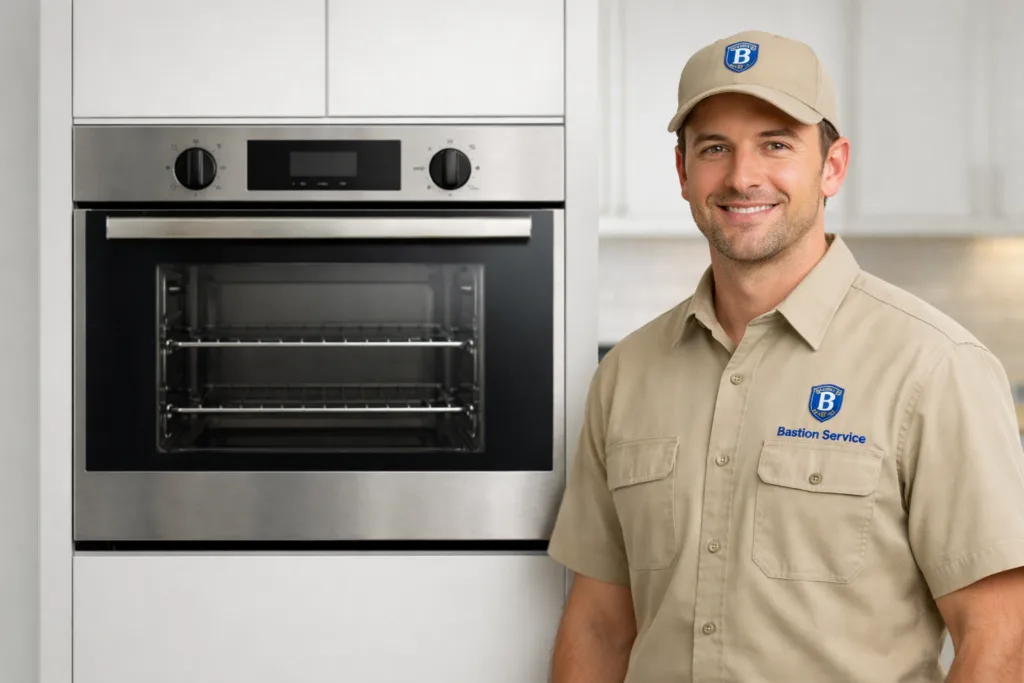
Oven problems rarely stay minor for long. A unit that starts with slow preheat or uneven baking can progress into repeated temperature swings, incomplete cooking, or a complete loss of heat. With Asko ovens, the most useful approach is to match the symptom pattern to the components most likely involved so the repair decision is based on evidence rather than part-swapping.
Common Asko oven problems in Rancho Park homes
Most household oven issues show up during everyday cooking: dinner takes longer than expected, baked foods brown unevenly, or the display appears normal even though the cavity is not heating correctly. In Rancho Park homes, these symptoms often point to one of a few systems inside the oven, including the heating circuit, temperature sensing, door and latch assembly, convection components, or electronic controls.
Oven not heating
If the oven powers on but stays cool, the fault may involve the bake element, broil element, igniter on gas models, a thermal cutoff, wiring, or the control sending power to the wrong place or not sending it at all. A dead oven can also be caused by a power supply issue, which is why testing matters before assuming a major internal failure.
Slow preheat or failure to reach the set temperature
An oven that eventually warms up but takes far too long often has a weak heating component, a sensor reading inaccurately, or a relay/control issue that prevents normal heat cycling. This symptom can be frustrating because the oven still appears to work, yet cooking times drift longer and results become unreliable.
Uneven baking and hot spots
When one side of a tray cooks faster than the other, or one rack browns while another lags behind, the issue may involve partial element failure, poor airflow, a convection fan problem, or a calibration issue. Homeowners usually notice this first with cookies, casseroles, and sheet-pan meals where results should be consistent from front to back.
Temperature swings during cooking
If the oven runs too hot, too cool, or seems to overshoot and then drop off, the cause may be a sensor drifting out of range, a control issue, or intermittent heating behavior. This kind of fault can be especially noticeable during roasting and baking, where precise temperature matters more than in short reheating cycles.
Control panel and display problems
Unresponsive buttons, flashing error codes, blank displays, and random shutoffs can point to the user interface, main control board, wiring connections, or moisture and heat stress inside the control area. These faults often feel unpredictable at first, but patterns usually emerge during testing.
Door, latch, and self-clean related issues
If the door will not close fully, the lock stays engaged, or problems start right after a self-clean cycle, there may be strain on hinges, latch components, switches, or nearby electronics. A door that does not seal correctly can also affect heating performance by allowing heat to escape during operation.
How symptom-based diagnosis helps narrow the cause
Two ovens can show the same symptom and need completely different repairs. For example, “not heating” might be caused by a failed element, but it could also come from a control relay that is not energizing the element, a sensor issue that disrupts cycling, or a wiring fault. In the same way, “uneven baking” may sound like a temperature problem when the real issue is airflow or a failing convection fan.
That is why a service visit should evaluate how the oven starts, how quickly it preheats, whether it cycles normally, how the controls respond, and whether the door and cavity components are working together as intended. This helps avoid replacing parts that are not actually responsible for the problem.
Signs the oven should not be ignored
Some symptoms are more than a convenience issue. It is smart to stop putting off service when you notice:
- Repeated failure to preheat
- Food coming out undercooked even after longer bake times
- Burning on top while the center remains raw
- Shutoffs during a cooking cycle
- Controls that freeze, flash, or reset
- A door that will not shut tightly or unlock properly
- Tripped breakers or intermittent power loss during use
These problems can waste food, disrupt meal planning, and in some cases place more stress on already-failing components.
What Rancho Park homeowners can check before scheduling repair
There are a few simple observations that can help clarify what is happening, without disassembling the appliance. Check whether the oven is slow every time or only on certain settings, whether broil works when bake does not, whether the interior light and display behave normally, and whether the door closes flush against the frame. If convection settings produce noticeably different results than standard bake, that can also be useful information.
It is also worth noting whether the problem began after a power interruption, a self-clean cycle, or a recent move or installation change. Details like these can make the diagnosis more efficient once service begins.
When repair is usually worth it
Many Asko oven issues are practical to repair when the failure is limited to one system and the rest of the appliance is in good condition. Heating components, sensors, certain latch parts, and some control-related issues can make sense to address if the oven has otherwise been performing well.
Replacement becomes a more realistic discussion when there are multiple failures at once, chronic electronic issues, significant wear across the appliance, or repair costs that are too close to the value of keeping the current oven in service. The right choice depends on the confirmed fault, overall condition, and what level of reliability the household needs from the appliance.
Gas odor and electrical safety concerns
If you have a gas oven and smell gas, stop using the appliance immediately. If the odor is strong or does not clear, leave the area if necessary and contact the gas utility or emergency services before arranging appliance repair.
If the oven trips the breaker, sparks, loses power intermittently, or shows signs of overheating around the control area, it should also be taken seriously. Those symptoms should be evaluated before the oven is used again for routine cooking.
What to expect from an Asko oven service visit
A productive appointment should answer more than “what part failed.” It should clarify whether the heating system is operating correctly, whether the temperature reading matches actual oven performance, whether controls are responding properly, and whether any door or latch problem is contributing to the complaint. It should also help the homeowner understand whether the appliance can be used safely while waiting on parts, or whether it should remain off.
For households in Rancho Park, the goal is to restore predictable cooking performance, not just temporary operation. Whether the issue is no heat, poor baking results, control trouble, or a door problem, the best next step is one based on the oven’s actual condition and the way it is used day to day.