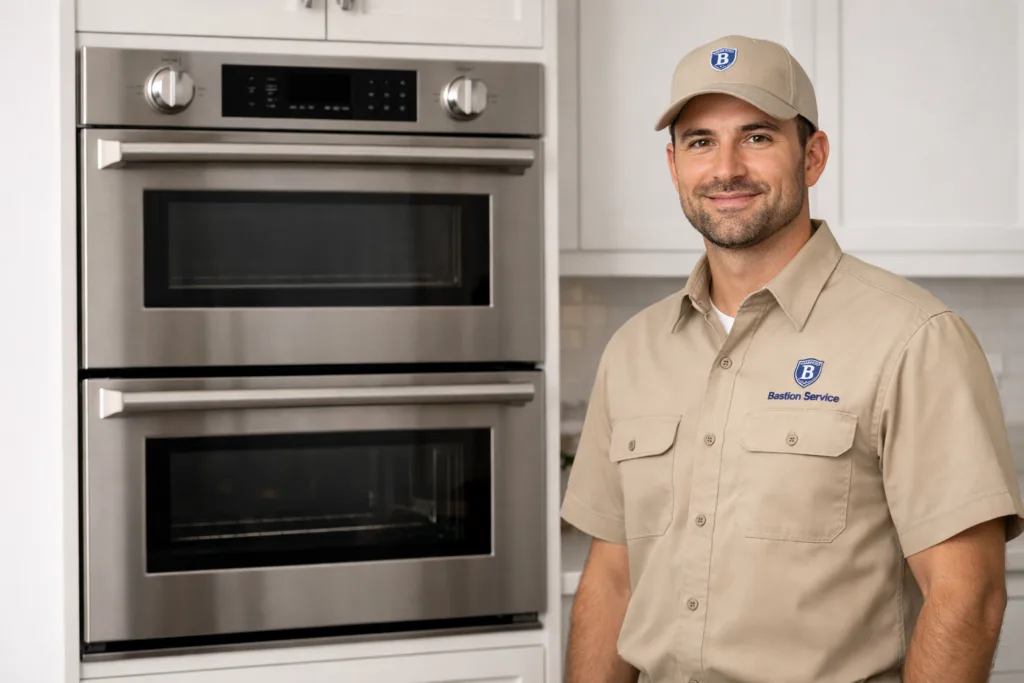
Symptom patterns that matter with Monogram oven problems

Monogram ovens can fail in ways that look similar on the surface but come from very different causes. An oven that never heats, one that heats slowly, and one that reaches temperature but cannot hold it each point to a different diagnostic path. Looking at how the problem shows up during preheat, baking, broiling, or convection use often says more than the display alone.
For homeowners in Rancho Park, the most useful observations usually include whether the issue happens every cycle, whether broil still works when bake does not, whether the oven sounds different than usual, and whether the problem started suddenly or developed over time. Those clues help separate a failed heating component from a sensor problem, control fault, airflow issue, or power-related interruption.
Common Monogram oven issues and what they may indicate
Oven will not heat at all
If the controls respond but the cavity stays cold, likely causes can include a failed bake element, weak or failed igniter on gas models, a temperature sensor fault, relay failure, or an electronic control problem. If the oven is completely dead, diagnosis may start with incoming power, breakers, terminal connections, fuses, and the user interface.
This symptom is usually straightforward for the household: the oven simply cannot be used. What matters is confirming whether the fault is limited to one part or whether a larger electrical or control issue is preventing normal operation.
Slow preheat
Slow preheat is one of the most common complaints because the oven may still appear to work, just poorly. A weak igniter, partially failing element, sensor drift, or control issue can all lengthen preheat time. In some cases, the oven eventually reaches temperature but does so inefficiently and inconsistently.
If preheat has gradually become longer over weeks or months, that often points to a component weakening rather than a sudden total failure. It is worth addressing before the oven moves from inconvenient to unusable.
Uneven baking or hot and cold spots
When cookies brown more on one side, casseroles finish unevenly, or the top cooks much faster than the center, the problem may involve weak heat output, a convection fan issue, sensor inaccuracy, or heat loss around the door. Rack position and cookware can affect results, but a sudden change in performance usually suggests the appliance itself is no longer regulating heat correctly.
Uneven results are especially frustrating because they can mimic recipe problems. If familiar dishes stop turning out the way they used to, the oven should be evaluated rather than blamed on ingredients or timing alone.
Temperature swings during cooking
Some cycling is normal, but wide temperature swings are not. If the oven seems too cool one day and too hot the next, or if it starts normally and then struggles to maintain heat, possible causes include a drifting sensor, failing control board, loose wiring, or relays not responding consistently.
This is the kind of issue that can be difficult to judge by touch or by the display reading alone. The appliance may report one temperature while the actual cavity temperature behaves very differently.
Oven overheats or burns food
An oven that overshoots the set temperature can ruin meals quickly and may place extra stress on internal components. Common causes include sensor faults, calibration problems, or a control failure that keeps a heating circuit energized longer than it should be.
If pans, liners, or food are coming out scorched despite normal settings, it is best not to keep testing the appliance through repeated use. Overheating is more than a cooking inconvenience when the oven can no longer regulate itself properly.
Control panel problems, beeping, or error codes
Touchpad failures, unresponsive buttons, flashing codes, and repeated beeping may point to interface faults, communication problems between components, or a deeper issue affecting temperature sensing or oven safety functions. Some codes relate to a specific circuit, while others require a broader check of the control system.
When controls behave unpredictably, it becomes harder to trust time and temperature settings. Even if the oven still heats, unreliable controls can make routine cooking frustrating and inconsistent.
How bake, broil, and convection symptoms help narrow the cause
Comparing cooking modes can reveal a lot. If bake fails but broil still works, the problem may be isolated to the bake circuit or a related control function. If both bake and broil are weak, the issue may be tied to power supply, sensor readings, or the main control. If convection results changed but standard baking seems close to normal, airflow or fan operation becomes more likely.
These distinctions matter because they prevent guesswork. A symptom-based approach reduces the chance of replacing the wrong part and helps determine whether the repair path is simple, moderate, or more involved.
When continued use can make the situation worse
Some oven problems stay stable for a while, but many do not. A weak igniter or heating component can continue to degrade. A door that does not seal well can force the oven to work harder. Overheating can damage finishes, racks, and nearby internal parts. Intermittent electrical faults can become complete failures with little warning.
If the oven is shutting off during cooking, struggling to preheat, tripping a breaker, or showing recurring fault codes, stopping regular use is usually the safer choice until the problem is identified. That is particularly true when temperature control has become unpredictable.
Helpful checks homeowners can make before scheduling service
Without disassembling anything, there are a few simple observations that can help make the problem clearer:
- Whether the issue happens on every cycle or only occasionally
- Whether bake, broil, and convection all behave the same way
- Whether preheat is slow, incomplete, or stops partway through
- Whether the display shows a code or resets unexpectedly
- Whether the oven door closes firmly and seals evenly
- Whether food is undercooked, burned, or uneven despite familiar settings
These details often shorten diagnosis because they show whether the problem is tied to heat production, heat retention, controls, or electrical reliability.
Repair or replacement: what usually makes sense
Many Monogram oven issues are repairable, especially when the failure is limited to a heating element, igniter, temperature sensor, fan, latch assembly, or a specific control-related component. Repair is often the practical option when the oven otherwise fits the kitchen well and the issue is confined to one system.
Replacement becomes more worth considering when there are multiple major failures, repeated electronic problems, severe internal damage, or when the total repair path is no longer reasonable for the condition of the appliance. Age can be a factor, but it is rarely the only one. The bigger questions are overall condition, parts availability, and whether the appliance is likely to return to stable long-term performance after service.
What a useful service visit should clarify
A worthwhile diagnosis should explain more than the surface symptom. It should identify which component or system is responsible, whether the failure is isolated or part of a broader pattern, and whether normal use could worsen the problem. For homeowners in Rancho Park, that kind of explanation makes the next step easier, especially when the oven is central to everyday meals and baking.
When a Monogram oven starts turning routine cooking into guesswork, the goal is not just to get heat back. It is to restore consistent, predictable operation so temperatures make sense again, preheat behaves normally, and the appliance can be used with confidence.