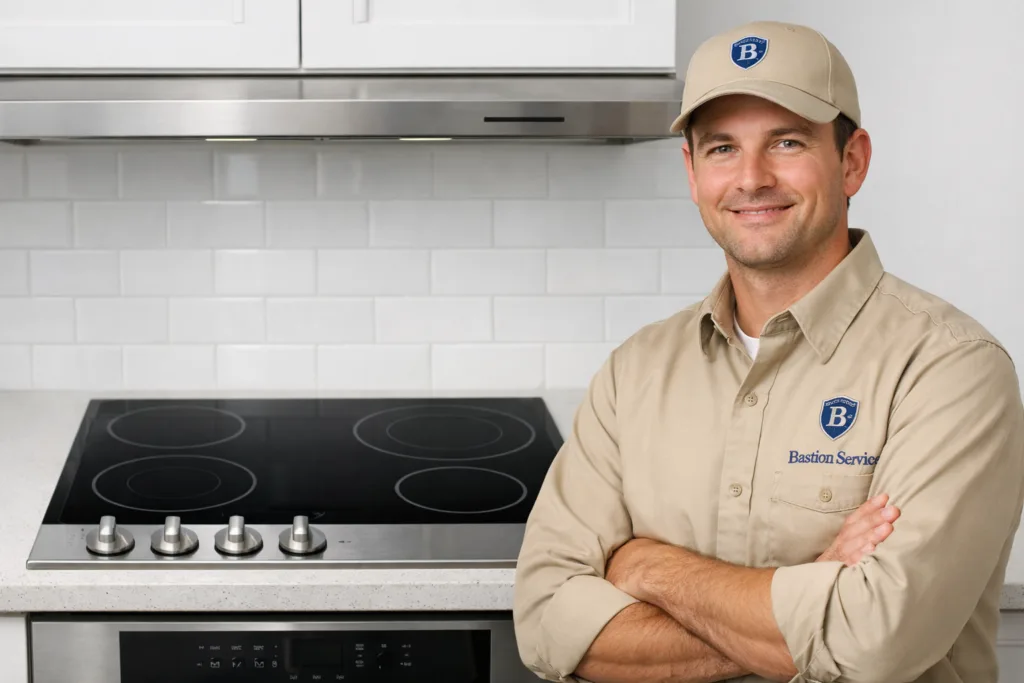
Cooktop problems tend to show up in small but disruptive ways: a burner that takes too long to heat, an igniter that clicks over and over, or a control that no longer matches the heat you expect. On Whirlpool units, those symptoms can come from different failures, so the most useful first step is identifying whether the issue is tied to ignition, heat control, surface damage, wiring, or the incoming power supply.
How Whirlpool cooktop issues usually present
Many homeowners first notice a performance change rather than a total failure. A burner may still work, but not in the same way it used to. That often matters because partial operation can point to a specific component beginning to fail instead of a full-system problem.
Common warning signs include:
- Burners that heat unevenly or more slowly than normal
- Gas burners that click repeatedly or fail to light
- Controls that do not adjust heat correctly
- One burner running much hotter than the selected setting
- A cooktop that loses power during use
- Visible cracks, chipped areas, or loose surface components
When the symptom is consistent, diagnosis is usually more straightforward. Intermittent problems can still be repairable, but they often require closer testing because the cooktop may behave normally for part of the visit.
Common Whirlpool cooktop problems and what they may mean
Burner clicks but does not ignite
On gas models, repeated clicking without ignition can be caused by moisture, dirty burner ports, a misaligned burner cap, a weak igniter, or a spark system issue. If the clicking is frequent but lighting is unreliable, it is better not to keep retrying the burner over and over, since that can add wear and make the original symptom harder to track.
If there is a strong or persistent gas odor, stop using the appliance and address the safety concern before planning repair.
Burner lights but the flame is weak or uneven
A burner that ignites but does not heat well may have blocked ports, burner head damage, or another issue affecting flame distribution. With electric Whirlpool cooktops, similar complaints can point to a weak element, a failing switch, or wiring trouble that limits output.
Uneven heating often shows up in everyday cooking before anything fully stops working. Pans may take longer to boil, simmer settings may become inconsistent, or one side of the cookware may heat more than the other.
Burner gets too hot and will not regulate
When a burner seems stuck on high or does not respond to lower settings, the problem is often tied to the control side of the system rather than the burner alone. Infinite switches, related control components, or wiring faults are common causes. This is not a symptom to ignore, because overheating can damage cookware and put extra stress on the cooktop surface.
Cooktop has no power
If the entire unit appears dead, the failure may involve the household power supply, terminal connections, internal electrical parts, or the control assembly. A cooktop with no power is a good example of why part guessing is risky. What looks like a bad burner from the surface may actually be a broader electrical issue.
Glass top is cracked or the surface is damaged
On smooth-top Whirlpool models, visible cracking is more than a cosmetic concern. Surface damage near active heating zones or controls can affect safe operation and should be inspected before the cooktop is used again. Even minor-looking cracks can spread with heat and normal kitchen use.
Symptoms that usually deserve prompt service
Some problems are mostly inconvenient. Others can lead to additional damage if they are left alone. In Rancho Palos Verdes homes, it usually makes sense to schedule service when the problem is repeatable, affects daily cooking, or creates uncertainty about safe use.
- A gas burner fails to ignite reliably
- The igniter keeps clicking after the flame appears
- One burner overheats or does not turn down
- Heat output changes unexpectedly from one use to the next
- The cooktop shuts off, trips power, or loses function during use
- The glass surface is cracked, separating, or visibly stressed
Acting early can help prevent damage to switches, wiring, and surrounding parts that may be affected by excess heat or repeated failed ignition attempts.
When to stop using the affected burner
Not every problem means the whole cooktop must stay off, but some symptoms are signs to pause use right away. If a burner will not regulate temperature, remains hotter than expected, or behaves unpredictably, continued use can make the repair larger and the appliance less safe to operate.
For gas models, unreliable ignition or abnormal flame behavior should be taken seriously. For electric models, stop using any burner that appears stuck on, cycles incorrectly, or remains excessively hot after the setting is lowered. If the issue is isolated to one burner, avoiding that burner until inspection is often the safest household choice.
Repair or replacement: what usually drives the decision
Many Whirlpool cooktop repairs make sense when the fault is limited to one component or one system. Igniters, switches, burner assemblies, heating elements, and related controls are often the kinds of problems that can be addressed without replacing the entire appliance.
Replacement becomes more likely when the cooktop has major glass damage, multiple burner failures, recurring electrical problems, or broader wear across the controls and surface. Age can be part of the conversation, but it is usually less important than the overall condition of the unit and the number of systems involved.
For homeowners in Rancho Palos Verdes, the best decision usually comes down to three things:
- Whether the failure is isolated or widespread
- The condition of the cooktop surface and controls
- Whether the repair solves the present problem without chasing several others soon after
What a service visit should help you understand
A useful appointment should do more than identify a bad part. It should explain why the symptom is happening, whether the cooktop can be used safely in the meantime, and whether the repair path is sensible for the condition of the appliance. That gives you a practical repair plan based on the exact symptom pattern instead of trial-and-error part replacement.
When the cause is clearly identified, it becomes much easier to decide whether to move forward with Whirlpool cooktop repair in Rancho Palos Verdes or start planning for replacement. Either way, the goal is the same: restore safe, predictable cooking without unnecessary repeat problems.