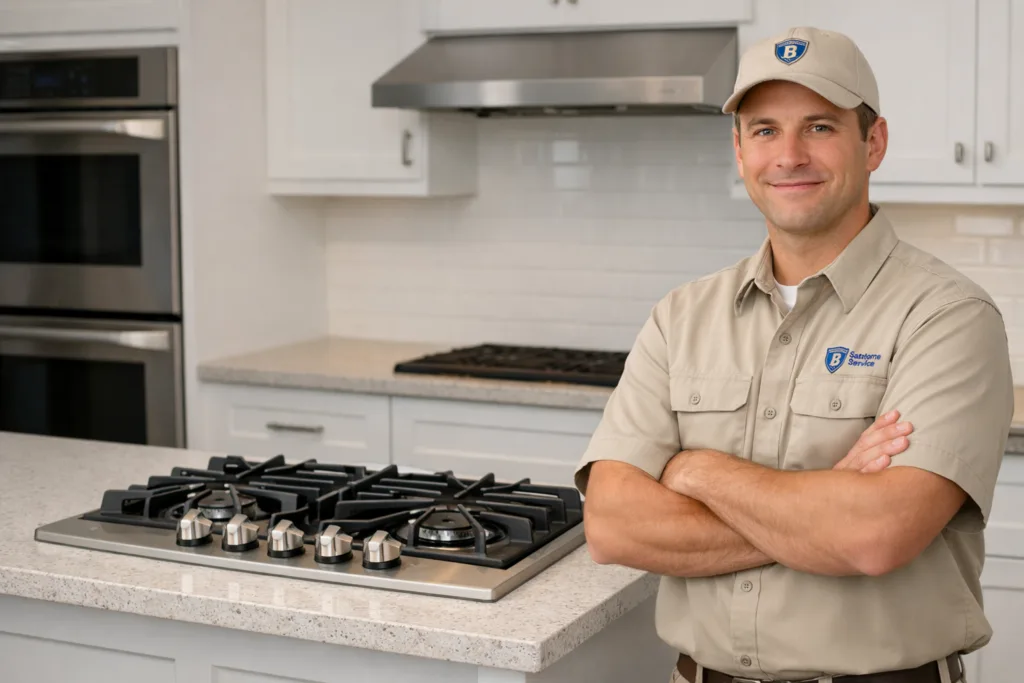
Cooktop problems often look simple from the surface, but the exact symptom usually tells you where the fault is most likely to be. On a Kenmore cooktop, one burner failing is different from the whole unit losing power, and repeated clicking points to a different repair path than a burner that overheats. Sorting that out first helps avoid unnecessary part swaps and makes it easier to decide whether repair makes sense.
What the symptom usually means
A burner will not heat on an electric cooktop
If one electric burner stays cold, common causes include a failed surface element, a damaged burner receptacle, a worn switch, or a wiring problem beneath the top. If multiple burners stop heating, the issue may involve the incoming power supply, internal connections, or a shared control problem. A burner that works only sometimes can be especially telling, since intermittent heating often points to a failing switch or a loose connection that worsens with use.
A gas burner clicks but does not ignite
On gas models, nonstop clicking without ignition can come from moisture around the igniter, food debris in the burner ports, a misaligned burner cap, or a worn ignition component. Sometimes the burner lights after several clicks, which may seem minor at first, but delayed ignition usually becomes less reliable over time. If there is a noticeable gas odor that does not clear quickly, stop using the appliance until the issue is addressed.
The burner heats unevenly or runs too hot
Uneven heating can make basic cooking frustrating, especially when pans develop hot spots or food scorches unexpectedly. On electric units, the problem may be tied to a weakening element or a switch that no longer regulates output properly. On gas units, flame distribution may be affected by clogged ports, burner assembly issues, or poor cap seating. When a burner seems stuck on high or will not maintain a lower setting, control failure is often part of the diagnosis.
The controls do not respond the way they should
Loose knobs, settings that no longer match the burner output, or touch controls that respond inconsistently can signal wear in the user interface or deeper trouble in the control system. These symptoms are not only inconvenient. They can also affect safety and cooking consistency, especially if a burner does not cycle down correctly or turns on unpredictably.
Signs the problem should not be ignored
Some cooktop issues are more than an everyday nuisance. A burner that overheats, a switch that sticks, sparking that becomes more frequent, or a glass surface that is visibly cracked all deserve prompt attention. Continued use can stress wiring, damage surrounding components, or create a more expensive repair later.
Intermittent symptoms also matter. A burner that works today and fails tomorrow often means a part is wearing out rather than a temporary fluke. In many Rancho Palos Verdes homes, these are the service calls that start with “it only happens sometimes” and end with a failed switch, igniter, or connection being identified.
Common Kenmore cooktop issues by type
Electric Kenmore cooktops
- Burner not heating at all
- Burner cycles erratically
- Element stays too hot
- Indicator light behavior is abnormal
- Cracked glass on smooth-top models
Gas Kenmore cooktops
- Clicking without flame
- Weak or uneven flame
- Burner lights slowly
- Ignition continues after lighting
- Knob turns but burner response is inconsistent
What to check before scheduling service
A few basic observations can make a service visit more efficient. Note whether the problem affects one burner or several, whether it happens every time or only occasionally, and whether the issue is related to heat output, ignition, or controls. For gas units, check that burner caps are seated correctly and that heavy spillover is not blocking the ports. For electric units, it helps to know whether there was a recent breaker trip or power interruption.
It is also useful to pay attention to timing. Does the burner fail immediately, or only after it has been on for several minutes? Does clicking happen on one burner or all of them? Does the control feel different than it used to? These details often help narrow the likely fault before any parts are replaced.
When repair is usually worth it
Repair is often a reasonable option when the cooktop is in otherwise good condition and the problem is limited to a burner circuit, igniter system, switch, or accessible control component. That is especially true when the appliance still fits the kitchen well and the issue has not spread into multiple systems.
Replacement becomes more likely when there are several failures at once, major structural damage, or repair costs that are high relative to the age and condition of the unit. A cracked glass top, heavy wear across multiple burners, or recurring electrical issues can shift the decision away from repair. The key is identifying not just the visible symptom, but the full repair path behind it.
Cooktop safety matters in everyday use
Because cooktops combine heat, electricity, and in some models gas ignition, unusual behavior should be taken seriously. If a burner will not shut off properly, if sparking appears abnormal, or if ignition becomes delayed and unreliable, it is best not to keep testing it during regular cooking. Small symptoms can escalate into damaged cookware, ruined meals, or a larger component failure.
For households in Rancho Palos Verdes that rely on the cooktop daily, service is usually worth arranging once normal cooking becomes unpredictable. The goal is not only to restore operation, but to pinpoint the exact failure and determine whether the appliance can be returned to stable, safe use without guesswork.