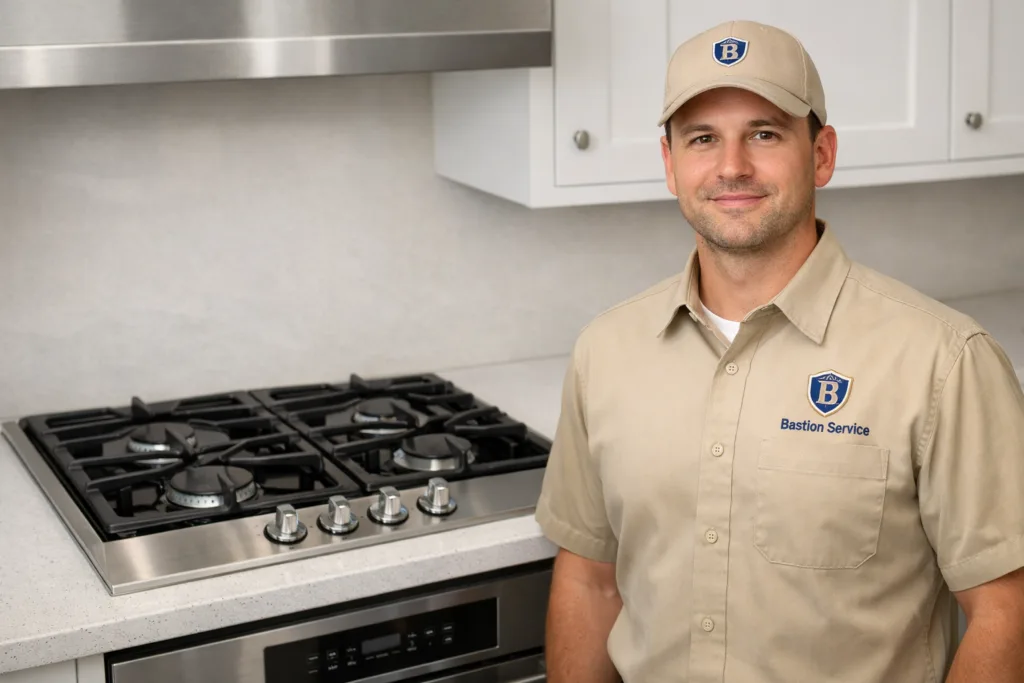
Bosch cooktops are generally reliable, but the way they fail can be frustratingly inconsistent. One burner may stop working while the rest seem normal, clicking may continue after the flame appears, or an electric zone may heat too fast one day and too slowly the next. In a household kitchen, those symptom patterns matter because they help narrow the problem before any repair decision is made.
Common Bosch cooktop symptoms and what they often mean
Burner will not ignite on a gas cooktop
If a gas burner does not light, the cause is not always the same from one call to the next. In some cases, the issue is as simple as moisture after cleaning or a burner cap that is slightly out of position. In others, the fault is deeper in the ignition system, such as a worn igniter, spark module problem, wiring issue, or restricted gas flow to that burner.
If only one burner is affected, that often points to a localized burner or ignition issue. If multiple burners are acting up at once, the diagnosis may shift toward shared ignition or control components.
Electric or induction burner stays cold
On electric and induction Bosch cooktops, a burner that does not heat can indicate a failed element, a bad switch, sensor trouble, wiring damage, or a control board fault. Induction models can also appear dead when the cookware is not being detected correctly, which makes it important to separate user-side issues from actual component failure.
A burner that heats only part of the time is often more informative than one that fails completely, because intermittent heating can point to a switch, relay, or connection problem rather than the cooking zone itself.
Cooktop keeps clicking
Constant clicking is one of the most common complaints on gas Bosch cooktops. Sometimes the cause is a wet ignition area, residue from cooking spills, or a burner cap that is not seated correctly. In other cases, the clicking continues because the unit is not sensing ignition properly or because a switch is stuck in the ignition position.
Even when the burner eventually lights, repeated clicking should not be ignored. It usually means the ignition system is not operating the way it should.
Uneven flame or uneven heating
An uneven flame on a gas cooktop may come from clogged burner ports, burner cap alignment issues, or wear in burner-related parts. Uneven heating on an electric or induction model may reflect element wear, sensor issues, or controls that are not regulating temperature consistently.
This symptom often shows up first during everyday cooking: pans taking longer than usual to boil, hot spots that scorch food, or settings that no longer match the actual heat output.
Controls not responding normally
If touch controls do not register properly or burner knobs no longer correspond to predictable heat levels, the problem may involve the user interface, switch assemblies, internal wiring, or the main control system. Surface controls can make a cooktop seem fine one moment and unreliable the next, which is why these issues usually require closer testing rather than guesswork.
Cracked glass or damaged surface
With glass cooktops, visible damage is more than a cosmetic concern. A crack can affect safe operation, expose internal components to moisture, and allow a minor problem to become a more expensive one. Whether the damage came from impact, heat stress, or wear over time, continued use is often the wrong move until the condition is evaluated.
Why symptom patterns matter on Bosch cooktops
Two cooktops can show the same visible symptom and need completely different repairs. A burner that will not light might need cleaning and realignment, or it might have a failing ignition component. A heating complaint on an electric model might be caused by the element itself, or by the switch or control circuit that feeds it.
That is why the most useful starting point is the exact behavior of the appliance:
- Does the problem affect one burner or several?
- Is the failure constant or intermittent?
- Did it begin after cleaning, a spill, or a power event?
- Is the burner weak, completely dead, or overheating?
- Are there noises, flashing indicators, or tripped breakers along with the main complaint?
Those details help determine whether the likely issue is isolated and repairable or whether the problem may involve broader control or wiring faults.
Problems that should not be ignored
Some cooktop issues stay inconvenient for a while. Others tend to get worse with continued use. Intermittent ignition can wear related parts. Overheating burners can damage cookware and stress controls. Electrical faults can become more serious if the unit keeps cycling under load.
It is smart to stop using the cooktop and arrange service if you notice any of the following:
- Burners that spark but do not ignite reliably
- A burner that remains on high regardless of the selected setting
- Controls that work only occasionally
- Repeated breaker trips when the cooktop is used
- Visible arcing, scorching, or melted areas
- Glass cracks, spreading lines, or lifted surface sections
For gas models, any strong or persistent gas odor should be treated as a safety issue first, not a routine appliance repair matter.
What homeowners in Rancho Palos Verdes often want to know first
Most service calls come down to a few practical questions: what failed, whether the cooktop is safe to use right now, and whether repair makes sense compared with replacement. For households in Rancho Palos Verdes, that usually means looking at the specific failed part, the condition of the cooking surface, and whether the issue appears isolated or part of a larger decline.
Many Bosch cooktop repairs are worthwhile when the problem is limited to ignition parts, switches, heating elements, sensors, or accessible control components. Replacement becomes more likely when there is major glass damage, multiple failing systems, or repair costs that no longer line up with the condition of the appliance.
Repair or replacement: how the decision usually gets made
There is no single rule that fits every Bosch cooktop. A newer unit with one failed burner may be a straightforward repair candidate. An older unit with surface damage and several control-related symptoms may not be. The better decision usually comes from comparing the failure itself with the overall condition of the appliance.
Key factors include:
- The exact component that failed
- Whether the problem affects one cooking zone or several
- The condition of the glass top, controls, and surrounding components
- The age and service history of the cooktop
- The expected repair cost relative to replacement
That approach keeps the decision grounded in the actual appliance instead of assumptions based only on one symptom.
Helpful observations before service
Before scheduling Bosch cooktop repair in Rancho Palos Verdes, it helps to note a few details about what the cooktop is doing. That information can make the appointment more productive and can reduce confusion when a symptom comes and goes.
- Which burner or burners are affected
- Whether the issue is constant or intermittent
- Whether the problem began after a spill, cleaning, or power interruption
- Any unusual noises, odors, flashing indicators, or control behavior
- Whether the cooktop still works partially or not at all
Even small details can help separate a surface-level issue from a deeper electrical or ignition fault.
What to expect from a focused service visit
A good cooktop service visit should lead to a clearer answer, not more confusion. That means identifying the failed system, checking whether continued use could cause more damage, and explaining whether the repair path is sensible for the condition of the appliance. For homeowners in Rancho Palos Verdes, that is usually the difference between replacing parts blindly and making an informed choice.
If your Bosch cooktop is clicking constantly, failing to ignite, heating unevenly, or showing control problems, the next step should be based on the actual fault in the unit. Once that is known, the repair decision is usually much easier to make.