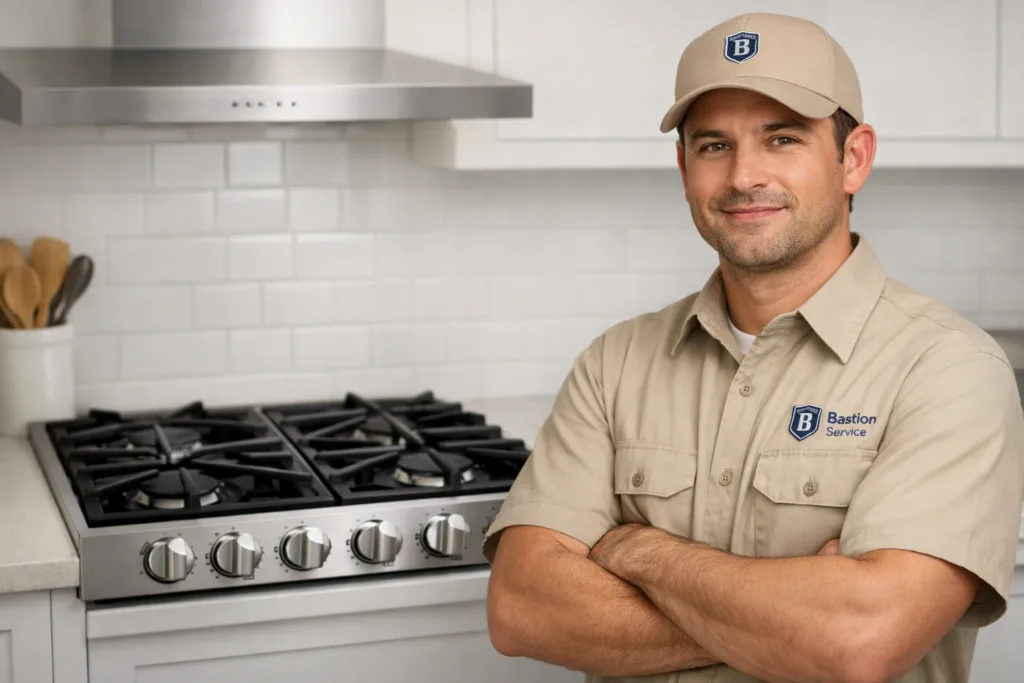
Cooktop problems are easiest to solve when the symptom pattern is looked at closely. A burner that seems dead may have a heating fault, a switch problem, or a control issue behind it. Clicking on a gas model may be caused by moisture and buildup, or it may point to a failing ignition component. In Rancho Palos Verdes homes, taking the time to identify the exact failure usually prevents unnecessary parts replacement and helps determine whether repair is the right next step.
Common LG cooktop issues homeowners notice
LG cooktops can develop problems gradually or fail with little warning. Some symptoms affect only one cooking zone, while others point to a wider electrical or control-related issue.
Burners not heating
On electric and induction models, a burner that does not heat at all may be tied to a failed element, damaged wiring, a sensor problem, or a fault in the control system. If only one zone is affected, the issue is often more isolated. If several burners stop working or act erratically at the same time, the diagnosis may shift toward power supply or control board problems.
Uneven or weak heat
When a burner gets hot but does not hold temperature well, cookware performance becomes inconsistent and normal cooking takes longer. Uneven heat can come from a weakening element, poor sensor feedback, a failing infinite switch, or a control issue that causes the burner to cycle incorrectly. On induction units, cookware compatibility can also mimic appliance trouble, so that should be ruled out before assuming a major failure.
Clicking without ignition on gas models
Repeated clicking is one of the more common complaints on gas cooktops. Sometimes the cause is straightforward, such as a wet igniter area after cleaning or a burner cap that is not seated correctly. In other cases, the problem may involve clogged burner ports, a bad ignition switch, or a failing spark module. If the clicking continues even when a burner is turned off, the cooktop should be checked promptly.
Burners that light slowly or produce uneven flames
Delayed ignition or an uneven flame pattern often means gas is not moving through the burner assembly the way it should. Misalignment, debris, or wear in ignition-related parts can all affect performance. This is not just an annoyance during meal prep; slow lighting and unstable flame behavior can make the cooktop less predictable to use.
Touch controls not responding
LG cooktops with electronic controls may develop symptoms such as buttons that lag, settings that change unpredictably, or indicators that stop responding. These failures can be linked to the user interface, the main control, or incoming power issues. Because multiple electronic parts can produce similar symptoms, testing matters before replacing anything.
Cooktop shutting off during use
If the unit starts normally and then powers down, the cause may involve overheating protection, a sensor fault, ventilation limitations, or an unstable electrical connection. This is especially frustrating because the cooktop can appear normal at the start of cooking and fail only after heat builds up.
What cracked glass or surface damage can mean
Cracked glass on a smooth-top or induction cooktop is more than a cosmetic problem. Surface damage can affect safe operation, allow spills into sensitive components, and make the appliance harder to use with confidence. In some cases, the cooktop may still seem functional after the crack appears, but continued use is not always advisable. The next step depends on the location and severity of the damage and whether other parts were affected when the break occurred.
Signs the problem may be getting worse
Some cooktop issues stay limited for a while, but others spread from one component to another. A switch that intermittently fails can eventually stop responding entirely. Repeated ignition attempts can place added strain on spark-related parts. Electrical faults may become more noticeable as heat and normal cooking cycles continue.
It is wise to stop normal use and schedule service if you notice any of the following:
- A burner that overheats or will not regulate temperature
- Controls that behave unpredictably
- Persistent clicking from a gas burner
- The cooktop losing power during operation
- A cracked glass surface
- Error displays or repeated shutdowns
For gas models, any ongoing gas odor should be treated as a safety concern first rather than a standard repair issue.
Why symptom-based diagnosis matters
Cooktops are compact appliances, but they bring together heating systems, ignition parts, sensors, wiring, and electronics in one place. That means one visible symptom can have several possible causes. A burner that will not heat might not need a new burner at all. A control issue can mimic a heating failure. A gas burner that clicks constantly may not need a full ignition rebuild if the root cause is contamination or moisture in a specific area.
Good diagnosis should confirm which part failed, whether neighboring components were affected, and whether the repair is likely to restore reliable operation. That is especially important on LG models with electronic controls, where replacing the wrong part can add cost without fixing the underlying problem.
Repair versus replacement for an LG cooktop
Many cooktop repairs are worthwhile when the issue is isolated and the rest of the unit is in good condition. Problems involving a single burner, igniter, switch, sensor, or control component are often more practical to address than damage affecting multiple systems at once.
Replacement may make more sense when:
- The glass top is severely damaged
- Several major functions have failed at the same time
- The appliance has a history of recurring electronic problems
- Parts availability is limited for the exact model
- The expected repair cost approaches the value of replacement
Age also matters, but it is not the only factor. A newer unit with significant surface damage may be a poor repair candidate, while an older cooktop with a single confirmed part failure may still be worth fixing.
When to schedule service
If the cooktop is no longer dependable for everyday meals, service is usually worth arranging sooner rather than later. Waiting can be tempting when one burner still works or the ignition issue comes and goes, but intermittent problems often become more expensive once they start affecting additional components.
Households in Rancho Palos Verdes often call for repair when cooking has become inconvenient, inconsistent, or difficult to trust. That includes burners that take too long to heat, controls that fail in the middle of use, and gas burners that light only after several tries.
What a useful repair visit should clarify
A service visit should do more than identify a bad part. It should determine whether the cooktop can be returned to safe, consistent operation and whether the repair path makes sense for the appliance overall. That includes checking how the failing component relates to the rest of the system, whether there are signs of additional wear, and whether the problem is likely to remain isolated.
If your LG cooktop is disrupting meal prep in Rancho Palos Verdes, the most helpful next step is a practical repair plan based on the actual symptom pattern, the condition of the appliance, and the expected value of the repair.