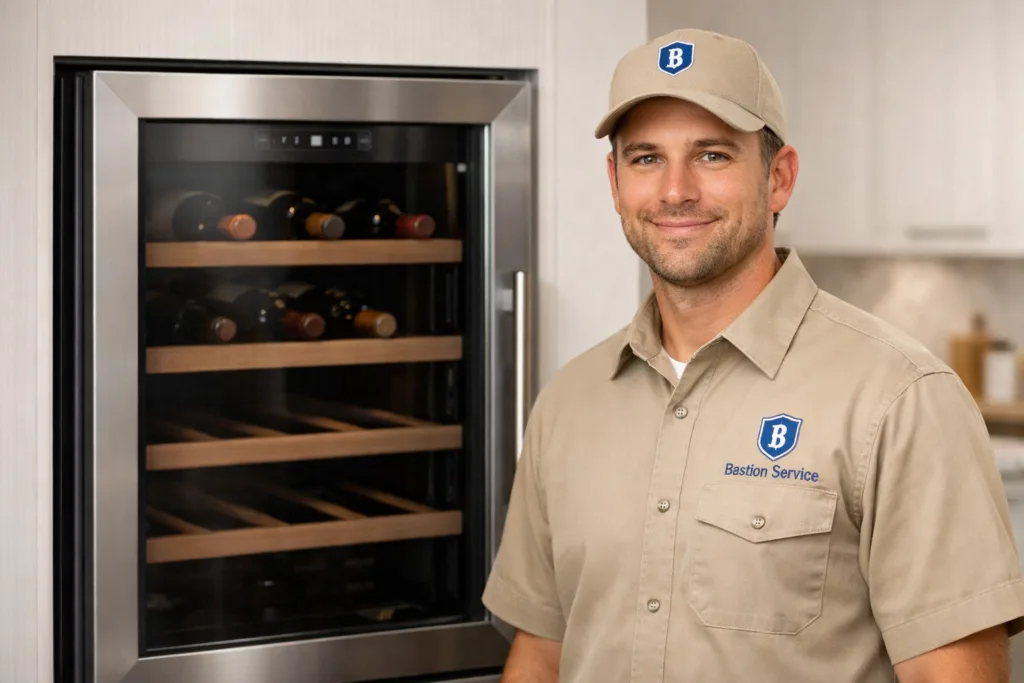
Temperature stability matters more in a wine cooler than many homeowners expect. A unit can still feel somewhat cool and yet be drifting well outside its set range because of a weak fan, a misreading sensor, dirty condenser airflow, or an early compressor problem. That is why the symptom itself is only the starting point; the underlying cause has to be identified before the right repair makes sense.
Common wine cooler problems and what they can mean
One of the most common complaints is a cabinet that no longer matches the display setting. If bottles are warmer than expected, the issue may involve the thermostat, temperature sensor, control board, evaporator fan, or restricted airflow through the condenser area. In some cases, uneven cooling from top to bottom points to circulation trouble inside the cabinet rather than a failed control.
Noise changes are also important. A steady hum that becomes much louder can mean the compressor is straining to maintain temperature. Rattling may come from loose panels or shelves, but it can also indicate a fan blade obstruction or worn mounting hardware. Repeated clicking without normal cooling often suggests a startup problem, such as a failing relay, and should not be ignored.
Moisture is another clue. Condensation on the glass, water inside the cabinet, or dampness around the door can come from a worn gasket, frequent warm-air intrusion, a blocked drain, or cooling components that are no longer keeping conditions stable. Frost where it does not belong can point to airflow restrictions, sensor issues, or a defrost-related fault depending on the design of the unit.
Why wine coolers lose temperature control
Wine coolers rely on several systems working together: accurate sensing, proper fan circulation, a sealed cooling system, and a door that closes tightly enough to keep warm room air out. When one part starts slipping, the entire appliance can become inconsistent. That is why homeowners in Playa Vista often notice small warning signs first, such as longer run times, mild interior sweating, or a cabinet that takes too long to recover after the door is opened.
Airflow problems are especially common because these appliances are often installed in tight spaces. If vents are blocked or coils are dirty, heat cannot leave the system efficiently. The cooler may run longer, internal temperatures may climb, and compressor wear can increase. In contrast, a sensor or control issue may make the display look normal even while the actual storage environment is unstable.
When freezer-style symptoms point somewhere else
If cooling problems are centered in the freezer compartment of another appliance, with heavy frost or poor temperature recovery after the door opens, Freezer Repair in Playa Vista may be more relevant than wine cooler service.
Signs the issue should be checked soon
A wine cooler that runs nonstop, short cycles, or turns on and off more frequently than usual should be evaluated before the strain affects additional parts. The same is true when the cabinet cools slowly, develops repeated condensation, or cannot maintain a reliable range from day to day. Continued operation under those conditions can make a minor electrical or airflow problem more expensive over time.
Another warning sign is when the cooler seems to recover only temporarily after adjusting settings. Lowering the temperature on the control panel may mask the problem for a short period, but it does not fix a failing fan motor, leaking door seal, or sealed-system issue. If the appliance keeps drifting back to warmer temperatures, there is usually a repairable reason behind it.
What a service visit typically focuses on
Effective wine cooler repair starts with the pattern of the symptom, not just the complaint that it is “not cooling.” A technician will typically check actual cabinet temperature, fan operation, sensor response, door seal condition, drainage, condenser airflow, startup components, and overall cooling-system performance. That process helps separate straightforward repairs from deeper sealed-system concerns.
For many households in Playa Vista, the outcome is not simply whether the unit turns back on, but whether it can hold stable conditions again without excessive cycling or moisture. A useful repair recommendation should explain what failed, whether the repair is practical, and whether the appliance is likely to perform reliably after the work is completed.
When the issue may be with a different kitchen appliance
If the main concern is weak cooling in a full-size kitchen unit, spoiled food, or inconsistent temperatures across fresh-food shelves, Refrigerator Repair in Playa Vista may be the better fit for the symptoms you are seeing.
Repair versus replacement considerations
Replacement is usually worth considering when the cooler has major sealed-system damage, compressor failure, or multiple aging components failing at the same time. On the other hand, many common issues are more manageable once they are properly identified. Fan motors, thermostatic controls, sensors, relays, gaskets, and drainage problems can often be addressed without replacing the appliance outright.
The decision often depends on the age of the unit, the type of failure, and whether the cooler still makes sense for your storage needs. A compact unit with a minor airflow or control issue is very different from one with recurring cooling-system trouble and poor temperature recovery. Diagnosis helps avoid replacing an appliance too early or putting money into the wrong repair.
Related symptoms that can help narrow the problem
Some homeowners notice that the wine cooler seems fine, but the household problem is really poor ice production, leaking around the fill area, or a dispenser that has stopped working. In that situation, Ice Maker Repair in Playa Vista may be the more appropriate service path.
By paying attention to where the symptom starts, whether it involves storage temperature, frost, water, airflow, or ice production, it becomes much easier to choose the right repair and avoid unnecessary parts. For homes in Playa Vista, that kind of targeted troubleshooting is what keeps a wine cooler from turning a manageable issue into a complete loss of dependable storage.