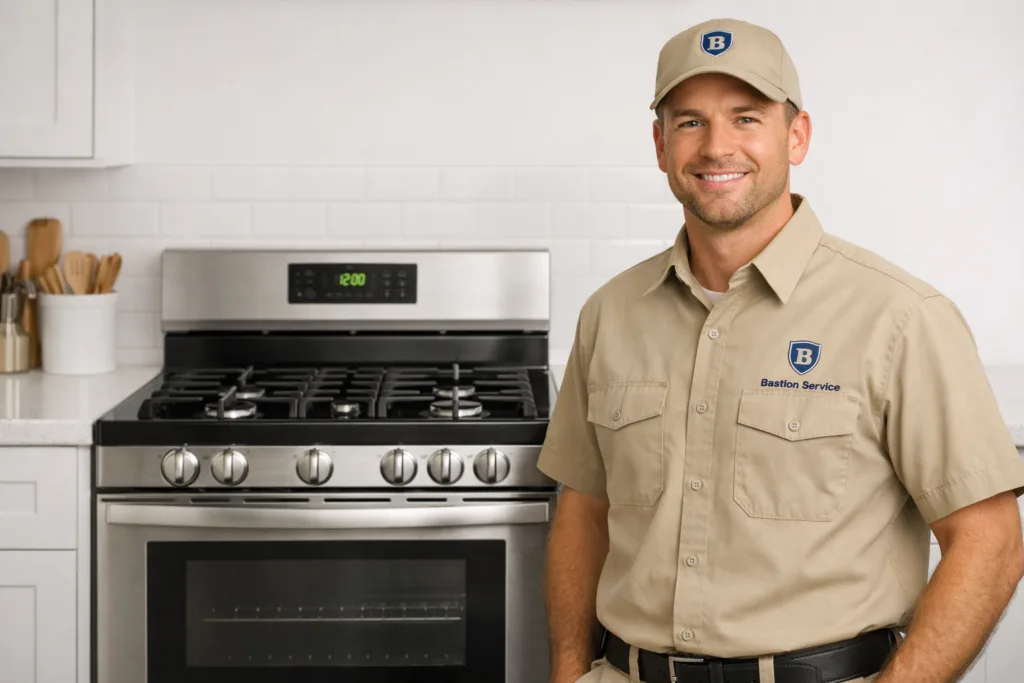
Symptom-based Whirlpool range troubleshooting for Rancho Park homes

Range problems often look similar at first, but the failure point can be very different depending on whether the issue affects a surface burner, the oven cavity, ignition, temperature regulation, or the electronic controls. That is why the most useful next step is identifying the exact pattern: what works, what does not, and whether the problem is constant or intermittent.
On many Whirlpool ranges, one failed part can create secondary symptoms. A weak igniter may look like a heating issue. A bad sensor may seem like a calibration complaint. A damaged switch may make a burner appear dead when the element itself is still good. Sorting out those differences helps avoid unnecessary part replacement and points to the repair path that actually fits the appliance.
Common Whirlpool range problems and what they usually mean
Burner clicks but does not light
On gas models, repeated clicking without ignition often points to a burner ignition problem rather than a full appliance failure. Common causes include blocked burner ports, moisture near the igniter, an out-of-position burner cap, or a failing spark ignition component. If the clicking continues after cleaning and drying the area, the issue may be deeper in the ignition circuit.
If one burner is affected, the problem is often isolated. If several burners behave the same way, the diagnosis may shift toward a broader spark or power-related issue.
Surface burner will not heat or heats unpredictably
On electric Whirlpool ranges, a burner that stays cold, overheats, or only works at certain settings can involve the element, receptacle, infinite switch, or internal wiring. In some cases the burner cycles so unevenly that normal cooking becomes difficult even though the element still glows.
When the symptom changes from day to day, that can suggest a failing connection rather than a completely failed component. Burn marks, intermittent heat, or a loose fit at the burner connection are all signs worth checking promptly.
Oven will not heat
If the oven does not heat at all, the likely causes depend on the model type. Electric models may have a failed bake element, broil element, control issue, or wiring fault. Gas models often point to a weak or failed igniter, though sensors and control failures can also stop normal heating.
This is one of the most important symptoms to diagnose correctly because an oven that appears completely dead may still have some active components, and guessing at the cause can lead to wasted time and repeat service.
Oven heats slowly or never reaches temperature
Slow preheating is a common Whirlpool range complaint. On gas models, a weak igniter is a frequent cause because it may open the gas valve too slowly or inconsistently. On electric models, one heating element may be out while the other still works, creating partial heat that makes the oven seem sluggish.
If meals take longer than usual, baked goods come out pale, or the oven runs for an unusually long time before stabilizing, the problem may be performance-related rather than total heat loss.
Oven runs too hot or cooks unevenly
When food burns faster than expected, browns unevenly, or cooks differently from rack to rack, the issue may involve the temperature sensor, control calibration, convection function, or a heating system that is not cycling correctly. Repeated overheating should not be dismissed as a minor quirk, especially if the difference is large enough to affect normal cooking results.
Uneven baking can also point to a hidden failure that has not yet become complete. Catching it earlier may keep the repair smaller and more straightforward.
Display, keypad, or control panel problems
A blank display, unresponsive keypad, flashing error code, or controls that work only sometimes can all indicate problems with the user interface, main control board, incoming power, or harness connections. If the issue appears after a heating complaint, both symptoms may be related rather than separate failures.
Electronic control problems are especially frustrating because they can interrupt the full range, not just one function. A proper diagnosis helps determine whether the problem is limited to the panel or reaches deeper into the appliance.
Signs the problem may be getting worse
Some range issues stay annoying but manageable for a while. Others tend to escalate. It is smart to stop putting off service when you notice any of the following:
- Burners that click continuously or ignite inconsistently
- An oven that takes much longer than normal to preheat
- Temperature swings that ruin routine cooking
- A burner that overheats even on lower settings
- Error codes that return after resetting power
- Controls that cut out during use
- Breaker trips or signs of overheating
Persistent gas odor is different from a standard repair issue. If there is a strong or ongoing gas smell, stop using the appliance and address safety before anything else.
How repair decisions are usually made
For many Whirlpool range problems, repair is sensible when the unit is otherwise in good condition and the issue traces to one main component or system. That often includes igniters, elements, sensors, burner switches, some wiring repairs, and certain control-related faults.
Replacement becomes more likely when the range has multiple active problems, heavy wear, recurring electrical trouble, or a repair cost that no longer makes sense for the age and condition of the appliance. Homeowners in Rancho Park usually make the best decision when they know whether the failure is isolated or part of a larger pattern.
What to note before scheduling Whirlpool range service
A few details can make the diagnosis faster and more accurate. Before service, it helps to note:
- Whether the problem affects the cooktop, the oven, or both
- Whether the range is gas or electric
- If the issue is constant or intermittent
- Any error codes shown on the display
- Whether the symptom started suddenly or got worse over time
- If recent cleaning, power loss, or a spill happened just before the problem appeared
Those details often narrow the likely cause quickly, especially when the symptoms overlap.
What homeowners usually want to know first
Most households are trying to answer three practical questions: is the range safe to use right now, what component is likely failing, and is the repair worth doing? A service call should lead to those answers without overcomplicating the process.
For Whirlpool ranges in Rancho Park, the most effective approach is one that follows the symptom trail carefully, tests the affected system, and explains the realistic next step in plain language. Whether the issue is a burner that will not cooperate, an oven that cannot hold temperature, or controls that have stopped responding, the goal is to get from confusing symptoms to a repair decision you can trust.