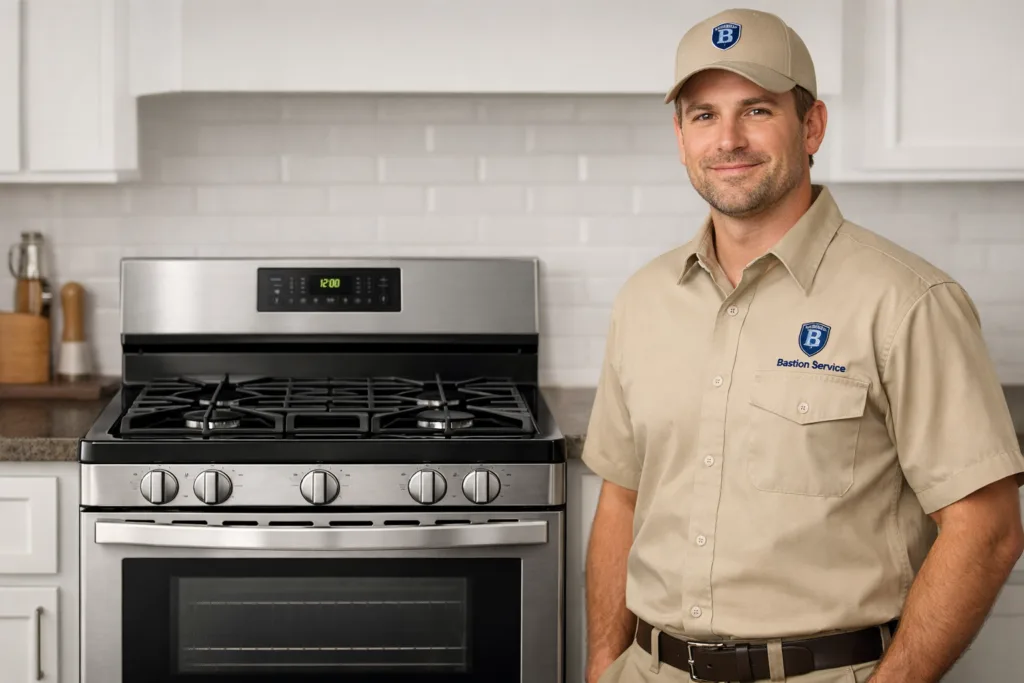
Range problems rarely stay limited to one inconvenience. A burner that clicks for days before lighting, an oven that suddenly runs cool, or a control panel that responds inconsistently can all change how safely and predictably the appliance operates. With Whirlpool models, the most useful approach is to match the repair plan to the exact symptom instead of assuming every heating problem comes from the same failed part.
What different symptoms usually point to
Many range complaints sound similar at first, but the underlying causes can be very different. A gas oven that does not heat may have a weak igniter, while an electric oven with the same complaint may have a failed bake element or a power issue. Surface burner problems can involve switches, elements, burner heads, spark ignition parts, wiring, or the control system depending on the model.
That is why symptom-based testing matters. The goal is not just to make the appliance turn on again, but to identify whether the fault is isolated or part of a larger problem affecting temperature control, ignition, or electrical stability.
Common Whirlpool range issues in Marina del Rey homes
Burners that do not heat properly
If a surface burner stays cold, heats only on certain settings, or cycles erratically, the problem often depends on whether the range is gas or electric. Electric models may have a damaged element, worn receptacle, faulty infinite switch, or heat-damaged wiring. Gas models may struggle because of clogged ports, a misaligned cap, an ignition problem, or a valve-related issue.
Uneven burner performance is worth checking when it keeps happening on the same cooking zone. If pans no longer heat consistently or one burner runs much hotter than the rest, the issue is usually with the range rather than cookware alone.
Oven not heating, slow preheat, or poor baking results
One of the most common complaints is an oven that technically heats, but not well enough for normal cooking. You might notice longer preheat times, food baking unevenly, or dishes coming out underdone even though the display says the oven reached the set temperature.
On Whirlpool ranges, this can be caused by a weak igniter, a failing bake or broil element, a sensor reading incorrectly, or an electronic control issue that is not regulating heat normally. In some cases, the oven still turns on, which makes the problem easy to ignore until cooking results become too inconsistent to work around.
Clicking burners or delayed ignition
Gas burner clicking that continues after ignition or clicking that never leads to a flame usually points to an ignition-related fault. Sometimes the cause is simple, such as moisture around the burner or a cap that is not seated correctly. In other cases, the spark electrode, ignition switch, or another ignition component is failing.
Delayed ignition deserves prompt attention. When the burner takes too long to light, gas can build briefly before ignition occurs, which can make operation rougher and less predictable than it should be.
Temperature that drifts during cooking
If the oven starts normally but struggles to hold temperature, the issue may show up as overbrowning, weak roasting performance, or recipes needing extra time every time you cook. This type of drift can come from a sensor problem, an intermittent element, a weakening igniter, or a control that is no longer cycling heat accurately.
Intermittent temperature loss is especially frustrating because the range may appear to work during a quick check, then fail during a full cooking cycle after components heat up.
Control panel, display, or keypad trouble
When the display flashes, buttons stop responding, settings reset, or error codes appear, the problem may be more than cosmetic. On many Whirlpool ranges, the control interface and main control board are directly involved in oven operation. A panel that works only part of the time can prevent proper temperature selection, interrupt cycles, or stop the oven from starting at all.
Repeated resets or unexplained beeping can also point to a power-supply or electronic control issue that should not be dismissed as normal aging.
Signs the problem may be getting worse
Some range issues stay stable for a short period, but others tend to progress. It is smart to stop putting off service when you notice any of the following:
- preheat is taking much longer than it used to
- one burner cuts in and out during cooking
- the oven reaches temperature inconsistently from one use to the next
- burners click repeatedly or light with a delay
- the display goes blank, freezes, or shows recurring errors
- the appliance shuts off unexpectedly or trips power
- you smell overheating insulation or see signs of arcing
These patterns can indicate more than simple wear. A weak igniter can strain ignition performance, a damaged receptacle can worsen with continued heat, and unstable wiring or controls can lead to broader failure if the range keeps being used under fault conditions.
When repair usually makes sense
Repair is often the practical choice when the problem is limited to a specific component or system, especially on a range that is otherwise in solid condition. Common examples include isolated igniter failure, a bad surface element, a sensor issue, a burner ignition fault, or a switch or control problem that can be identified clearly.
Replacement becomes more likely when there are several major faults at once, significant internal heat damage, repeated breakdowns over time, or repair costs that no longer fit the condition of the appliance. For homeowners in Marina del Rey, the best decision usually comes down to the age of the range, the number of systems involved, and whether normal cooking performance is likely to be restored without chasing one issue after another.
What to check before scheduling service
A few quick observations can help narrow the problem down and make the visit more productive. Before service, it helps to note:
- whether the issue affects the oven, the cooktop, or both
- if the problem happens every time or only after the range has been on for a while
- whether the fault is limited to one burner or cooking function
- any recent error codes, resets, or unusual sounds
- whether the symptom began suddenly or worsened gradually
These details often reveal whether the failure is tied to ignition, heating output, temperature regulation, or electronic control behavior.
Why intermittent range problems should not be ignored
Intermittent faults are some of the most misleading. A Whirlpool range may work normally during breakfast, then fail to preheat at dinner. A burner may ignite perfectly for several days and then click without lighting. These symptoms often point to parts that break down when hot, connections that loosen with expansion, or controls that fail unpredictably.
Because the appliance still works sometimes, it is easy to postpone service. The problem is that intermittent failures can become harder to diagnose after related parts are stressed or damaged by repeated use. Addressing the issue earlier usually gives a better chance of limiting the repair to the original failed component.
What homeowners should expect from a service visit
A worthwhile appointment should identify the failed system, explain whether the range should be used before repair, and clarify whether the issue is isolated or part of a broader condition. For Whirlpool range repair in Marina del Rey, that means looking at the exact complaint in context instead of treating every no-heat or ignition symptom as the same job.
Most homeowners want three straightforward answers: what failed, whether continued use is a bad idea, and whether the repair is worth doing. When those answers are based on the actual symptom pattern and appliance condition, it becomes much easier to move forward with confidence.