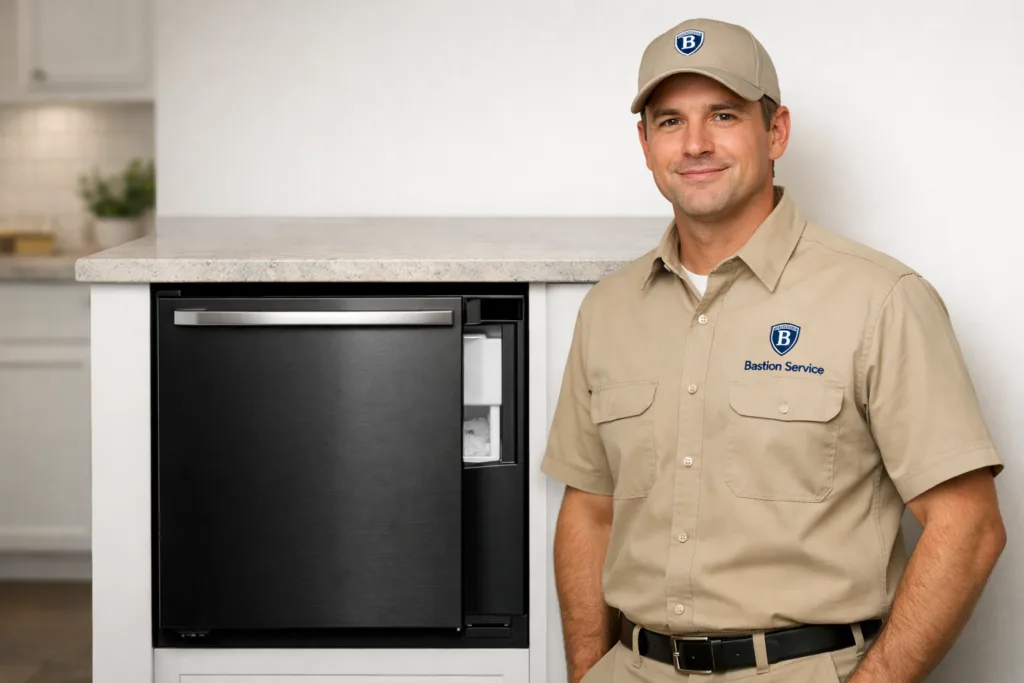
How U-Line ice maker problems usually show up

U-Line ice makers rarely fail in just one way. A machine that stops making ice completely may have a water supply issue, an inlet valve problem, a temperature-related fault, a sensor issue, or an internal component that is no longer completing the cycle correctly. A unit that still makes some ice but falls behind often points to restricted water flow, scale buildup, airflow trouble, or cooling performance that is starting to slip.
Leaks are another common warning sign. Water near the base of the appliance can come from a drain problem, a loose connection, overfilling during the harvest cycle, or ice melting where it should remain frozen. If moisture keeps appearing around the unit, it is best to address it before surrounding cabinetry, flooring, or trim are affected.
Changes in sound can also help narrow the issue. Buzzing, clicking, grinding, or repeated attempts to cycle may indicate trouble with a pump, fan, motor, valve, or ice formation inside the machine. Noise does not always mean a major failure, but it usually means the unit is no longer operating normally.
Common symptom patterns homeowners notice
No ice production
If the bin stays empty, the cause may be a blocked or disconnected water supply, a failed valve, a control issue, poor internal temperature, or a mechanical problem inside the ice-making assembly. When the machine appears to have power but never completes an ice cycle, hands-on testing is usually more useful than guessing at parts.
Slow ice production
Slow production often starts gradually. Homeowners may first notice that the machine cannot keep up during regular use, or that recovery after the bin is emptied takes much longer than before. Mineral buildup, weak water fill, restricted airflow, or early cooling issues are all possible causes. This is often the stage where service can prevent a complete shutdown.
Small, hollow, or clumped ice
Ice quality can say a lot about what is going wrong. Small or hollow cubes may point to fill problems or restricted water delivery. Clumped ice may mean melting is happening between cycles, which can be tied to temperature inconsistency, drainage trouble, or a problem with how the machine is harvesting and storing ice.
Cloudy ice, odor, or bad taste
Poor ice quality is not always just a cleaning issue. While buildup and stagnant water can affect taste and odor, cloudy or soft ice may also reflect freezing inconsistency or water delivery problems. If cleaning does not resolve the issue, the machine may need deeper diagnosis.
Leaking or pooling water
Repeat leaks deserve prompt attention. Even a small drip can lead to swelling in nearby wood, damage to finished floors, or moisture problems in surrounding built-in spaces. If water appears more than once, the problem should be inspected rather than monitored indefinitely.
Constant running or mid-cycle shutdowns
A U-Line ice maker that seems to run continuously or one that stops unexpectedly during the cycle may have a sensor, control, or temperature-management problem. Continued operation in that condition can add wear to internal components and make the repair more involved.
Why diagnosis matters with built-in U-Line ice makers
Many U-Line units are installed in finished residential spaces where ventilation, leveling, drain routing, and water line connections all affect performance. A symptom that looks simple from the outside can actually involve more than one issue. For example, poor ice production may be caused by both restricted water flow and a cooling problem, while a leak may be tied to drainage and ice formation at the same time.
That matters because the right repair depends on the real cause. Replacing parts based only on the most obvious symptom can lead to repeat failures, unnecessary cost, and more downtime. Bastion Service helps Rancho Palos Verdes homeowners evaluate whether the problem is isolated and repairable or whether the appliance is showing signs of broader reliability trouble.
When to schedule service
It makes sense to schedule service when the unit stops making ice reliably, starts leaking, begins making unusual noise, or shows a clear change in cycle behavior. A single odd batch may not always mean a serious fault, but repeated symptoms usually do. If performance has been declining over several days, or the issue returns after cleaning or a basic reset, the next step should be a proper inspection.
In Rancho Palos Verdes homes, built-in ice makers often get the most attention right before guests arrive or when household demand increases. By then, a minor slowdown may already have developed into a larger problem. Earlier service is often simpler than waiting for a full no-ice failure.
When continued use can make things worse
Some symptoms carry more risk than others. A leaking ice maker can damage nearby finishes and create hidden moisture problems. A machine that struggles to cool or cycle correctly may put extra strain on motors, valves, or control components. If the appliance is making loud new sounds, leaving standing water, or repeatedly failing mid-cycle, continued use can increase both the scope and cost of repair.
If the main complaint is poor ice quality without leaks or major noise, the urgency may be lower, but it is still worth finding out whether the cause is maintenance-related or mechanical. The important point is that not every symptom has the same cause or the same level of risk.
Repair or replacement?
For many U-Line ice maker issues, repair is still the sensible option when the fault is limited and the rest of the appliance is in solid condition. That is especially true when the unit is built into cabinetry and replacement would require matching size, finish, and installation details.
Replacement becomes more worth considering when the machine has recurring failures, multiple major component problems, severe internal deterioration, or a pattern of unreliable operation. A useful service visit should help clarify whether the issue is a straightforward repair or whether the appliance is approaching the point where replacement makes more financial sense.
What homeowners should check before service
- Whether the unit has power and the controls are responsive
- Whether the water supply to the ice maker is fully on
- Whether the bin is empty, partially filled, or full of misshapen ice
- Whether there is visible water under or around the appliance
- Whether the machine is making new or unusual sounds
- Whether cleaning or resetting changed anything at all
These observations can help narrow the symptom pattern, but they usually do not replace testing. If the problem keeps returning, the machine needs more than a quick workaround.
Service focused on the actual symptom
The most effective U-Line ice maker repair in Rancho Palos Verdes starts with what the machine is doing now: no ice, slow batches, clumping, leaks, bad ice quality, or irregular cycling. From there, the goal is to identify the real cause, avoid unnecessary parts replacement, and determine whether the repair is likely to hold up over time.
If your household ice maker is no longer performing the way it should, symptom-based service is the best way to move from frustration to a workable repair plan.