
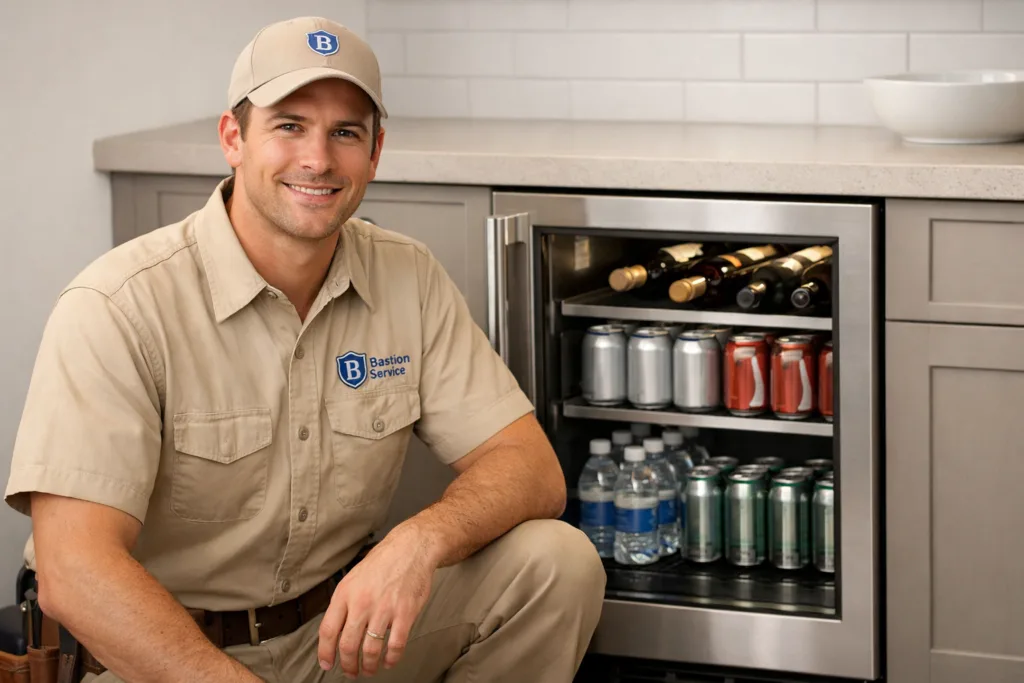




Cooling problems in a U-Line appliance often start subtly. A beverage section feels a little warm, ice production slows, or a wine cooler begins drifting a few degrees off its normal range. Those early changes matter because they often point to airflow, sensor, drainage, sealing, or control issues that can worsen if the unit keeps running under strain.
How U-Line issues usually show up at home
In Rancho Palos Verdes homes, U-Line units are often used for specialty storage and built-in convenience, which means performance issues may be noticed through changes in daily use rather than a complete shutdown. Homeowners may first see longer run times, light condensation, soft ice, inconsistent temperatures, or a sound that was not there before. The visible symptom is important, but it does not always identify the failed part on its own.
For example, warming can come from poor airflow, frost buildup, a weak door seal, a fan problem, or an electronic control fault. Moisture can come from a drain issue, humidity exposure, an ice-making problem, or a sealing problem. Looking at the full symptom pattern is what helps separate a simple repair from a larger cooling-system concern.
Temperature problems that should not be ignored
Runs, but does not hold temperature
If the appliance powers on and seems active but cannot maintain the right temperature, there may be restricted airflow, dirty condenser components, evaporator fan trouble, sensor inaccuracy, or frost blocking normal circulation. This is common in refrigerators, freezers, and wine coolers, and it often starts as a mild inconsistency before becoming a no-cool complaint.
Warning signs include food softening, drinks not cooling properly, temperature swings from one shelf to another, or a unit that seems to run almost constantly. Continued operation in this condition can add wear to other components.
Too cold in the wrong places
Not every cooling complaint means the unit is getting warm. Some U-Line appliances develop overcooling in one area while another section remains unstable. That can point to airflow imbalance, control issues, sensor problems, or a damper-related fault. In a wine cooler, this may show up as unstable storage conditions rather than obvious freezing.
Intermittent performance
When the unit works normally part of the day and then drifts out of range later, the issue may be tied to a failing fan, a control board problem, a sensor reading issue, or frost that is interfering with airflow during part of the cycle. Intermittent symptoms are worth documenting because they can be more revealing than a simple “not cooling” description.
Ice maker symptoms and what they often mean
U-Line ice makers can fail in several different ways, and the pattern usually matters more than the fact that ice production changed.
No ice production
If there is no ice at all, possible causes include water supply problems, fill-system faults, freezing-cycle issues, a shutoff problem, or control failure. A unit that tries to cycle without completing the process may also begin making unusual clicks, buzzes, or repeated start-stop sounds.
Small, hollow, or wet ice
These symptoms can suggest water flow issues, freezing irregularities, or problems with circulation during the ice-making cycle. Wet or clumping ice may also mean the unit is producing ice but not holding conditions consistently afterward.
Slow batches or uneven production
Slow output is often dismissed at first, but it can be an early sign of restricted flow, partial cooling loss, scale-related issues, or a control problem. If production is dropping while noise or moisture is increasing, the appliance should be checked sooner rather than later.
Leaks, condensation, and frost buildup
Water where it should not be is one of the most useful symptoms because it can narrow the diagnosis quickly. The source, location, and timing of the moisture all matter.
Water under the unit
Pooling beneath the appliance can be related to drainage trouble, an ice maker fill issue, poor leveling, or excess condensation. For built-in units, small leaks may go unnoticed long enough to affect surrounding flooring or cabinetry.
Moisture inside the cabinet
Condensation on shelves, walls, or stored items may point to warm-air intrusion from a gasket problem, frequent door openings, unstable cooling, or an issue with how the appliance is defrosting or circulating air.
Frost in a freezer or around interior panels
Frost buildup often means air is entering where it should not, or that normal defrost and airflow functions are being interrupted. A little frost can become a larger cooling restriction if it keeps returning after being cleared.
Noise changes that often signal a repair need
Most cooling appliances make some normal operating noise, but a meaningful change in sound usually deserves attention. Buzzing, rattling, repeated clicking, grinding, or loud fan noise can help identify whether the issue is mechanical, airflow-related, or tied to the ice-making cycle.
A new noise matters most when it appears alongside another symptom such as warming, leaking, frost, or reduced ice output. In that situation, the sound is often part of the same fault pattern rather than a separate annoyance.
Symptom patterns by appliance type
U-Line refrigerator concerns
Refrigerator problems often begin with mild warming, uneven temperatures, early food spoilage, condensation, or a door that does not seem to seal firmly. A refrigerator that still cools somewhat can be harder to judge, but partial cooling is often the stage when repair is most straightforward if addressed early.
U-Line freezer concerns
Freezer trouble commonly shows up as soft food, frost accumulation, long run times, or temperatures that seem acceptable one day and off the next. Repeated thawing and refreezing can affect stored food quality and may indicate a larger airflow or defrost-related issue.
U-Line ice maker concerns
Ice maker issues are often noticed through no ice, low output, poor cube quality, leaking, clumping, or unusual cycle behavior. Because water and freezing systems work together in these units, one small fault can create several symptoms at once.
U-Line wine cooler concerns
Wine coolers depend on stability more than aggressive cooling. If the cabinet runs too warm, too cold, cycles too often, develops interior moisture, or displays erratic control behavior, the storage environment may no longer be reliable. Even a modest shift in performance can matter when temperature consistency is the goal.
When service makes sense
Scheduling service is usually the right move when a temperature problem lasts beyond a short adjustment period, when frost or moisture returns quickly, when ice output drops noticeably, or when the appliance begins making a new sound. It also makes sense when basic checks such as confirming power, door closure, and settings do not resolve the problem.
Waiting too long can turn a manageable repair into a more involved one. A struggling fan motor, blocked drain, weak gasket, or control issue may continue affecting the rest of the system while the appliance still appears to be partly functioning.
Repair or replacement: a practical way to decide
Not every U-Line problem leads to the same recommendation. Repair is often reasonable when the fault is isolated and the appliance is otherwise in good condition. Replacement becomes a more serious consideration when there are repeated cooling failures, multiple worn components, severe cabinet deterioration, or a repair scope that is difficult to justify for the unit’s age and condition.
The most useful way to make that decision is to compare the actual cause of failure with the expected reliability after repair. That gives homeowners in Rancho Palos Verdes a better basis for deciding than symptoms alone.
What to note before an appointment
- When the problem first started
- Whether the issue is constant or intermittent
- Any unusual sounds, leaks, frost, or changes in ice quality
- Whether the temperature display matches actual cabinet conditions
- Any recent power interruption, cleaning, or movement of the unit
It also helps to avoid repeated resets or forcing a struggling appliance to continue running through obvious warming or leakage. A simple record of the symptom pattern often makes diagnosis faster and more accurate.
Choosing the right next step
For homeowners in Rancho Palos Verdes, the key is to evaluate the appliance by symptom group rather than by guesswork. Whether the issue involves a refrigerator, freezer, ice maker, or wine cooler, the most effective repair path starts with understanding how the unit is failing in real use. That approach helps separate minor problems from larger ones and makes the next decision more practical.


