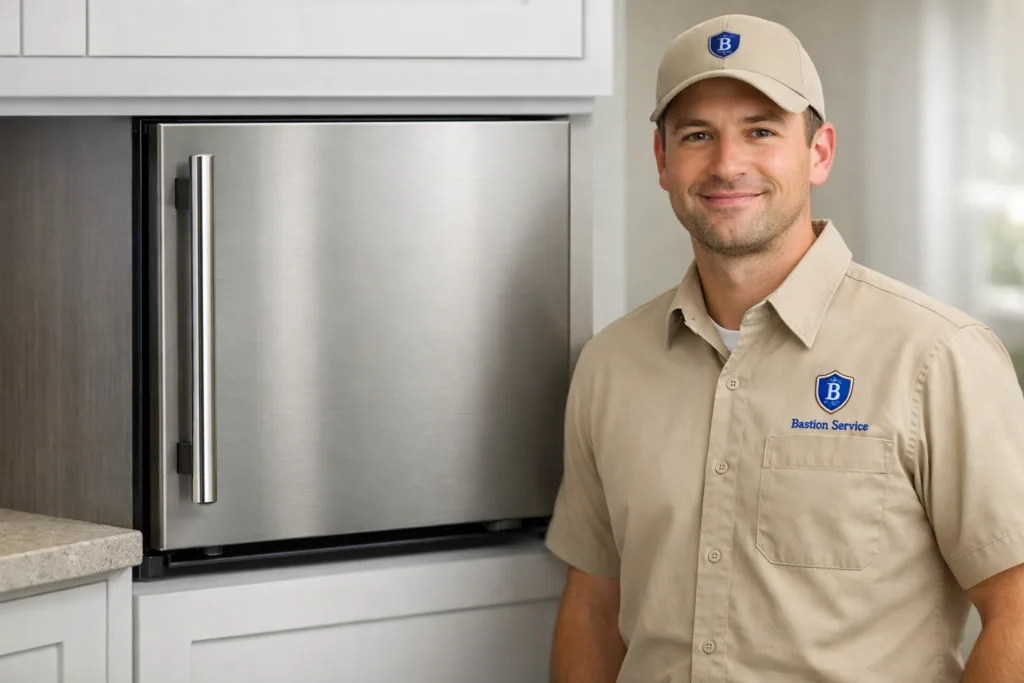
Small changes in refrigerator performance often show up before a full failure. You might notice milk not staying as cold, condensation near the door, ice forming where it should not, or a cabinet that suddenly sounds louder than usual. With U-Line units, those early signs can point to very different causes, so it helps to look at the symptom pattern rather than assume every cooling issue means the same repair.
What homeowners in Culver City often notice first
Many refrigerator problems begin as a change in routine rather than a complete breakdown. Food may spoil faster, beverages may not feel cold enough, or the unit may seem to run long after the kitchen has quieted down. In some homes, the first clue is water under the appliance or moisture collecting on shelves and drawers.
These symptoms matter because a refrigerator can still appear to be working while struggling in the background. A unit that is barely maintaining temperature today may lose cooling more noticeably soon after, especially if airflow, fan operation, or defrost performance is already compromised.
Common U-Line refrigerator symptoms and what they may mean
Cooling is weak or uneven
If one section stays cold while another warms up, the issue may involve airflow, temperature sensing, fan operation, or a control problem. Uneven cooling is often different from a total no-cool condition. Homeowners may notice warmer items near the top shelf, inconsistent temperatures from side to side, or food in the back freezing while items near the door are too warm.
Possible causes can include:
- Restricted interior airflow from frost or blocked vents
- Evaporator fan problems
- Thermistor or temperature control faults
- Dirty condenser components affecting heat transfer
- Compressor or sealed-system performance issues
If temperatures are drifting up gradually, it is usually best not to wait for complete failure before having the appliance checked.
The refrigerator runs too long or seems to never shut off
Long run times do not always mean the compressor is failing, but they do signal that the refrigerator is working harder than it should. A U-Line refrigerator may run continuously because it is losing cold air, struggling to move air internally, or dealing with frost that reduces efficiency.
This can happen when:
- The door gasket is not sealing well
- Condenser areas need cleaning
- A defrost system is not clearing ice properly
- A sensor is misreading cabinet temperature
- The appliance is trying to recover from an underlying cooling fault
Long run times are worth addressing early because the extra strain can lead to higher wear on major components.
Short cycling or repeated clicking
If the refrigerator starts and stops quickly, or you hear clicking followed by no normal cooling, the problem may be electrical rather than airflow-related. Start components, controls, relays, or compressor-related issues can all create this pattern. Short cycling is not something to ignore, since repeated failed starts can escalate the repair path.
Water leaks, puddles, or excess moisture
Water under or inside the refrigerator can come from more than one source. A blocked drain line is common, but door sealing issues, condensation problems, and leveling concerns can also create recurring moisture.
Watch for:
- Puddles under the front edge of the unit
- Water collecting beneath crispers or drawers
- Moisture around the door frame
- Condensation on shelves or interior walls
Leaks should be handled promptly, especially on finished flooring. Even a small recurring drip can damage surrounding surfaces over time.
Frost buildup or ice where it should not be
A little moisture can quickly turn into a larger airflow problem when frost begins forming on interior panels or around vents. In many cases, repeated frost points to warm air entering the cabinet, a gasket issue, or a defrost-system failure. Manually clearing the ice may bring short-term improvement, but if the frost returns, the underlying cause still needs attention.
Repeated frost buildup can lead to:
- Reduced cooling consistency
- Blocked air circulation
- Longer run times
- Ice interference with fan blades
New noises during normal operation
Not every sound is a defect. Refrigerators naturally make some operating noise as fans run, refrigerant moves, and components cycle on and off. The concern is a new sound or a sound that becomes stronger, more frequent, or clearly abnormal.
Noises that often deserve inspection include:
- Loud buzzing that was not present before
- Clicking without proper cooling
- Rattling caused by vibration or loose components
- Fan scraping from ice buildup or motor wear
A change in sound is especially important when it appears alongside warming temperatures or frost.
How symptom timing helps narrow the cause
When a refrigerator problem started can be almost as useful as the symptom itself. If performance changed suddenly, the cause may be a component failure such as a fan motor, control issue, or start problem. If the change developed slowly over days or weeks, that can suggest airflow restriction, coil contamination, gasket leakage, or an efficiency problem that worsened gradually.
Helpful details to note before service include:
- Whether the issue is constant or intermittent
- If the freezer or fresh-food section is affected more
- Whether the problem began after a power interruption
- If leaks, frost, and noise appeared together or separately
- Whether opening and closing the door seems to change the symptom
When continued use can make refrigerator damage worse
Some problems stay relatively contained for a short time, but others create stress that can spread. A weak fan can lead to poor airflow and then frost. A damaged gasket can force long run cycles. A blocked drain can become repeated water exposure. A refrigerator trying and failing to start can place additional strain on electrical components.
If the cabinet temperature is no longer dependable, it is wise to reduce use, protect perishable food, and avoid assuming the unit will stabilize on its own. The longer a struggling refrigerator runs under the wrong conditions, the greater the chance of added wear.
Repair versus replacement for a U-Line refrigerator
Many U-Line refrigerator issues are repairable when the problem is limited to a fan, control, sensor, gasket, drain, or ice-making component. In those cases, restoring normal operation can be more sensible than replacing the appliance.
Replacement becomes a more serious consideration when:
- The diagnosis points to major sealed-system trouble
- The unit has a history of repeated breakdowns
- Multiple systems are failing at once
- The repair cost no longer makes sense for the appliance’s condition
The right decision depends on the failed part, the overall state of the refrigerator, and whether it has otherwise been reliable in the home.
Household situations where fast service matters most
Prompt service is especially important when the refrigerator stores a high volume of groceries, specialty items, medications that require stable cooling conditions, or items for frequent entertaining at home. In Culver City households that rely on a built-in or undercounter U-Line unit every day, even a modest performance drop can become a bigger inconvenience quickly.
Scheduling service sooner is usually the better choice when you notice:
- Food temperatures that no longer feel consistently cold
- Leaks returning after cleanup
- Frost reappearing after manual removal
- Persistent clicking, buzzing, or fan noise
- A refrigerator that is clearly running harder than normal
What a service visit should accomplish
A useful refrigerator service visit should identify whether the fault is related to airflow, controls, drainage, electrical starting, fan operation, defrost function, or a larger cooling-system concern. That matters because similar symptoms can have very different repair paths, and replacing parts without confirming the cause can waste time and money.
For homeowners in Culver City, the goal is simple: understand what failed, what risk comes with continued use, and whether repair is the practical next step for the specific U-Line refrigerator in the home.