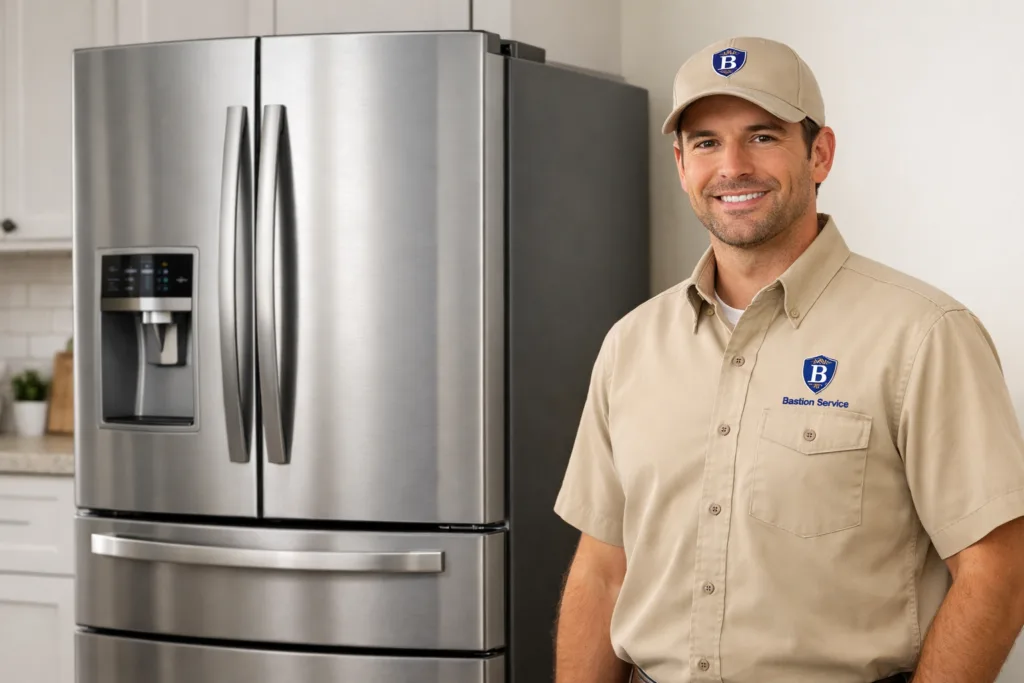
Refrigerator problems rarely stay minor for long. A unit that runs a little warm today can lead to spoiled groceries, soft produce, melting freezer items, or water on the floor by the next day. Because several different parts can create similar symptoms, the most useful approach is to match what you are seeing with the way the refrigerator actually cools, circulates air, drains moisture, and manages defrost cycles.
Common refrigerator symptoms and what they often indicate
Warm temperatures in the fresh-food section can come from restricted airflow, dirty condenser coils, a failing evaporator fan, control trouble, or a defrost issue that blocks cold air from moving where it should. If milk, leftovers, and produce are warming while frozen foods still seem mostly solid, that often points to an air circulation problem rather than a total loss of cooling.
When both the refrigerator and freezer sections are getting warmer, the problem may be broader. That can include compressor-related trouble, condenser fan issues, electrical faults, or sensors and controls that are no longer responding properly. In a household kitchen, that kind of temperature loss usually deserves quicker attention because food safety becomes part of the concern.
Leaks are another common complaint. Water under crispers or on the floor often traces back to a clogged defrost drain, a supply line problem, condensation caused by poor door sealing, or ice buildup melting in the wrong place. A small puddle may look harmless, but repeated leaking can affect flooring and cabinetry if it continues.
Noises also tell an important story. Buzzing, clicking, rattling, humming that seems louder than usual, or a refrigerator that runs almost nonstop can point to fan motors, vibration, ice striking a fan blade, compressor stress, or a unit working too hard because temperatures are not recovering normally.
How freezer-related symptoms change the diagnosis
The freezer compartment often gives the clearest clues. Heavy frost on the back interior wall, packages covered in ice crystals, or airflow that feels weak can suggest a defrost failure or blocked vents. If the main problem is centered in the freezer compartment rather than the fresh-food side, Freezer Repair in Palms may be more relevant.
Another pattern homeowners notice is slow temperature recovery after the doors have been opened. If the refrigerator takes much longer than usual to cool back down, the cause may be a weak fan, dirty coils, poor door sealing, or frost buildup limiting airflow. Those issues do not always stop cooling completely, but they do make the appliance less reliable and more expensive to run.
Ice maker and water system problems
Not every refrigerator issue is really a whole-unit cooling failure. Sometimes the cabinet temperature is fine, but the ice system stops producing cubes, dispenses irregularly, leaks near the fill area, or forms clumps. If the symptom is mostly tied to ice production, fill behavior, or dispenser performance, Ice Maker Repair in Palms may be the better service path.
Water line issues can overlap with refrigerator repair as well. A kinked line, failing inlet valve, frozen fill tube, or poor water pressure can interfere with both ice production and leak diagnosis. That is why it helps to separate a cooling complaint from a water-delivery complaint before deciding what repair is actually needed.
When frost, condensation, or freezing food points to airflow trouble
A refrigerator that freezes food in the fresh-food section is not necessarily “too cold” in a simple thermostat sense. It may have a damper problem, sensor issue, control fault, or uneven airflow that sends excessive cold air toward certain shelves. Items placed near vents often show the problem first, especially leafy produce, drinks, and leftovers stored toward the back.
Condensation on shelves, around door openings, or on food containers can mean warm air is getting in through a worn gasket or a door that is not closing squarely. In other cases, excess moisture forms because the refrigerator is not defrosting correctly or is struggling to maintain a stable interior temperature. These are the kinds of symptoms that seem small at first but often lead to frost accumulation and more noticeable cooling loss later.
Specialty cooling appliances need a different service path
Some kitchens have more than one cooling appliance, and the symptom is not always coming from the primary refrigerator. If temperature instability is happening in a separate beverage unit or specialty wine storage appliance, Wine Cooler Repair in Palms may be the better fit.
When to schedule service instead of waiting
Waiting can make sense for a brief noise after a defrost cycle or a door left slightly open once, but repeated warming, persistent leaking, rising frost, or nonstop running usually means the problem is active and not resolving on its own. In Palms homes, service becomes more urgent when dairy is warming, frozen items are softening, or the refrigerator cannot hold steady temperatures overnight.
It is also smart to stop waiting when you notice one symptom triggering another. For example, poor airflow can lead to frost buildup, which then causes longer run times and warmer shelves. A drain blockage can start as moisture inside the cabinet and end as a floor leak. Addressing the first failure early often prevents a more expensive chain of problems.
What a useful refrigerator repair visit should clarify
A worthwhile service call should do more than identify one visible symptom. It should narrow down whether the issue is related to airflow, defrost, drainage, seals, controls, fans, or a larger sealed-system concern. That distinction matters because a manageable component repair is very different from a major cooling-system failure.
Homeowners in Palms usually want straightforward answers: whether food is still being stored safely, whether continued use risks more damage, and whether the repair is likely to be a practical fix. Those answers come from testing and observation, not guessing based only on a warm compartment or a puddle on the floor.
Repair versus replacement
Many refrigerator problems are repairable when they involve serviceable parts such as fans, thermostats, sensors, drains, gaskets, valves, or control-related components. In those cases, restoring proper airflow, temperature control, or drainage can return the appliance to normal daily use without a major overhaul.
Replacement enters the conversation when cooling failures are recurring, multiple systems are worn at once, or the diagnosis points to significant sealed-system or compressor trouble. Even then, a proper diagnosis is still valuable because it confirms whether the problem is truly major or whether the symptoms are being caused by something smaller and more economical to correct.
For households in Palms, the main goal is to understand what failed, how urgent the issue is, and whether the refrigerator is likely to return to stable performance after repair. That makes it easier to protect groceries, avoid repeat breakdowns, and make a sound decision about the appliance you rely on every day.