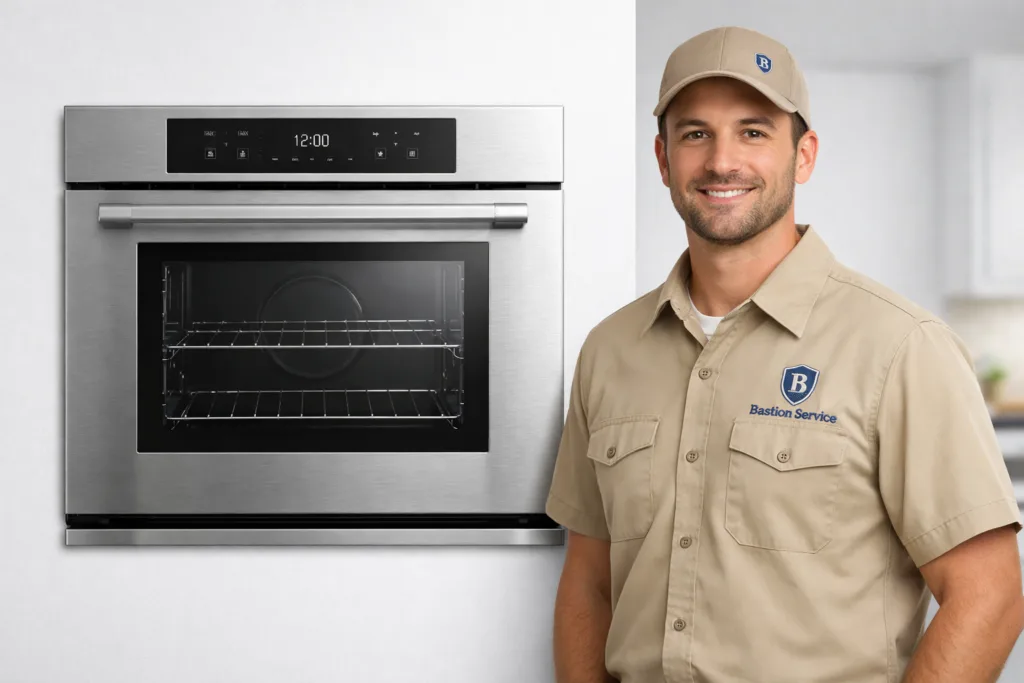
Common Summit oven symptoms and what they can mean

Oven problems rarely show up in just one way. A Summit oven may still turn on but fail to reach temperature, heat unevenly from rack to rack, or seem to run hotter or cooler than the setting suggests. Looking at the exact symptom pattern usually says more than the symptom name alone.
Oven will not start or will not heat
If the lights, clock, or display appear normal but the cavity stays cold, the issue may involve the bake element, igniter, temperature sensor, wiring, or the control system. If the oven is completely unresponsive, power supply issues, a blown fuse, or a failed control can also be part of the diagnosis. On gas models, a weak igniter can be especially deceptive because the oven may appear to start a cycle without producing enough heat to actually ignite the burner.
Slow preheat
A long preheat time often points to a heating component that is operating below normal output rather than failing completely. Electric models may struggle because of a weakening element or relay problem. Gas models may show slow preheat when the igniter is no longer drawing enough current to open the gas valve properly. Homeowners usually notice this first through delayed meal timing, longer baking cycles, or recipes that suddenly need extra minutes.
Uneven baking and inconsistent browning
When cookies darken too quickly on one side, casseroles stay cool in the center, or one rack cooks much faster than another, the problem may involve temperature sensing, heat cycling, door sealing, or airflow. In some cases, the oven is heating, but not regulating correctly. That difference matters because the repair path for a calibration or sensor issue is not the same as the path for a failed element or control fault.
Temperature swings
Some cycling is normal in any oven, but large swings are not. If food alternates between undercooked and overdone, or if an oven thermometer shows repeated overshooting and dropping well below the set point, the problem may be tied to the sensor, control board, relay behavior, or a heating component that cuts in and out under load.
Display or control issues
Unresponsive buttons, a flickering display, random beeping, or settings that change on their own can affect both convenience and safe operation. A control issue may prevent proper temperature selection, interrupt the cooking cycle, or make it hard to tell whether the oven is actually on or off. These symptoms often require testing beyond what can be seen from the front panel.
Door, hinge, and gasket problems
A door that does not close tightly can make an oven seem weak even when the heating system is working. Escaping heat leads to slow preheat, poor browning, and longer cook times. Worn hinges, damaged gaskets, or slight misalignment can all contribute, especially when the symptom seems worse during longer baking cycles.
Why symptom-based diagnosis matters
Different failures can create nearly identical cooking problems. For example, a Summit oven that does not maintain temperature might have a bad sensor, a failing control, a weak igniter, a damaged element, or a door seal issue. Replacing parts based only on guesswork can leave the original problem unresolved and add unnecessary cost.
This is especially true with intermittent issues. An oven that works some days and fails on others may have a wiring problem, a relay that sticks only when hot, or a control board that behaves unpredictably under normal cooking temperatures. Those faults are often missed if the appliance is judged only by appearance.
Signs the problem is getting worse
Some oven issues stay inconvenient for a while before turning into a full failure. Others escalate quickly. It is smart to stop using the oven and schedule service if you notice any of the following:
- The oven trips power or shuts off unexpectedly
- Preheat times keep getting longer
- Food burns outside but remains undercooked inside
- The control panel stops responding consistently
- The oven overheats or seems much hotter than the setting
- The door will not close properly or heat leaks heavily during use
On gas models, any persistent gas smell should be treated as a safety concern first. Stop using the appliance until the source of the issue is identified.
What Brentwood homeowners should watch for during everyday use
Many oven problems become easier to identify when you pay attention to repeatable cooking patterns rather than a single bad meal. If the same dish suddenly needs more time every week, if baked goods are browning unevenly in familiar pans, or if the oven no longer recovers temperature well after the door is opened, those changes can help narrow down the fault.
It also helps to note whether the issue affects every cooking mode or only one. For example, trouble in bake mode but not broil may point in a different direction than an oven that struggles in all settings. That kind of detail can make Summit oven repair in Brentwood more efficient and reduce unnecessary parts replacement.
Repair or replacement: how to think it through
Many Summit oven problems are repairable when the issue is limited to parts such as an igniter, element, sensor, switch, gasket, hinge, or control-related component. If the appliance is otherwise in solid condition and the failure is clearly defined, repair is often the more sensible option.
Replacement may make more sense when the oven has multiple significant problems at once, shows repeated electronic failures, or has condition issues that go beyond a single repair. The better choice depends less on frustration in the moment and more on the actual fault, the overall condition of the appliance, and the likely path forward after diagnosis.
When service makes the most sense
Service is usually worth scheduling when the oven can no longer support normal meal preparation with predictable results. That includes no-heat conditions, slow preheat, unstable temperatures, control failures, and recurring uneven cooking. Small symptoms can also be worth addressing early if they affect performance regularly, since a minor repair may prevent added strain on other components.
For households in Brentwood, the goal is simple: restore normal cooking with a repair plan based on how the oven is actually failing. Once the symptom pattern is identified, it becomes much easier to tell whether the problem is straightforward, whether continued use is unwise, and whether repair is practical.