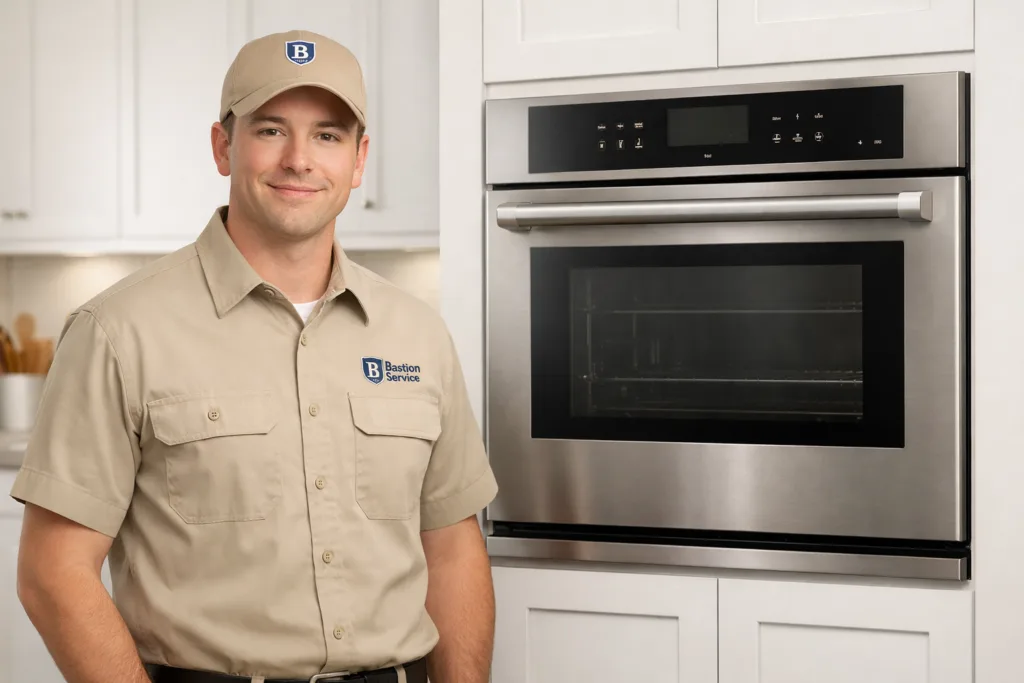
Oven problems rarely stay small for long. A Monogram unit that takes too long to preheat, runs hotter than the display says, or stops mid-cycle can turn routine cooking into trial and error. Because several different components can create similar symptoms, the most useful starting point is to match the repair plan to the way the failure appears in daily use.
Start with the symptom pattern
What the oven does before, during, and after a cycle often points toward the affected system. A total no-heat complaint is different from an oven that heats sometimes, drifts off temperature, or only fails in certain modes. Paying attention to whether the problem shows up during bake, broil, convection, or preheat helps narrow down the cause much faster.
In Brentwood homes, that matters because built-in cooking appliances are often used heavily and expected to hold steady temperatures for family meals, entertaining, and planned cooking schedules. When results become inconsistent, the issue is usually more specific than “the oven is old.”
Common Monogram oven problems and what they may mean
Oven will not heat at all
If the display comes on but the cavity stays cold, the fault may involve a heating element, temperature sensor, relay, thermal protection component, wiring issue, or electronic control problem. On some models, the oven can appear fully powered while a critical heating circuit has failed. That is why a lit control panel does not always mean the heating system is working.
Slow preheat
Slow preheat is one of the most common complaints with electric ovens. It can be caused by a weak bake element, sensor inaccuracy, control failure, or a problem with how the oven cycles heat during warm-up. Homeowners often notice this first when recipes suddenly need extra time even though the set temperature has not changed.
- Preheat takes much longer than it used to
- The oven says it is ready before it is actually hot enough
- Cooking times keep getting longer from week to week
Uneven baking
If the top rack browns too quickly while lower dishes stay pale, the oven may be struggling with temperature regulation, airflow, or door sealing. Uneven baking can also happen when a convection system is not circulating heat correctly or when the temperature sensor is sending inaccurate readings to the control.
This type of problem often shows up gradually. Cookies may bake unevenly, casseroles may come out overdone on one side, or dishes that used to be reliable start producing inconsistent results.
Oven overheats or burns food
An overheating oven deserves prompt attention. When the cavity runs well above the selected temperature, likely causes include a faulty sensor, a stuck relay, or a control board that is not cycling the heat correctly. Repeated overheating does more than ruin meals. It can place added stress on internal components and increase the chance of a larger failure.
Temperature swings during cooking
Some temperature fluctuation is normal as an oven cycles on and off, but wide swings that affect cooking results usually are not. If one batch turns out fine and the next one is undercooked or scorched using the same settings, the issue may involve the sensor, control calibration, heating response, or heat loss through the door.
Door will not close properly
A door that does not seal tightly can cause long preheat times, unstable temperatures, and heat escaping into the kitchen. Worn hinges, alignment problems, gasket wear, or latch issues may all contribute. Even a small gap can be enough to affect performance, especially during longer bake cycles.
Error codes or unresponsive controls
Beeping, flashing codes, partial display failure, or buttons that stop responding point toward an electronic problem rather than a simple heating issue. These symptoms may involve the user interface, the main control, wiring connections, or feedback from another failed component such as the sensor. If the same error returns after a reset, it usually needs proper diagnosis instead of repeated power cycling.
Signs the oven should not keep being used
Some issues are inconvenient. Others are a reason to stop using the appliance until it is checked. If the oven is tripping breakers, losing power during operation, overheating badly, or showing signs of electrical trouble, continued use can make the repair more expensive and create unnecessary risk.
- The oven shuts off unexpectedly in the middle of cooking
- The breaker trips when bake or broil is selected
- Food burns quickly even at moderate settings
- There is buzzing, repeated clicking, or intermittent power loss
- The control panel behaves erratically or does not respond consistently
Why accurate diagnosis matters on premium built-in ovens
Monogram ovens are often integrated into the kitchen in a way that makes targeted repair worth considering. Replacing a premium built-in unit can involve fit, trim, cabinetry alignment, electrical compatibility, and finish matching, not just the appliance itself. That makes it especially important to identify whether the problem is isolated to one repairable part or spread across multiple systems.
A good service approach should separate a failed component from a secondary symptom. For example, a temperature complaint may stem from a door seal issue, while a control error may begin with bad sensor feedback. Replacing the wrong part first can waste time and delay a lasting fix.
Repair or replacement: how homeowners usually decide
Many Monogram oven failures are repairable when the issue is limited to components such as elements, sensors, switches, relays, hinges, gaskets, or selected control-related parts. Replacement becomes more likely when the appliance has several major faults at once, when the overall condition is poor, or when the repair path no longer makes sense for how the oven is used.
For most households, the decision comes down to a few practical questions:
- Is the problem confined to one main system or are multiple systems failing?
- Has the oven been performing well otherwise?
- Will the repair restore stable daily cooking performance?
- Is the issue affecting a feature you rely on regularly, such as convection or broil?
What to note before scheduling service
Helpful details can make troubleshooting faster. If possible, note whether the issue happens every time or only in certain modes, whether the oven reaches temperature eventually, and whether the display shows any codes. Also pay attention to whether the problem appeared suddenly or worsened over time.
Those patterns help distinguish between a single failed part and a broader control or power issue. For homeowners in Brentwood, that usually leads to a more efficient visit and a more realistic repair recommendation.
What a service visit should accomplish
A productive appointment should verify the actual complaint, test the heating and temperature-related systems, check for door or control issues, and explain the repair options in plain language. The goal is not just to confirm that the oven has a problem, but to identify which component or system is creating the performance issue and whether the repair is likely to return normal cooking results.
When your oven stops behaving predictably, the next step should be based on the real failure rather than guesswork. That gives you a better way to decide whether repair is the sensible choice for your kitchen and your routine.