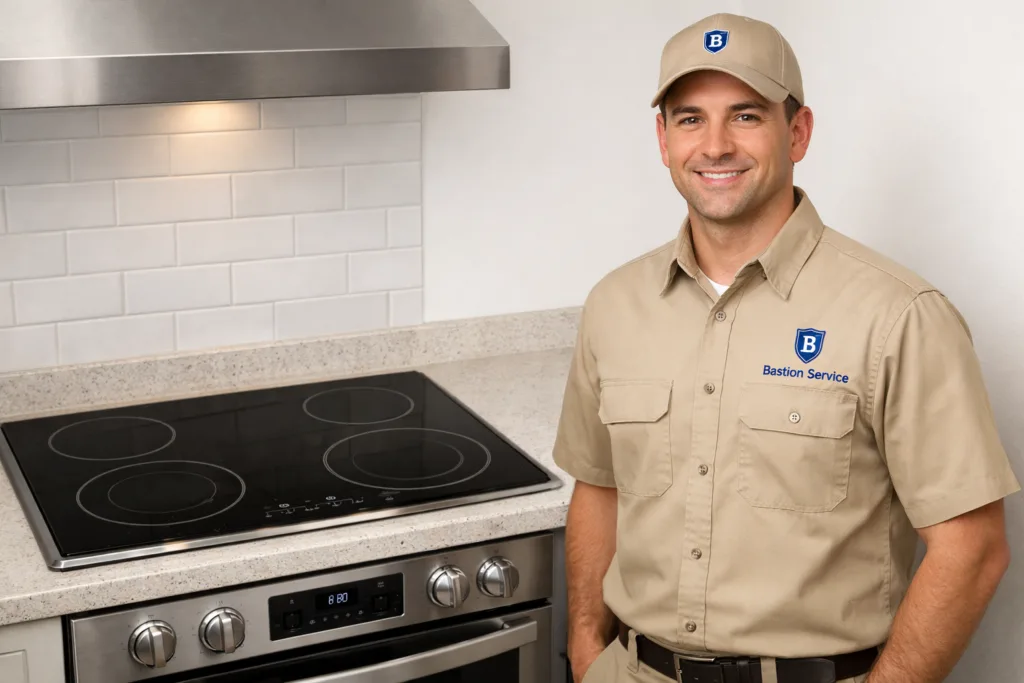
Cooktop problems often look simple from the surface, but the same symptom can come from very different failures. A Whirlpool cooktop that will not heat, clicks constantly, or behaves inconsistently may have a problem with one burner assembly, a control component, wiring, or the incoming power feeding the unit. Sorting that out first helps avoid wasted parts and unnecessary downtime in the kitchen.
Common Whirlpool cooktop symptoms in Palms homes
Burner will not ignite on a gas model
If a gas burner clicks but does not light, the cause may be as minor as a dirty burner head or a cap that is not seated correctly. In other cases, the issue points to a worn igniter, a bad spark switch, moisture around the ignition area, or a problem in the spark module. When only one burner is affected, the fault is often local to that burner. When several burners act up at once, shared ignition components deserve closer attention.
Burner will not heat on an electric model
An electric burner that stays cold may have a failed radiant element, a damaged connection, a bad switch, or a wiring problem beneath the cooktop. If the element warms only occasionally, intermittent electrical contact can also be part of the picture. This matters because an element is not always the failed part, even when that is the most obvious suspect.
Burner gets too hot or does not regulate well
When a burner jumps quickly to high heat, ignores lower settings, or cycles in a way that feels erratic, temperature control parts should be checked. On many electric Whirlpool cooktops, this can point to an infinite switch or related control issue. On gas units, poor flame spread, blocked burner ports, or burner cap alignment problems can also create uneven cooking results.
Continuous clicking after ignition
A gas cooktop that keeps clicking after the flame appears usually needs service. The cause may be a wet or dirty igniter, a stuck switch, or a fault in the ignition system. Even if the burner still lights, constant clicking is a sign that something is not operating normally and should not be ignored.
Multiple burners or controls acting unpredictably
When more than one cooking zone misbehaves, the diagnosis often expands beyond a single burner. Shared wiring, control assemblies, terminal blocks, or power-related issues may be involved. This kind of symptom pattern is worth addressing promptly, especially if operation changes from day to day or worsens as the cooktop heats up.
What different symptoms can tell you
Not every cooktop issue means the same thing, even when the problem sounds familiar. A burner that will not light can be a cleaning issue, an ignition issue, or a switch issue. A burner that will not heat can be the element itself, the control behind it, or a damaged connection underneath. Symptom-based diagnosis matters because Whirlpool cooktops vary by model design, and the repair path should match the exact failure rather than the most common guess.
- One burner affected: often points to an isolated burner, switch, igniter, or element problem.
- Several burners affected: may indicate a shared control, spark, or power issue.
- Intermittent operation: can suggest loose connections, heat-related electrical faults, or moisture-related ignition issues.
- Burning smell or visible scorching: raises concern for overheated wiring or damaged components.
When a cooktop issue becomes a safety concern
Some problems are more than an inconvenience. If you notice a persistent gas smell, visible sparking, a burner that will not shut off properly, or signs of overheating around the controls or burner area, stop using the cooktop until it is assessed. These symptoms can point to conditions that should not be handled with trial-and-error use.
Gas concerns deserve particular caution. If the smell of gas is strong or does not clear quickly, do not continue testing burners. Likewise, on electric units, repeated tripping, buzzing, or heat damage around a burner can indicate an electrical problem that may worsen with continued use.
When repair usually makes sense
Many Whirlpool cooktop problems are repairable when the failure is limited to a burner component, igniter, element, switch, or another defined part. Repair is often the better choice when the cooktop surface is in good condition, the controls are otherwise functioning normally, and the issue is isolated rather than widespread.
Homeowners in Palms often benefit from repair when:
- Only one burner is failing
- The cooktop is otherwise working normally
- The surface is intact and not severely damaged
- The problem appeared recently rather than after a long pattern of multiple failures
When replacement may be the better option
Replacement becomes more likely when the cooktop has major glass damage, repeated issues across several systems, severe electrical heat damage, or repair costs that approach the value of the unit. Age alone does not decide the issue, but overall condition matters. If the appliance has functional problems along with structural or cosmetic damage, investing in a major repair may not be the best long-term choice.
This is especially true when one visible symptom turns out to be part of a larger decline, such as failing controls plus wiring damage plus surface wear. In those cases, the right decision depends on the extent of the problem rather than the original complaint alone.
What to note before scheduling service
A few observations can make diagnosis more direct. Try to note whether the problem affects one burner or several, whether it happens every time or only sometimes, and whether the issue appears at startup, during heating, or after the cooktop has been running for a while.
Helpful details include:
- Which burner is affected
- Whether the burner clicks, glows, heats weakly, or does nothing at all
- Whether the control feels loose, stiff, or inconsistent
- Whether the flame looks uneven on a gas model
- Whether the issue started suddenly or became worse over time
Those details help connect the symptom pattern to the most likely repair path and make it easier to decide whether service is practical for the cooktop’s condition.
Keeping daily cooking predictable again
A cooktop does not have to fail completely to create real frustration. Uneven heat, delayed ignition, nonstop clicking, and unreliable controls all affect everyday cooking and can make the appliance harder to trust. For households in Palms, the goal is to restore safe and consistent performance with a repair plan that fits the actual condition of the Whirlpool cooktop, not just the first visible symptom.