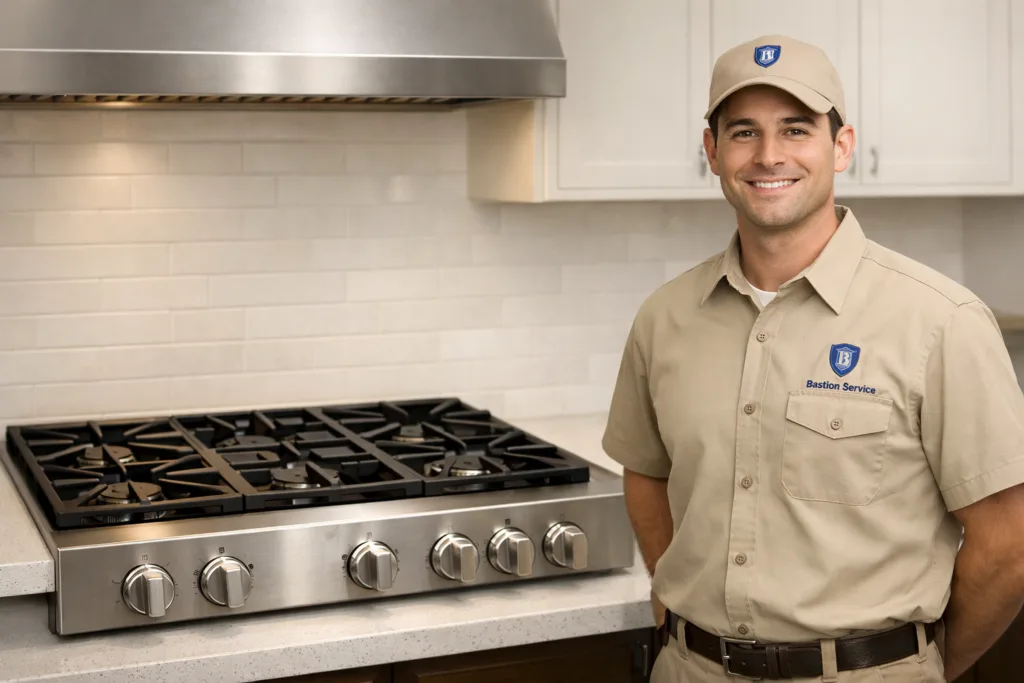
Cooktop failures tend to show up in the middle of normal routines: breakfast interrupted by a burner that will not ignite, dinner delayed because one zone heats far slower than the others, or a steady clicking sound that continues long after the flame appears. In Culver City homes, the most important part of the repair process is matching that symptom pattern to the actual fault instead of replacing parts by guesswork.
Common Wolf cooktop symptoms and what they often mean
Many cooktop problems look similar at first, but the cause can be very different depending on whether the issue involves ignition, heat output, controls, wiring, or the cooking surface itself. A symptom-based inspection helps narrow that down quickly.
Burner clicks but does not light
On gas models, repeated clicking without ignition may point to a wet or dirty burner area, misaligned burner caps, blocked ports, a worn igniter, or a spark system issue. If the burner lights only after several tries, that delay usually means the problem is progressing rather than improving on its own.
Clicking that continues after the burner is lit can also indicate a fault in the ignition circuit. That should be checked before the cooktop is used normally again, especially if the behavior keeps returning.
Burner lights slowly or unevenly
A burner that ignites on one side but not all the way around often has a flame-distribution problem rather than a complete no-ignite failure. Common causes include clogged burner openings, cap alignment problems, or burner head wear. Uneven flame is easy to dismiss at first, but it can affect cooking results and put extra stress on ignition components over time.
Burner does not heat properly
If a burner runs weak, fluctuates, or never reaches the expected cooking temperature, the failure may involve the regulator side of the burner system, control components, heating elements, or temperature-sensing parts depending on the model. Electric and induction Wolf cooktops may also show slow response, intermittent heating, or a dead zone when an element, module, or related control part begins to fail.
Controls respond inconsistently
When touch controls do not register correctly, settings change unpredictably, or a burner turns on and off at the wrong times, the issue may be tied to switches, interface components, wiring connections, or the main control system. Intermittent control problems are worth addressing early because they often become less predictable with continued use.
Cracked glass or surface damage
On glass, radiant, or induction-style units, visible cracking is more than a cosmetic concern. Surface damage can affect safe operation, heat transfer, and component protection underneath. A cracked cooktop should be evaluated before further use, especially if the crack spreads, reaches a control area, or appears after impact or sudden temperature change.
Symptoms that should not be ignored
Some cooktop issues are inconvenient. Others are signals to stop using the appliance until it is inspected. These are the ones that deserve faster attention:
- Persistent clicking that does not stop after ignition
- One burner failing repeatedly after cleaning and normal reset steps
- Intermittent power loss during use
- Controls that do not respond or respond incorrectly
- Visible sparking, scorching, or signs of overheating
- Cracked glass on applicable models
- A gas odor in or around the cooktop area
If you notice a strong or persistent gas smell, stop using the unit immediately. Do not keep testing burners. Leave the area if needed and contact the gas utility or emergency service first. Appliance repair should come only after the immediate safety issue is addressed.
Why one symptom can have several possible causes
A burner that will not light may be as simple as poor cap placement after cleaning, but it can also come from a failed igniter, spark module issue, or a deeper electrical problem. A cooktop that appears to lose power may have a control fault, damaged wiring, or a component that fails only after heating up.
This is why the best repair decisions come from testing and inspection rather than assumptions. Two households in Culver City may describe the same symptom, yet the actual repair path can be completely different once the unit is checked.
When continued use can make the problem worse
It is common to work around one weak burner for a while, especially if the rest of the cooktop still operates. The risk is that repeated ignition attempts, overheating, or inconsistent controls can create secondary damage. What begins as a single-part issue can spread into added wear on surrounding components.
Examples include:
- Repeated clicking wearing down ignition components
- Blocked burner ports causing poor flame performance and unreliable ignition
- Intermittent electrical faults leading to sudden loss of additional functions
- Ignoring cracked glass until the surface becomes unsafe to use
If the appliance is no longer reliable for normal cooking, it is usually time to stop treating it as a temporary inconvenience and have it properly evaluated.
Repair or replacement: what usually makes sense
Many Wolf cooktop problems are repairable when the issue is limited to ignition parts, switches, elements, sensors, burner components, or control-related parts and the rest of the unit remains in good condition. Repair is often the practical option when the cooktop still fits the kitchen well and the problem is isolated.
Replacement becomes more reasonable when there are multiple major failures, significant physical damage, heavy age-related wear, or when the overall repair path approaches the value of keeping the current appliance in service. The right decision depends on the condition of the specific cooktop, not just the fact that it has stopped working properly.
What homeowners in Culver City should note before service
A few details can make diagnosis faster and more accurate. Before scheduling service, it helps to note:
- Which burner or zone is affected
- Whether the issue happens every time or only sometimes
- If the symptom started after cleaning, a power interruption, or a spill
- Whether the problem involves ignition, heat level, controls, or the cooking surface
- Any unusual sounds, smells, or error behavior
Those observations can help separate a simple burner-area issue from a control or electrical fault and make the repair plan more direct.
Focused help for Wolf cooktop repair in Culver City
For most homeowners, the priority is straightforward: identify what failed, know whether the cooktop should be used in the meantime, and understand whether repair is worthwhile. Bastion Service helps Culver City households evaluate Wolf cooktop problems based on the actual symptom, appliance condition, and likely repair path so the next step is based on evidence instead of trial and error.