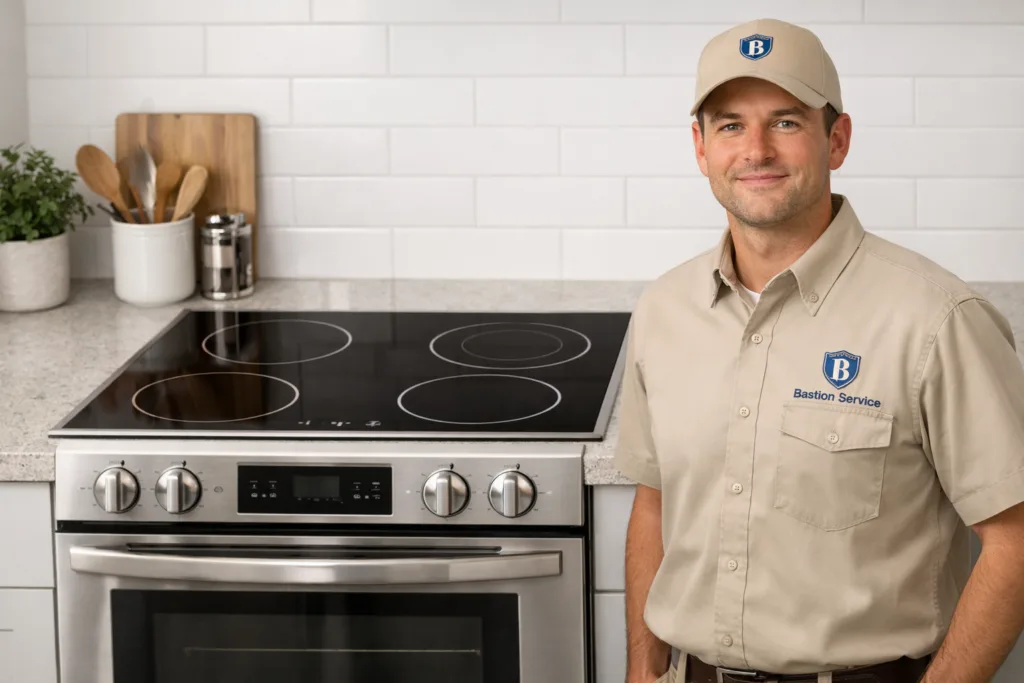
Cooktop problems rarely stay minor for long. A burner that struggles to ignite, runs too hot, or stops heating altogether can disrupt everyday cooking and sometimes point to a developing electrical or ignition fault. For Culver City homeowners, the most useful starting point is identifying the symptom pattern and matching it to the most likely failed part or circuit.
Common Kenmore cooktop symptoms and what they may mean
Kenmore cooktops can show similar symptoms for very different reasons. One burner not working is often a different kind of issue than multiple burners failing at once, and an electric heating problem is diagnosed differently from a gas ignition problem. Looking at how the cooktop behaves during normal use helps narrow the repair path quickly.
Burner will not heat
On electric Kenmore cooktops, a burner that stays cold may have a failed element, a bad switch, damaged wiring, or a problem in the receptacle connection below the surface. If the burner sometimes works and sometimes does not, heat-related wear in the switch or wiring is often part of the diagnosis.
If more than one burner is affected, the issue may involve shared electrical supply, internal wiring, or control components rather than a single surface element.
Burner heats unevenly or gets too hot
Uneven heating often shows up as slow boiling, food scorching in one area of the pan, or settings that no longer match the expected temperature. In some cases, the burner cycles incorrectly because the switch is no longer regulating power as it should. In others, the element itself has worn spots that create irregular heating.
A burner that overheats even on a lower setting should be checked promptly. Continued use can stress nearby wiring and create additional damage inside the cooktop.
Clicking without ignition
For gas Kenmore cooktops, constant clicking usually points to the ignition system trying to light a burner but failing to complete the process normally. Common causes include moisture around the igniter, a dirty burner cap, a misaligned burner head, a worn ignition switch, or a spark module problem.
If the clicking continues after the burner is lit, or if several burners begin acting the same way, the repair may involve more than simple cleaning.
Burner clicks but lights slowly
Delayed ignition can happen when gas is not flowing evenly through the burner ports or when the spark is weak or inconsistent. Homeowners may notice a pause before ignition, a small flame that spreads unevenly, or repeated attempts before the burner lights fully. This is a symptom worth addressing early because delayed ignition can worsen and affect normal cooking safety.
Knobs, switches, or controls feel unreliable
Loose knobs, stiff controls, indicator lights that stay on, or burners that only work in certain positions often suggest worn switch assemblies or internal control wear. These issues can seem minor at first, but they are often early signs that a component is breaking down under regular heat exposure.
Symptom-based diagnosis for electric and gas cooktops
Kenmore made both electric and gas cooktops, so the correct repair path depends on the type installed in the home.
Electric Kenmore cooktop issues
- Burner does not turn on
- Burner stays too hot
- Indicator light stays on
- Only certain heat settings work
- Cooktop trips a breaker
These symptoms often lead to testing elements, switches, wiring connections, and power supply. Breaker-tripping complaints deserve prompt attention because they can involve a shorted component or damaged wiring.
Gas Kenmore cooktop issues
- Repeated clicking
- Burner will not ignite
- Weak or uneven flame
- Burner lights only after several tries
- Ignition problems after spills or cleaning
Gas cooktop service usually focuses on igniters, burner heads, caps, switch harnesses, spark modules, and burner gas flow. Spills, grease buildup, and moisture can all affect ignition performance, but recurring problems often indicate a part that is wearing out rather than a one-time cleaning issue.
Problems that should not be ignored
Some symptoms are more urgent because continued use can increase the chance of further damage or create a safety concern. It is wise to stop using the affected burner and arrange service when you notice any of the following:
- A burner that overheats and will not regulate properly
- Sparking, arcing, or a burning smell near the controls
- Clicking that continues abnormally
- A cooktop that trips the breaker during use
- Visible cracking on a glass cooktop surface
- Intermittent operation that is getting worse
If there is a strong or persistent gas odor, stop using the cooktop and treat the situation as a safety issue first.
Cracked glass and surface damage
On smooth-top Kenmore models, cracked glass is more than a cosmetic problem. A damaged surface can affect safe operation, especially when heat and spills are involved. Even a small crack can spread with continued use or allow moisture to reach internal components below the top.
Surface damage should be evaluated based on its location, whether the affected burner still operates normally, and whether the crack has changed over time. In some cases, the repair may be limited to the top assembly. In others, the condition of the cooktop may make replacement the better choice.
Why the exact cause matters before replacing parts
Cooktops are often misdiagnosed when the visible symptom seems obvious. A burner that will not heat may look like a failed element, but the real cause could be the switch or wiring below it. A gas burner that clicks constantly may seem like a dirty igniter, but the problem may actually be in the switch harness or spark module.
That is why a proper diagnosis saves time and avoids unnecessary parts replacement. It also gives homeowners a more realistic repair recommendation based on the actual condition of the appliance, not just the first symptom that appeared.
Repair or replacement: what usually makes sense
Many Kenmore cooktop problems are still worth repairing when the issue is isolated to one burner, one switch, one igniter, or another specific component. Repair becomes less appealing when there are multiple failures at once, repeated electrical problems, extensive surface damage, or signs that the unit is aging beyond a reliable fix.
For many households in Culver City, the decision comes down to a few practical questions:
- Is the failure limited to one component or spread across the cooktop?
- Has the same problem happened before?
- Is the cooktop otherwise in good condition?
- Will the repair restore normal daily use without ongoing issues?
Those answers matter more than the symptom alone. A single failed part is often a straightforward repair. Multiple interacting faults may point in a different direction.
What to note before a service visit
Homeowners can help speed up diagnosis by paying attention to a few details before service is scheduled. Useful observations include whether the problem affects one burner or several, whether it is constant or intermittent, and whether it started after a spill, cleaning, power interruption, or unusual noise.
It also helps to note if the cooktop has:
- Lights that stay on after use
- Knobs that feel loose or inconsistent
- Clicking that happens with all burners or just one
- Heat levels that no longer match the control setting
- Breaker trips only when a certain burner is used
Details like these can make the inspection more focused and reduce guesswork.
Kenmore cooktop repair for everyday home cooking needs
In a busy household kitchen, cooktop reliability matters. Whether the issue is a burner that stopped heating, an igniter that will not stop clicking, or a control that no longer responds correctly, the goal is to restore safe and consistent cooking performance without replacing parts unnecessarily.
Bastion Service helps Culver City homeowners evaluate Kenmore cooktop problems based on the specific symptom, the condition of the appliance, and the repair path most likely to solve the issue for daily use.