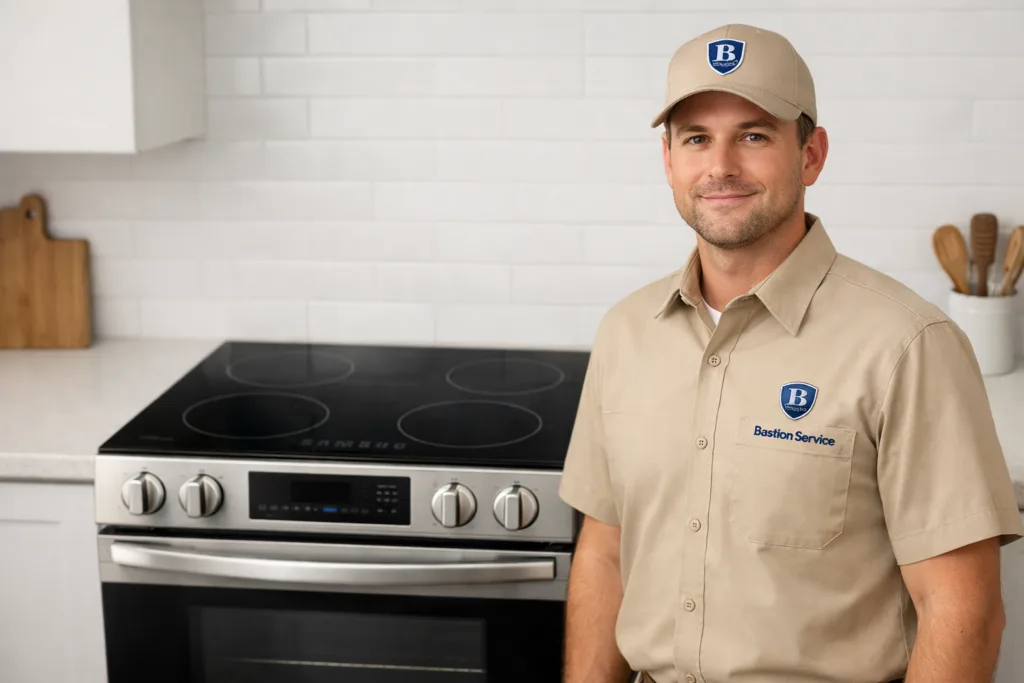
Cooktop problems are easier to solve when the symptom is described clearly. A burner that will not ignite, a surface unit that heats unevenly, or controls that respond only sometimes can each come from more than one failure point on a Samsung unit. The right repair usually depends on whether the problem is isolated to a burner assembly, ignition component, sensor, control, wiring connection, or the cooktop surface itself.
How Samsung cooktop problems are usually diagnosed
Symptom patterns matter. If one burner fails while the others work normally, the issue is often localized. If several burners act up at once, the problem may involve shared controls, power supply, or an internal board. Gas, electric, and induction Samsung cooktops also fail in different ways, so the type of unit changes the repair path.
In many homes in Culver City, the most useful approach is to note exactly what happens and when it happens. Does the clicking continue after the burner lights? Does the element heat briefly and then shut off? Does the touch panel respond after cooling down but fail during cooking? Small details like these help separate a simple burner problem from a larger control issue.
Common Samsung cooktop symptoms and what they can mean
Burner will not heat
On electric models, a burner that stays cold may point to a failed radiant element, damaged connection, faulty switch, or control problem. On induction models, a heating zone may appear dead because of a pan-detection issue, sensor fault, or module problem. If only one area is affected, the repair is often more straightforward than when the whole cooktop loses function.
Burner will not ignite
On Samsung gas cooktops, ignition trouble often starts with the igniter, burner cap alignment, clogged burner ports, or moisture around the burner head. If the spark is present but the flame is weak or delayed, gas flow or burner assembly condition may also need attention. A burner that lights only after several tries should not be ignored, especially if the delay is becoming more frequent.
Continuous clicking
Repeated clicking is one of the most common complaints on gas cooktops. Sometimes it begins after a spill or deep cleaning. In other cases, it comes from a worn ignition switch or spark module issue. If the clicking continues even when the burner is off or after the area is dry, the cooktop should be checked before regular use continues.
Uneven heat
Uneven heating can show up as slow boiling, hot spots, or burners that seem weaker than before. Electric units may have a failing element or sensor. Induction models may cycle abnormally because of electronics or communication faults. Homeowners usually notice this first during everyday cooking when a familiar pan suddenly behaves differently.
Touch controls not responding
Samsung cooktops with touch controls can develop intermittent response problems from moisture intrusion, panel failure, power issues, or a bad control board. If settings change on their own, buttons stop responding, or the display works only part of the time, the problem is usually beyond normal user adjustment.
Error codes or random shutoffs
Error codes can help narrow the issue, but they do not automatically identify the exact failed part. A cooktop that shuts down during cooking may be reacting to overheating, a sensor fault, unstable electrical input, or control failure. If reset attempts only restore operation temporarily, the underlying fault is still present.
Problems that should not be worked around
Some symptoms create more than inconvenience. A cracked glass surface, visible sparking, burning smell, breaker trips, delayed gas ignition, or flames that do not look normal are all signs to stop using the cooktop until it is inspected. These issues can worsen quickly and may damage additional components.
Even less dramatic problems can spread. A loose electrical connection can overheat and damage a switch or board. Repeated failed ignition can wear down ignition parts. A small control issue can eventually affect multiple burners. Early service is often less disruptive than waiting until the appliance stops working altogether.
Gas, electric, and induction repairs are not the same
Samsung gas cooktops typically involve burner heads, igniters, switches, spark modules, and gas delivery components. Electric cooktops more often involve radiant elements, limiter controls, wiring, and surface switches. Induction models add another layer with sensors, electronic modules, and communication between controls and cooking zones.
That is why the same complaint, such as “one burner not working,” can lead to very different repairs depending on the model. Matching the symptom to the cooktop type is a key part of avoiding unnecessary parts replacement.
When repair makes sense and when replacement may be better
Repair is often worthwhile when the failure is limited to one burner system, one ignition component, a sensor, a switch, or another defined part. If the cooktop structure is in good condition and the issue is isolated, restoring normal use is usually reasonable.
Replacement becomes a more serious consideration when there is major glass damage, multiple failing components, repeated electronic issues, or a repair cost that gets too close to the value of the appliance. Age matters, but condition matters more. A newer Samsung cooktop with one clear fault is very different from an older unit with recurring problems across several systems.
What helps speed up service
Before scheduling repair, it helps to note a few details:
- Whether the problem affects one burner or several
- Whether the cooktop is gas, electric, or induction
- Any error code shown on the display
- Whether the issue is constant or intermittent
- Whether the problem started after a spill, cleaning, or power interruption
These details can make diagnosis more efficient and help determine whether the issue is likely mechanical, electrical, or control-related.
Cooktop repair focused on everyday kitchen use
For homeowners in Culver City, cooktop trouble usually becomes urgent the moment basic meal prep is disrupted. Whether the issue is a burner that will not respond, ignition that has become unreliable, or a control panel that makes cooking unpredictable, the goal is to identify the failed component and determine whether repair will restore safe, consistent performance.
If the symptom has gone from occasional to repeatable, that is usually the point where service becomes the better option than continued trial and error. A well-timed diagnosis can prevent extra damage, reduce kitchen downtime, and make the repair-versus-replacement decision much easier.