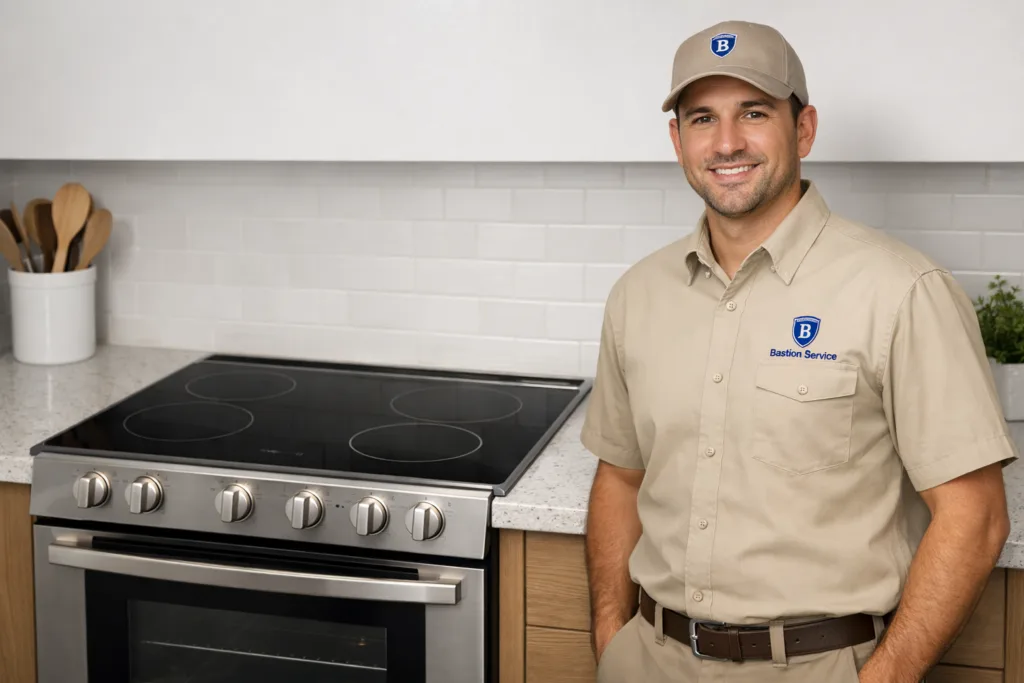
Cooktop problems tend to show up in ways that seem simple at first but point to very different failures underneath. A burner that will not ignite, an element that heats too slowly, or controls that react unpredictably can come from anything from residue and alignment problems to worn switches, failed components, wiring faults, or electronic control issues. For homeowners in Culver City, the most useful approach is to match the symptom pattern to the likely failure before deciding whether a Whirlpool cooktop repair is worthwhile.
Common Whirlpool cooktop symptoms and what they often indicate
Gas burner will not light
If a single gas burner will not light, the issue may be limited to that burner head, cap alignment, igniter condition, or local switch function. Food residue, cleaning product buildup, or moisture can interfere with ignition even when the rest of the cooktop appears normal. If multiple burners fail at the same time, the problem may involve the spark system, incoming power to the ignition circuit, or fuel supply.
Homeowners often notice one of two patterns: the burner clicks but never lights, or it does not click at all. Those are different clues. Clicking without ignition can point to gas flow, burner cap placement, or weak spark delivery. No clicking may suggest a switch, harness, or ignition system problem.
Constant or repeated clicking
Ongoing clicking is one of the most common complaints on gas cooktops. Sometimes it starts after a spill or a deep cleaning, especially when moisture gets around the igniter area. In other cases, the clicking continues because a switch is sticking or the spark module is misfiring. If the sound continues after the surface is dry and burner parts are correctly seated, the cooktop should be checked rather than used as usual.
Repeated clicking is not just annoying. It can be a sign that the ignition system is failing to complete its normal cycle, and that can lead to unreliable burner use.
Electric element not heating or heating unevenly
On electric Whirlpool cooktops, a burner that stays cool, heats only partway, or cycles erratically may have a failed radiant element, a damaged receptacle connection, a switch issue, or a control fault. Some homeowners first notice the problem as longer boil times, poor simmer control, or one side of the pan heating more than the other.
An element that overheats is also important to address quickly. When a burner runs too hot regardless of the setting, the problem can involve the control regulating that element rather than the glass surface itself.
Burner gets hot but does not regulate normally
If heat levels do not match the selected setting, the cooktop may still be usable in a limited way, but cooking performance becomes inconsistent. Sauces scorch on low, water takes too long to boil on high, or temperature changes lag far behind the controls. These symptoms often point to a failing infinite switch, sensor-related issue, or electronic control problem depending on the model.
Touch controls or knobs acting irregularly
When controls stop responding, respond intermittently, or behave differently from one use to the next, the problem may go beyond the surface burner itself. Worn control components, loose wiring connections, or board-related failures can all create symptoms that look random from the outside. If a control panel is flashing, locking unexpectedly, or refusing to change heat output, diagnosis should focus on the input and control system rather than only the burner.
Cracked glass or visible surface damage
A cracked glass cooktop is not just a cosmetic issue. Damage to the surface can affect safe operation, especially if heat reaches the damaged area or moisture can get beneath it. Even if the burner still works, continued use may risk worsening the crack or affecting internal components below the surface. Surface condition matters when deciding whether repair remains practical.
When to stop using the cooktop
Some problems should move from inconvenience to priority right away. Stop using the cooktop if a burner will not shut off normally, an electric element overheats, the unit trips power, sparks appear, or controls behave in a way that makes heat output unpredictable. Continued use in those situations can increase damage and create avoidable safety risks.
For gas models, a strong or persistent gas odor should never be treated as a standard appliance repair matter. Stop using the appliance. If the smell does not clear quickly or seems significant, leave the area if needed and contact the gas utility or emergency service first. Repair service comes after the immediate safety concern is addressed.
Why similar symptoms can have different causes
Cooktops are a good example of why symptom-based diagnosis matters. Two households may both report that a burner is not working, but one may have a simple blockage or misalignment while the other has a failed ignition part or control issue. In the same way, uneven heating on an electric model can come from the element, the switch, the wiring connection beneath the cooktop, or a control board problem.
That distinction matters because replacing the wrong part does not solve the complaint and can add unnecessary cost. A proper diagnosis should narrow the fault to the actual failed component and also check for secondary issues that may have contributed to it.
What homeowners can notice before service
It helps to pay attention to the exact behavior of the cooktop before scheduling repair. Small details often make troubleshooting faster and more accurate.
- Whether the issue affects one burner or several
- Whether a gas burner clicks, smells of gas, or does nothing at all
- Whether the problem started after a spill, boil-over, or cleaning
- Whether an electric element heats too little, too much, or only intermittently
- Whether controls feel loose, delayed, or unresponsive
- Whether the problem is constant or comes and goes
These observations do not replace service, but they do help connect the complaint to the most likely repair path.
Repair or replacement: how the decision usually gets made
In many Culver City homes, repair makes sense when the Whirlpool cooktop is otherwise in good condition and the failure is limited to a burner component, igniter, switch, element, wiring repair, or control-related part. That is especially true when the surface is intact and the appliance has been performing well apart from the current issue.
Replacement becomes a stronger consideration when the cooktop has multiple failing systems, severe glass damage, repeated service history, or age-related wear that makes one repair likely to be followed by another. The best decision usually comes down to the exact failed part, the overall condition of the unit, expected reliability after repair, and whether the cost still makes sense for the household.
What to expect from a focused Whirlpool cooktop repair visit
A useful service call should do more than confirm that a burner is not working. It should identify which component failed, whether other parts have been affected, and whether the repair is likely to restore normal daily cooking without chasing overlapping problems. On gas models, that means looking at ignition, burner condition, switch function, and fuel-related performance. On electric models, it often means checking the element, control, and supporting electrical connections together.
For homeowners in Culver City, that kind of inspection is what turns a vague cooktop problem into a repair decision that makes sense. Whether the complaint is clicking, no heat, uneven heat, cracked glass, or erratic controls, the right next step is to identify the exact fault and weigh the repair against the cooktop’s overall condition.