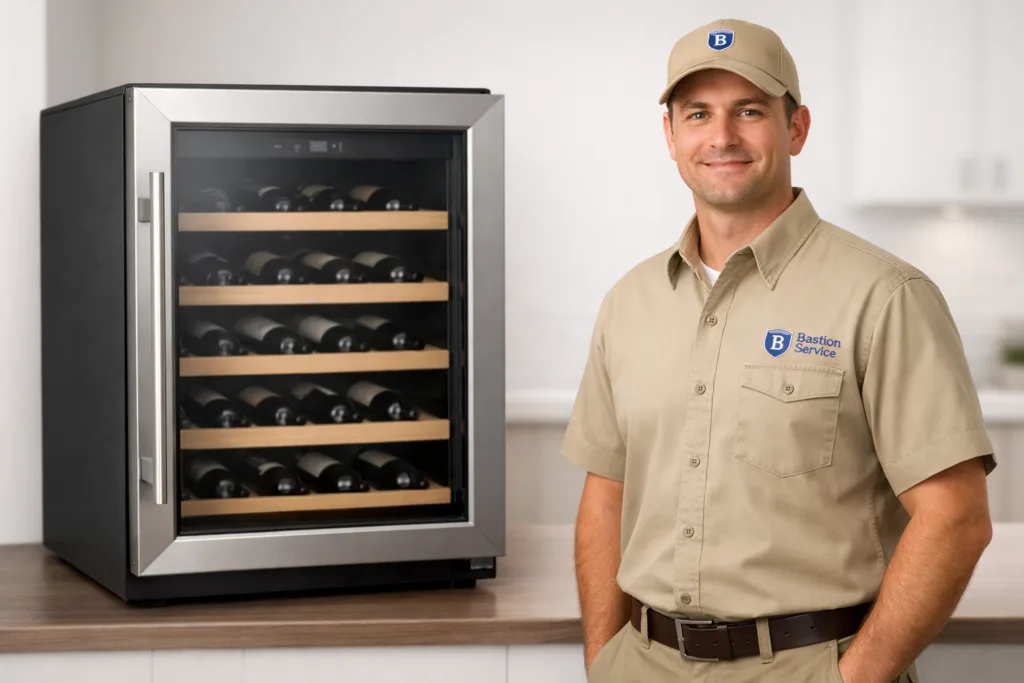
Temperature drift in a wine cooler is easy to underestimate until bottles start feeling warmer than expected or labels show moisture from repeated condensation. With Summit units, the same outward symptom can come from more than one failure point, so the useful first step is identifying whether the problem is tied to airflow, controls, door sealing, fans, or the cooling system itself.
What to watch for before a minor issue turns into a bigger one
Wine coolers usually do not fail all at once. Many start with subtle changes: a cabinet that seems a little too warm, longer run times, a faint clicking sound, or moisture collecting near the door. In a Redondo Beach home, these early signs matter because wine storage depends on stability, not just whether the interior feels somewhat cool.
If you notice changes over several days rather than one sudden shutdown, pay attention to patterns such as:
- The displayed temperature no longer matching actual bottle temperature
- The compressor running much longer than usual
- New vibration, buzzing, or repeated clicking during startup
- Condensation on the glass or around the door gasket
- Cooling that seems weaker after the door has been closed for hours
These clues help narrow down whether the issue is likely mechanical, electrical, or related to installation conditions.
Common Summit wine cooler symptoms and what they can indicate
Not cooling enough
If the cooler is on and the interior feels somewhat chilled but not at the correct storage temperature, several parts may be involved. A sensor that reads inaccurately, restricted airflow, a failing evaporator fan, a dirty condenser area, or weakening sealed-system performance can all create this symptom. The unit may still appear functional while slowly exposing your collection to unstable conditions.
This kind of problem often shows up as temperature swings rather than a total loss of cooling. Homeowners sometimes assume the issue is minor because the light works and the display is active, but uneven cooling is often the first sign that service is needed.
Completely warm interior
When the cabinet is fully warm, diagnosis usually focuses on whether the compressor is starting properly, whether the control board is sending the right commands, and whether fans are operating as they should. In some cases, a startup electrical component fails and prevents normal cooling from beginning. In others, the cause is deeper in the sealed system.
If the unit has power but never begins to cool, continued operation can add unnecessary stress to components that are repeatedly trying to start.
Running constantly or cycling too often
A Summit wine cooler that rarely seems to shut off is not always facing a compressor failure. It may be compensating for warm air entering through a worn gasket, poor ventilation around the cabinet, condenser dust buildup, or inaccurate temperature feedback from a sensor or control issue.
Frequent cycling can also mean the cooler is reaching temperature briefly and then losing it too quickly. That points attention toward insulation performance, sealing, airflow, or control calibration rather than just the compressor alone.
Condensation, water, or interior moisture
Moisture inside a wine cooler can appear as fogging on the glass, droplets around shelves, or water collecting near the bottom. This may be caused by a door that is not sealing tightly, a leveling issue that affects closure, a drain-related problem, or repeated humidity intrusion from warm air entering the cabinet.
Excess condensation is not only a cosmetic issue. It can suggest that the appliance is no longer maintaining a steady environment, and over time moisture can affect nearby components and storage conditions.
Buzzing, clicking, rattling, or louder operation
Some operating noise is normal, especially when the cooling cycle begins. What deserves attention is a change in sound. Repeated clicking may suggest a compressor start issue. Buzzing can point to electrical strain or vibration. Rattling may come from a fan blade, mounting hardware, or cabinet alignment.
If noise is paired with weak cooling or frequent restart attempts, the problem is more likely to need prompt repair rather than simple observation.
Why diagnosis matters on a wine cooler more than many owners expect
A wine cooler is designed around tighter temperature stability than a typical household refrigerator. Because of that, small faults can create noticeable storage problems long before the unit stops working completely. A cooler may still feel cold to the hand while running outside the proper range for wine preservation.
Exact diagnosis also affects whether repair is sensible. A gasket, fan motor, sensor, or control component is very different from a sealed-system problem in both cost and repair path. The goal is to identify the actual source of the symptom before parts are replaced or the appliance is written off too early.
Simple checks homeowners can make first
Before scheduling service, a few basic observations can help rule out avoidable causes and make the visit more efficient:
- Confirm the door is closing fully and the gasket is not loose, cracked, or folded
- Make sure stored bottles or shelves are not interfering with door closure
- Check that ventilation openings are not blocked by surrounding cabinetry or items placed too close
- Listen for fan movement and note whether clicking or buzzing happens at startup
- Look for visible condensation patterns that return even after the door remains closed
These steps will not replace a proper repair diagnosis, but they can help separate a simple use or placement issue from a true component failure.
When repair is usually worth considering
Many Summit wine cooler issues are repairable when the fault is isolated to a fan motor, sensor, thermostat-related control issue, startup electrical part, door gasket, or airflow-related condition. If the cabinet is otherwise in good shape and the unit has been reliable up to this point, repair can be the better option.
This is especially true when the symptom appeared recently and there is no history of repeated breakdowns.
When replacement may make more sense
Replacement becomes a more realistic discussion when testing points to a major sealed-system problem, multiple failing components, or repair costs that approach the value of the appliance. Age, prior service history, and the overall condition of the cooler all matter.
For homeowners in Redondo Beach, the most helpful outcome is understanding whether the appliance needs a targeted fix or whether further investment is unlikely to provide reliable long-term storage.
When to schedule Summit wine cooler repair in Redondo Beach
It is smart to schedule service when the cooler cannot hold a stable temperature, the interior is warming up, moisture keeps returning, the door no longer seals properly, or operating noise has clearly changed. Waiting often leads to more strain on the cooling system and increases the chance of poor storage conditions for the bottles inside.
If your Summit unit is still running but no longer performing consistently, that usually means the problem has already moved beyond a minor inconvenience and should be evaluated before it gets worse.