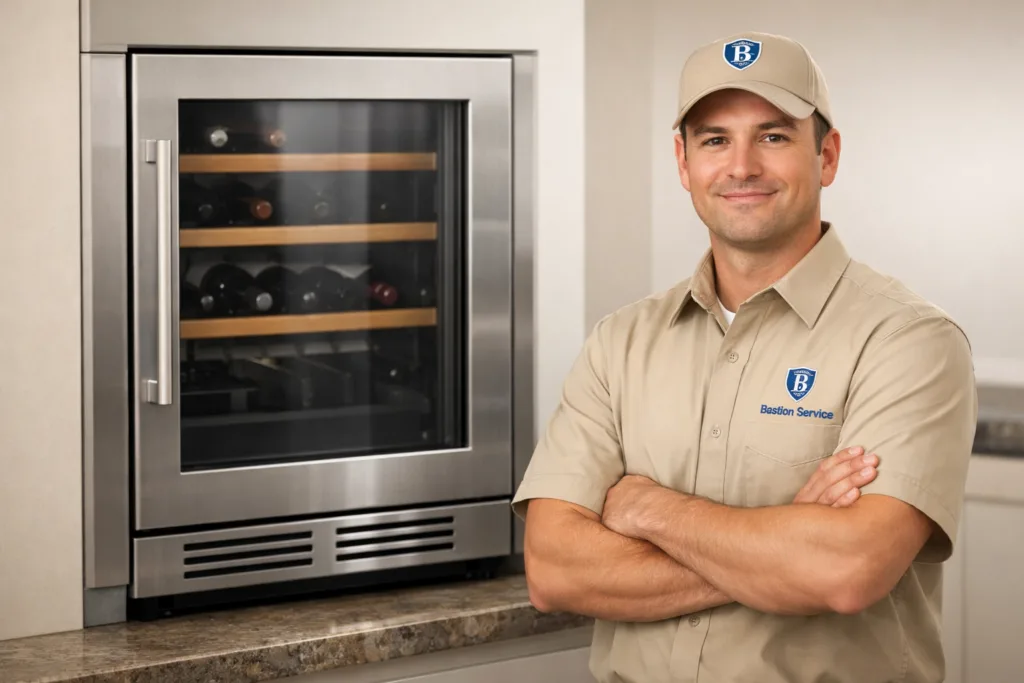
A Perlick wine cooler that runs warm, cycles too often, or starts collecting moisture can affect both storage conditions and confidence in the appliance. Because similar symptoms can come from very different failures, the best next step is to match what you are seeing and hearing with the most likely repair path.
Common Perlick Wine Cooler Problems in Redondo Beach Homes
Most household wine cooler issues fall into a few recognizable categories: poor cooling, unstable temperature, excess condensation, unusual noise, or control problems. What matters is not just the symptom itself, but the pattern behind it. A unit that is slightly warm all day points to a different kind of problem than one that cools correctly at night and drifts during heavier use.
Running Warm or Not Cooling Enough
If the cabinet temperature stays above the setting, the cause may be restricted airflow, a weak fan, a sensor problem, a control issue, or trouble in the cooling system. In some cases, the cooler still runs and sounds normal, but it never quite reaches the target temperature. In others, it may run for long stretches without making real progress.
Homeowners often notice this first when bottles feel warmer than expected or when the display reading does not match the actual cabinet temperature. That kind of mismatch usually means the issue should be checked sooner rather than later, especially if the compressor seems to be working harder than normal.
Temperature Swings and Uneven Storage Conditions
A wine cooler does not have to stop cooling completely to have a real problem. If temperatures rise and fall too much, the unit may have trouble reading cabinet conditions accurately or moving air evenly through the interior. A sensor drifting out of range, an intermittent fan, or a control fault can all create unstable storage conditions.
These problems are easy to overlook because the appliance may still appear operational. If the display is active and the interior feels cool at times, it can seem minor, but repeated swings are often the sign of a component beginning to fail.
Condensation, Water, or Frost Buildup
Moisture inside the cabinet, droplets on shelves, water near the base, or frost where it should not be usually points to an air leak, drainage issue, airflow problem, or a defrost-related fault. A door gasket that no longer seals evenly can let humid air enter the cabinet, forcing the unit to work harder and creating moisture where it should not collect.
Frost is especially important to watch. A little moisture can look harmless at first, but buildup around vents or interior panels can interfere with circulation and gradually reduce cooling performance.
Fan Noise, Buzzing, or Constant Cycling
New sounds are often the earliest warning sign. Rattling may come from vibration or loose mounting hardware. A repeated buzzing sound can point to a struggling compressor or start component. A noticeable fan sound may indicate wear, obstruction, or imbalance.
Constant cycling is another issue that deserves attention. If the unit starts and stops too often, it may be reacting to unstable temperature readings, restricted airflow, or an underlying cooling problem. If it runs almost nonstop, it may be trying to compensate for a fault it cannot overcome.
Display, Control, or Power Issues
When the control panel becomes unresponsive, settings do not hold, or the unit powers on and off unpredictably, the problem may involve the interface, wiring, sensor circuit, or control board. These issues can mimic cooling failures because the refrigeration system may still be capable of working, but it is no longer being managed correctly.
If the cooler shuts down unexpectedly, loses its settings, or behaves differently after a reset, electrical diagnosis is usually necessary before replacing parts.
What Different Symptoms Can Mean
One reason wine cooler repair can be tricky is that a single symptom does not always lead to a single answer. For example:
- Runs warm: possible fan, sensor, airflow, control, or sealed-system issue
- Runs all the time: possible door seal leak, condenser airflow problem, or cooling inefficiency
- Builds frost: possible gasket leak, circulation issue, or defrost fault
- Makes new noise: possible fan wear, vibration, compressor strain, or loose components
- Display works but cooling is off: possible sensor or control issue rather than complete refrigeration failure
That is why symptom-based troubleshooting is more useful than guessing. Replacing the wrong part can add cost while leaving the original problem in place.
Why Accurate Diagnosis Matters
Perlick wine coolers are built for temperature-sensitive storage, so the difference between a minor control issue and a major cooling-system failure matters. A proper inspection should look at airflow, fan function, seals, controls, drainage, temperature behavior, and compressor operation before any repair recommendation is made.
This is especially important when the cooler is partly working. Partial cooling often leads people to keep using the appliance, hoping it will stabilize on its own. In reality, continued operation can increase wear, worsen frost or condensation, and make the final repair more involved.
When to Schedule Service
It is usually time to schedule Perlick wine cooler repair in Redondo Beach when the unit:
- cannot maintain the set temperature
- runs constantly or short cycles
- develops water leaks or ongoing condensation
- forms unusual frost buildup
- starts making new or louder noises
- shows display, control, or intermittent power problems
If the cabinet is warm but the machine is still trying to run, prompt service is a smart move. If there is a burning smell, repeated breaker trips, or sudden shutdowns, stop using the cooler until it has been checked.
Repair or Replace?
The answer depends on the exact failure, the age of the unit, overall condition, and the value of the repair compared with the appliance. Many problems involving fans, sensors, controls, seals, and drainage are repairable, particularly when addressed early. Replacement becomes more likely when there is major sealed-system trouble, repeated breakdown history, or a repair cost that no longer makes sense for the condition of the cooler.
For most homeowners, the real question is whether the appliance can be restored to stable, reliable performance without overinvesting in a declining unit. That decision is easier once the actual fault is identified.
What Homeowners in Redondo Beach Usually Want to Know
Most people do not need a long technical explanation. They want direct answers: why the cooler is acting up, whether continued use could make things worse, and what repair option is most sensible. A helpful service visit should clarify the symptom pattern, identify the likely cause, and explain whether the unit is a good repair candidate.
For a household appliance designed to protect a collection, restoring steady temperature control is the main goal. When that is practical, repair can make sense. When it is not, knowing that early helps avoid wasted time and unnecessary parts replacement.