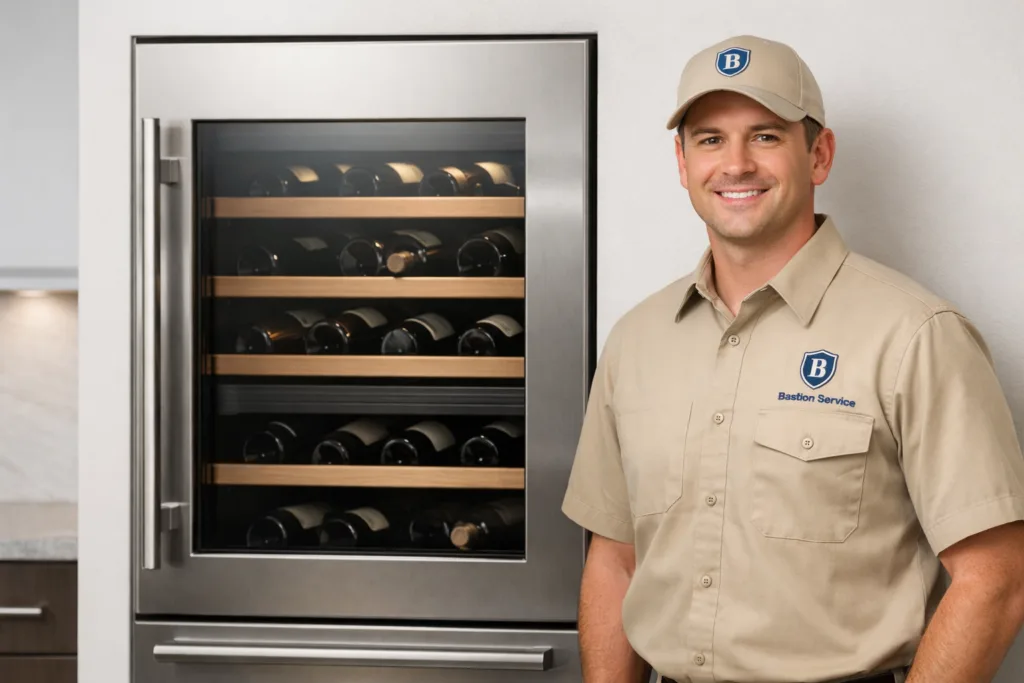
Small changes in a wine cooler usually show up before a full breakdown. A few degrees of temperature drift, light condensation on the glass, or a new humming or rattling sound can all point to a developing problem. Because Monogram wine coolers rely on steady cooling, controlled airflow, and accurate sensing, the best repair path depends on what the unit is actually doing day to day.
Start with the symptom, not the part
Different faults can create similar results. A cabinet that feels warm may be dealing with airflow restrictions, a weak door seal, a sensor reading problem, a fan issue, or a cooling-system fault. That is why symptom-based diagnosis matters more than replacing parts based on guesswork.
For homeowners in Redondo Beach, the most useful details to notice are whether the unit is running constantly, whether the temperature is drifting high or low, whether moisture is building up, and whether new sounds started before the performance changed.
Running warm or failing to hold temperature
If the cooler no longer maintains the set temperature, the cause may be simple or more involved. Common possibilities include:
- Door gasket wear that lets warm air enter the cabinet
- Blocked airflow inside the cooler
- Faulty temperature sensors or control issues
- Dirty condenser components reducing heat transfer
- Evaporator or condenser fan problems
- Compressor or sealed-system trouble
A wine cooler that runs for long periods without reaching the target temperature should not be ignored. Constant operation often means the unit is working harder than normal, which can increase wear on major components.
Too cold, freezing, or swinging between temperatures
A Monogram wine cooler that overcools can be just as concerning as one that runs warm. If bottles are getting too cold or temperatures swing noticeably, the issue may involve a thermostat, thermistor, control board, or airflow imbalance. Inconsistent cooling usually means the appliance is no longer regulating conditions the way it was designed to.
Condensation, water, or interior moisture
Moisture inside or around the unit does not always mean there is an active leak. In many cases, condensation forms when humid air gets into the cabinet through a compromised seal or frequent door opening. Other causes can include drainage issues, leveling problems, or cooling irregularities that allow excess moisture to collect.
Signs worth watching include:
- Water under the unit
- Moisture on shelves or bottle labels
- Fogging on the glass door
- Dampness near the door edges
When moisture is persistent, the repair approach should determine whether the problem is primarily sealing, drainage, or cooling related.
Fan noise, buzzing, clicking, or vibration
Wine coolers normally produce some operating sound, but changes in sound often help narrow down the fault. A rattling noise can come from loose components or cabinet vibration. Buzzing may point to fan or compressor strain. Repeated clicking can suggest startup trouble or a control-related issue. If unusual sound appears together with weak cooling, both symptoms should be evaluated as part of the same problem rather than treated separately.
What a Monogram wine cooler repair visit typically needs to check
Effective service usually starts by confirming how the cooler is cycling and how accurately it is maintaining temperature. From there, the repair process may involve checking the door closure, gasket condition, fan operation, sensor response, control behavior, frost pattern, drainage path, and the condition of the refrigeration system.
This matters because a visible symptom does not always identify the failed part. For example, condensation can be caused by poor sealing rather than a drain problem, and a warm cabinet can come from weak airflow rather than a compressor failure. Narrowing the issue correctly helps avoid unnecessary part replacement and wasted time.
Problems that should be addressed sooner rather than later
Some issues can wait a short time for service, but others tend to worsen with continued use. It is smart to schedule repair when the wine cooler:
- Cannot maintain a stable storage temperature
- Runs almost nonstop
- Short cycles on and off repeatedly
- Develops heavy condensation or unexplained moisture
- Makes new persistent noise
- Shows frost buildup where it normally should not
Early attention can prevent a smaller control, airflow, or sealing problem from turning into more serious cooling failure.
Repair versus replacement for a household wine cooler
Repair is often a sensible option when the problem is limited to serviceable parts such as fans, controls, sensors, switches, drainage components, or door sealing. If the cabinet is in otherwise good condition and the unit has not had repeated cooling problems, restoring normal operation is often worthwhile.
Replacement becomes a more serious consideration when the cooler has multiple age-related issues, repeated breakdowns, or a major sealed-system problem combined with other worn components. The right decision depends on the actual fault, the overall condition of the appliance, and whether the repair is likely to restore stable performance without layering one major expense on top of another.
Why brand-specific diagnosis helps
Monogram wine coolers are built with model-specific controls, cooling behavior, and fit considerations that can affect how a problem presents. A repair approach that stays focused on the exact unit is more useful than treating it like a generic undercounter cooler. That is especially true when symptoms involve inconsistent temperature readings, electronic control behavior, or intermittent cooling.
For households in Redondo Beach, the most helpful next step is service based on the appliance’s real symptom pattern in the home. That gives a clearer repair path, reduces unnecessary guesswork, and helps determine whether the cooler can be returned to reliable daily use.