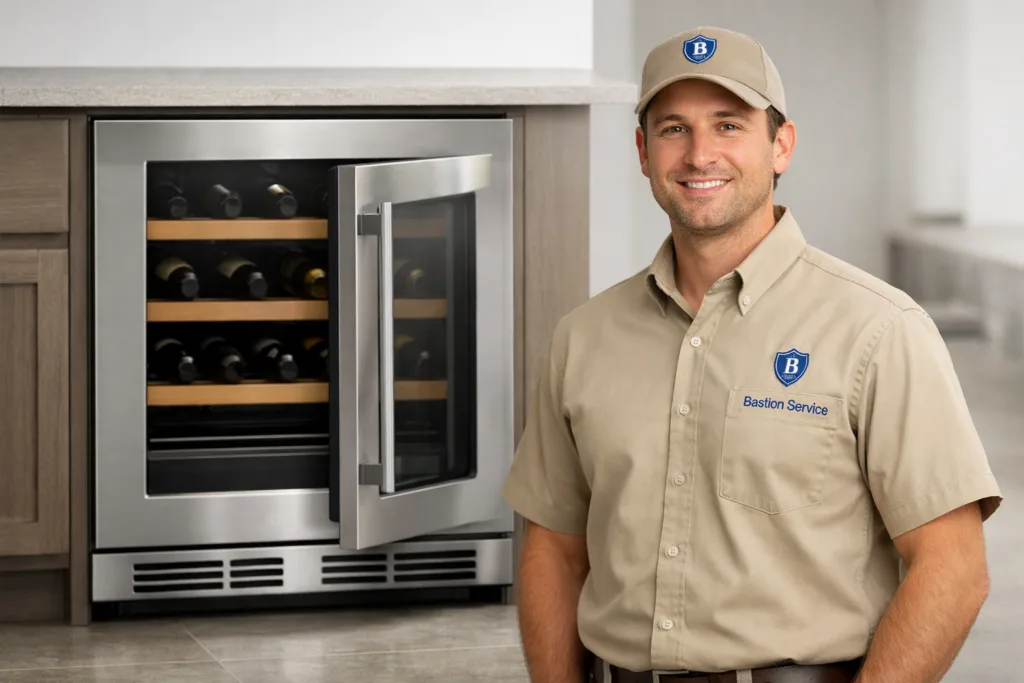
A Marvel wine cooler that runs warm, cycles constantly, or leaves moisture around the door can put stored bottles at risk faster than many homeowners expect. In Redondo Beach homes, the most useful next step is to match the symptom to the likely failure path, because similar complaints can come from very different causes such as airflow restriction, a control problem, a failing fan, a door seal leak, or a sealed-system issue.
Start with the symptom, not the assumption
Wine coolers are designed to hold a stable environment with relatively small temperature changes. When that stability starts to slip, the problem is not always obvious from the outside. A unit may still light up, respond to controls, and sound like it is running while struggling to remove heat properly. That is why symptom-based troubleshooting matters before deciding on any repair.
For homeowners, the most helpful clues are usually easy to notice:
- The cabinet feels warmer than the display setting
- Temperatures swing through the day
- One section cools differently than another
- Moisture forms on the door or inside the cabinet
- The cooler starts making new clicking, buzzing, or fan-related noise
- The unit seems to run almost all the time
Common Marvel wine cooler problems and what they can mean
Not cooling enough
If the cabinet is not reaching or holding the selected temperature, the issue may involve restricted airflow, dirty condenser surfaces, fan trouble, thermostat or sensor problems, control faults, or compressor-related failure. On some units, the cooling system is still active but no longer moving air correctly through the cabinet, which can make the cooler seem partially functional while performance declines.
This is one of the most important complaints to address early. A wine cooler that is only slightly warm today can drift much further off target if the underlying cause continues.
Temperature swings or uneven cooling
When one shelf area stays cooler than another, or the temperature rises and falls more than usual, the problem often points to circulation issues, sensor drift, intermittent controls, or warm-air intrusion around the door. Some homeowners first notice this as bottles feeling different from top to bottom rather than a complete loss of cooling.
Uneven cooling usually means the appliance is no longer maintaining the stable internal environment it was designed to create. Even if the display appears normal, the actual cabinet conditions may not be consistent.
Condensation, moisture, or water buildup
Moisture on the glass, damp shelving, or water collecting near the base can indicate a worn gasket, a door that is not sealing evenly, a drain issue, or operating conditions that force the unit to run too long. In a household setting, this can also create odor concerns and lead to staining or damage around the appliance if it continues unchecked.
If the cooler has heavy condensation along with temperature drift, that combination often suggests the unit is fighting repeated warm-air entry or losing efficiency elsewhere in the system.
Clicking, buzzing, or unusual running noise
Wine coolers do make some normal operating sounds, but repeated clicking, louder buzzing, fan rubbing, or a compressor that starts and stops too often can point to startup component failure, fan motor wear, vibration from mounting or panels, or a deeper cooling-system problem. A noise change that appears at the same time as warming performance is usually more significant than a harmless sound shift by itself.
Constant running
If a Marvel wine cooler seems to run nearly nonstop, it is often compensating for a condition it cannot overcome. Common reasons include poor heat transfer, air leaks at the door, weak internal airflow, control problems, or loss of cooling efficiency. Long run times do not always mean the compressor is healthy and working hard in a good way. Sometimes they indicate the machine is struggling to keep up.
Why accurate diagnosis matters before repair
Different faults can create the same complaint. “Not cold enough” might be caused by a bad door seal, a weak fan, a sensor issue, a control problem, or a sealed-system defect. Replacing parts based only on the symptom can lead to unnecessary cost while the original failure remains.
Proper diagnosis also helps determine whether the issue is isolated or whether the appliance has multiple age-related problems. That is especially important with built-in or undercounter wine coolers, where access, ventilation, and installation conditions can affect how the unit performs over time.
Signs you should schedule service soon
It is smart to arrange service when the cooler cannot hold its setting, develops repeated condensation, runs much longer than usual, shows inconsistent control behavior, or starts making a new sound that does not go away. Intermittent issues deserve attention too. A cooler that seems to recover after being adjusted but then turns warm again often has a developing component problem rather than a one-time glitch.
In Redondo Beach, many homeowners wait because the unit still feels somewhat cool. The problem with that approach is that partial cooling can mask a worsening fault. By the time the cabinet is obviously warm, bottles may already have been stored outside the intended range for too long.
When continued use can make the repair more involved
Running a struggling wine cooler for too long can increase wear on other components. A leaking door gasket can cause excess run time. A weak fan can reduce heat removal and place added stress on the cooling system. Persistent moisture can affect the cabinet interior and nearby surfaces. Rapid cycling or repeated failed starts can also be hard on electrical components.
If the unit is clearly warming, laboring, or overheating around the lower rear area, it may be better to protect the contents and limit use until the cooler can be evaluated.
Repair or replacement: how homeowners usually decide
Repair is often reasonable when the problem is tied to accessible components such as fans, controls, sensors, switches, gaskets, or startup parts and the rest of the appliance is in solid condition. If the cabinet is in good shape and the issue is limited, targeted repair can make sense.
Replacement becomes a more realistic discussion when the cooler has repeated major failures, significant cabinet wear, cooling-system concerns, or repair costs that are difficult to justify based on age and overall condition. The key is understanding whether the current problem is a focused repair or part of a larger decline.
What homeowners can observe before service
Before a service visit, it helps to note a few details:
- Whether the display matches the actual cabinet feel
- If warming is constant or comes and goes
- Whether condensation appears at the glass, gasket, or cabinet base
- What kind of sound has changed and when it happens
- Whether the door closes firmly or seems slightly loose
- If one area of the cooler is much warmer than another
These observations can help narrow the cause faster and make the repair path more straightforward.
Focused help for Marvel wine cooler issues in Redondo Beach
For Redondo Beach homeowners, the best service outcome usually comes from looking closely at the exact symptom pattern instead of treating every cooling complaint the same way. Whether the issue is unstable temperature, moisture, unusual sound, or nonstop running, the goal is to identify what is failing, how far the problem has progressed, and whether the repair is practical for the condition of the unit.
That approach keeps Marvel wine cooler repair in Redondo Beach centered on the appliance problem you actually have, not a guess based on the first visible symptom.