
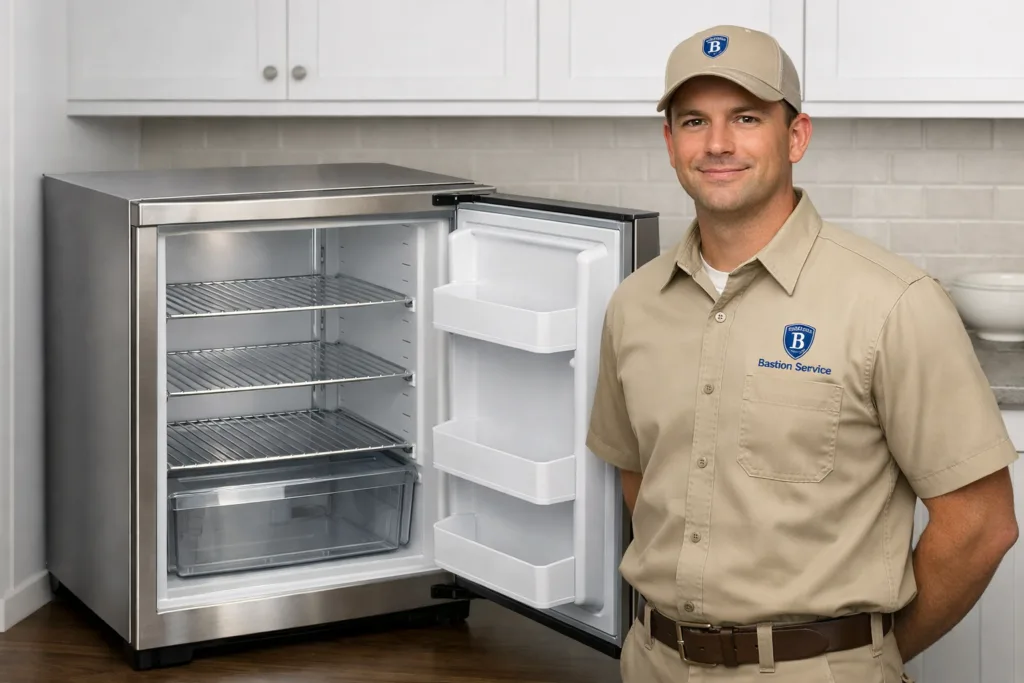




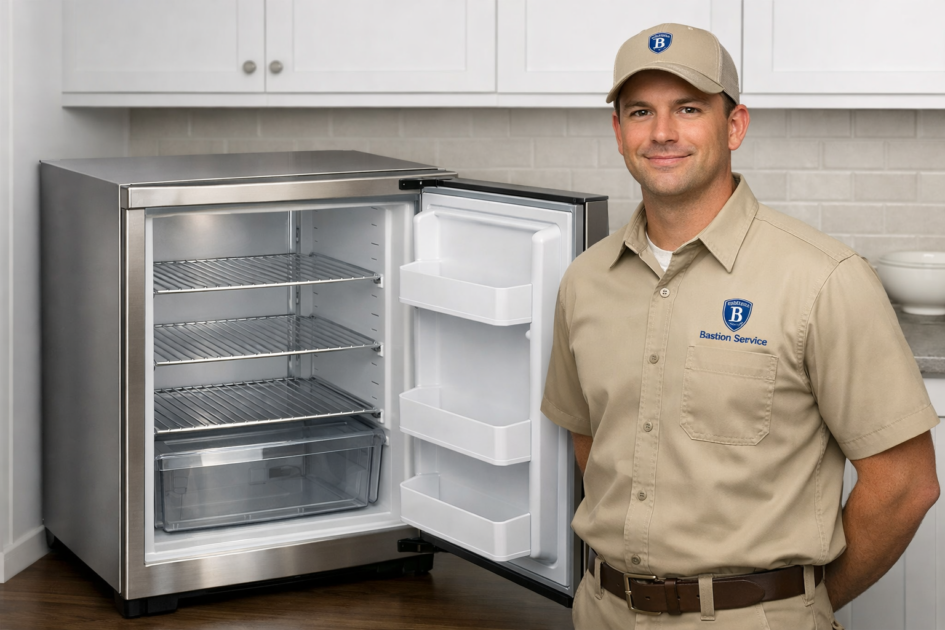
Summit appliances are common in homes that rely on compact refrigeration, specialty cooling, and everyday kitchen equipment that needs to perform consistently. When one starts behaving differently, the symptom itself usually tells you a lot about the likely repair path. A refrigerator that runs all day, a dishwasher that leaves standing water, or an oven that overshoots temperature each point to different systems, levels of urgency, and repair costs.
For homeowners in Redondo Beach, the most useful approach is to pay attention to what changed first. Did cooling fade gradually or stop suddenly? Is the noise new, or has it been building for weeks? Does the unit fail every time, or only during certain cycles? Those details help separate a simple part failure from a deeper electrical, airflow, drainage, or sealed-system problem.
How Summit appliance problems usually show up
Many Summit issues begin with performance drift rather than complete failure. Appliances may still turn on, but they stop doing the job well. That often looks like longer cooling times, temperature swings, poor cleaning results, delayed ignition, or controls that respond inconsistently.
There are also symptoms that deserve faster attention because continued use can make damage worse. These include leaking water, burning smells, visible sparking, repeated breaker trips, strong vibration, and major loss of cooling. In those situations, stopping normal use is usually the safer choice until the cause is identified.
Refrigerator and freezer symptoms to take seriously
Summit refrigerator and freezer problems are often first noticed through food warming, soft ice cream, frost where it should not be, puddles near the appliance, or a compressor that seems to never shut off. Those symptoms do not all point to the same repair. Some come from airflow restrictions or fan motor failure, while others involve a thermostat, sensor, defrost component, door gasket, or sealed cooling issue.
If one section is cold while another is warm, airflow and circulation become strong suspects. If the entire unit is struggling and the compressor is running constantly, that can suggest the system is working harder than it should to maintain temperature. Heavy frost buildup can also interfere with normal operation and eventually reduce cooling even more.
- Warm fresh-food section with a colder freezer may suggest airflow or defrost trouble.
- Water under the unit can come from drainage problems or excess condensation.
- Clicking, humming, or nonstop running may point to start components, fans, or cooling-system stress.
- Doors that do not seal tightly can create temperature instability and frost issues.
When refrigeration temperatures are no longer safe, waiting too long can lead to spoiled food and extra strain on the components still trying to keep up.
Wine cooler and ice maker performance issues
Summit wine coolers and ice makers often fail in ways that seem minor at first. A wine cooler may still cool, just not steadily. An ice maker may produce some ice, but slowly, with small cubes, clumping, or leaking. Those partial failures matter because they often mean a key component is weakening rather than fully dead.
Temperature drift in a wine cooler can relate to sensors, controls, fans, door sealing, or cooling-system problems. Excess condensation may indicate a sealing issue, uneven temperature recovery, or airflow trouble inside the cabinet. A unit that powers on but does not cool reliably needs closer attention before the problem worsens.
Ice makers can be affected by water supply restrictions, inlet valve trouble, fill problems, freezing in the wrong area, or faults in the control system. A no-ice complaint does not always mean the ice maker assembly itself has failed. In many cases, another part of the water or control system is the real source of the issue.
Dishwasher symptoms that point to more than poor cleaning
Dishwashers often give early warning signs before a complete breakdown. Dishes may come out cloudy, cycles may take longer than usual, or water may remain at the bottom after the wash ends. Homeowners also commonly notice leaking near the door, unusual grinding sounds, or a machine that starts and then stops mid-cycle.
These symptoms can come from blocked wash arms, drain restrictions, pump wear, water inlet problems, latch issues, or electronic control faults. A leak should not be treated as a cosmetic annoyance. Water escaping repeatedly can affect flooring, toe-kick areas, and nearby cabinetry even when the amount seems small.
Signs the dishwasher should not keep running
- Water leaking onto the floor
- A burning odor during the cycle
- Repeated mid-cycle shutdowns
- Loud grinding that was not present before
- Standing water that does not drain out
If the main complaint is weak cleaning, the repair may still be relatively contained. If the dishwasher is leaking or stopping unpredictably, the problem becomes more urgent.
Cooktop, oven, range, and wall oven problems
Cooking appliances usually reveal faults through heat that is missing, delayed, uneven, or uncontrolled. A Summit cooktop may click repeatedly without lighting. A range burner may heat inconsistently. An oven or wall oven may take too long to preheat, bake unevenly, shut off during use, or run hotter than the setting indicates.
These issues can involve igniters, heating elements, switches, relays, sensors, control boards, or wiring. Because several different parts can create similar symptoms, replacing one component based on guesswork can waste time and money. For example, uneven baking is not always an element failure, and repeated clicking is not always just an igniter issue.
Homeowners often notice cooking problems through everyday use first:
- Meals taking much longer than they used to
- Hot spots or undercooked areas
- Burners that work only on certain settings
- An oven that preheats but does not hold temperature
- Controls that respond intermittently
If a burner will not ignite properly, a cooktop keeps clicking, or the oven overheats or shuts off unexpectedly, it is best to stop routine use until the fault has been checked.
When repair makes sense and when replacement enters the conversation
Not every Summit problem points toward replacement. Many household repairs are still worthwhile when the failure is limited to a fan, gasket, sensor, igniter, switch, inlet valve, drain component, or certain control-related parts. If the appliance is otherwise in good condition and has not had a pattern of repeated breakdowns, repair is often the sensible next step.
Replacement becomes more likely when the unit has extensive corrosion, major cooling-system failure, significant cabinet damage, or multiple problems happening at once. Age matters, but condition matters just as much. A well-kept appliance with one isolated fault may be a better repair candidate than a newer unit with recurring issues and visible wear.
What to write down before scheduling service
A short symptom record can make troubleshooting much easier. Before scheduling, it helps to note:
- Whether the problem is constant or intermittent
- Any error code or flashing light pattern
- When the issue started
- Any recent power interruption or water supply change
- Whether the appliance still powers on normally
- What sounds, smells, or leaks appeared before the failure
That information gives a clearer starting point than a broad description like “not working.” It also helps determine whether the problem is mostly mechanical, electrical, temperature-related, or tied to drainage or water supply.
Choosing the right next step for your home
In Redondo Beach homes, Summit appliance issues are easier to sort out when you focus on the exact behavior of the machine rather than the brand alone. A refrigerator not cooling, a freezer frosting over, a dishwasher not draining, an ice maker producing poor batches, or an oven heating unpredictably all require different repair thinking even when the symptoms appear on the same day.
The goal is to identify what failed, whether continued use risks additional damage, and whether the appliance remains a good candidate for repair. When that decision is based on the real symptom pattern instead of assumption, homeowners are in a much better position to move forward with confidence.


