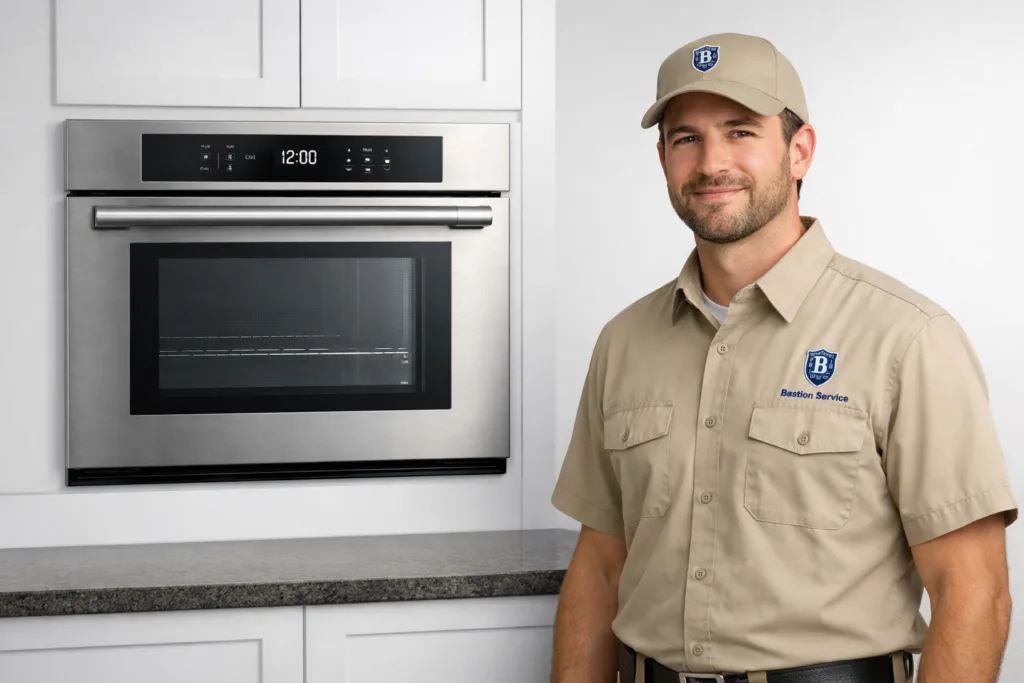
Cooking problems usually start as small annoyances: longer preheat times, cookies that brown unevenly, or a control panel that takes a second try to respond. With Summit ovens, those early signs often point to a specific part or circuit issue, and catching the pattern matters more than guessing at a replacement part.
In Redondo Beach homes, oven trouble is often easier to sort out by looking at exactly how the failure shows up during normal use. A unit that never heats, one that heats inconsistently, and one that shuts off during cooking may sound similar, but they often lead to very different repairs.
Common Summit oven symptoms and what they can mean
Oven not heating at all
If the oven stays cold after you start a bake cycle, the cause may be a failed bake element, broil element, igniter, thermal limiter, control relay, or a power supply issue. On some models, the display may appear normal even though the heating circuit is not actually operating. That is why a working clock or lit control panel does not automatically mean the oven is receiving or sending heat correctly.
Homeowners often notice this problem after food remains undercooked even after a full cycle, or when the cavity never feels warm during preheat. If both baking and broiling are affected, the issue may be broader than a single heating part.
Slow preheat
A Summit oven that eventually heats but takes much longer than before can point to a weakening igniter, a partially failed element, sensor inaccuracy, or a control problem that is not energizing the heat properly. Slow preheat is easy to overlook because the oven still works, just not at its usual pace.
This symptom becomes more obvious in busy households where meal timing matters. If preheat now takes noticeably longer than it used to, that change is worth paying attention to before the problem turns into a complete no-heat condition.
Uneven baking
When one rack browns faster than another or the back of a dish cooks faster than the front, the problem may involve weak heat output, inaccurate temperature sensing, poor airflow, or a door that is not sealing as well as it should. Uneven baking is especially frustrating because the oven appears functional, yet the results are no longer predictable.
Common examples include muffins that rise unevenly, casseroles that stay cool in the center, or roasted foods that need frequent turning to finish evenly. Those patterns help narrow down whether the issue is heat production, heat distribution, or temperature feedback.
Temperature swings during cooking
All ovens cycle on and off to hold temperature, but wide swings that affect cooking results can signal sensor drift, relay trouble, calibration issues, or an intermittent control fault. If meals that used to be reliable now come out overdone one day and underdone the next, the oven may not be regulating heat accurately.
This symptom is often mistaken for user error or recipe inconsistency. In reality, repeated swings usually mean the appliance is no longer maintaining stable cooking conditions.
Controls not responding properly
If buttons respond inconsistently, the display acts erratically, or the oven starts and stops unpredictably, the issue may involve the user interface, control board, wiring, or power interruptions inside the unit. Some control problems are obvious, while others only show up during certain functions such as bake, broil, timer use, or self-clean settings.
Intermittent behavior is important to note because it can point to a fault that is worsening over time rather than a one-time glitch.
Door and latch problems
An oven door that will not close fully, a damaged gasket, or a latch issue can affect both safety and cooking performance. Heat escaping around the door can lead to longer preheat times, uneven baking, and excess strain on heating components. On models with locking functions, latch failures can also prevent normal operation.
These are easy problems to dismiss at first, but they can change how the entire appliance performs.
Why the exact symptom matters
Many oven complaints overlap. “Not heating right” could mean no heat, weak heat, poor temperature control, or heat loss through the door. The more precise the symptom description, the easier it is to determine whether the likely cause is a heating component, a sensor, the control system, or an electrical supply problem.
That is especially true when a Summit oven shows more than one issue at the same time. Slow preheat plus uneven baking, for example, suggests a different repair path than a dead display plus a locked door. Looking at the full symptom pattern helps avoid replacing parts that are not actually causing the failure.
Signs the problem is getting worse
Some oven issues stay manageable for a while, but others tend to escalate. Watch for signs such as:
- Preheat times getting longer from week to week
- Food finishing too early or too late at the same settings
- The oven shutting off before cooking is complete
- Repeated error displays or controls freezing mid-cycle
- The door no longer sealing tightly
- Burning smells, overheating, or a breaker tripping during use
These symptoms suggest more than routine wear and should not be ignored, especially if the oven is used regularly for family meals.
When to stop using the oven until it is checked
It is smart to pause use if the appliance trips the breaker, sparks, overheats, shuts off unexpectedly, or shows obvious signs of electrical trouble. The same applies if the door will not latch correctly during a locking cycle or if the oven temperature seems dangerously inaccurate.
Continuing to use the unit under those conditions can increase part damage and make the eventual repair more involved.
Repair or replace: what usually drives the decision
For Redondo Beach homeowners, the best choice usually depends on the failed component, the oven’s overall condition, and whether the repair is likely to restore consistent daily use. A targeted repair often makes sense when the problem is isolated and the rest of the appliance is in solid shape.
Replacement becomes a more serious consideration when the oven has multiple major faults, recurring control issues, significant wiring problems, or age-related wear that affects several systems at once. Part availability can also influence the decision on some models.
The most useful approach is to compare the current symptom, the scope of the fault, and the expected result after repair. If the fix addresses the actual cause and returns stable performance, repair is often the practical path.
What helps homeowners describe the issue clearly
If you are scheduling service, a few details can make the problem easier to identify. It helps to note:
- Whether the oven fails during bake, broil, or both
- If the display works normally while the heat does not
- How long preheat is taking compared with before
- Whether the problem happens every time or only occasionally
- If the oven shuts off on its own or shows error behavior
- Whether the door closes firmly and seals well
Those observations often reveal whether the issue is more likely related to heat generation, temperature regulation, controls, or door hardware.
Summit oven service focused on everyday cooking reliability
The goal of service is not just to make the oven turn on again. It is to restore dependable cooking performance for normal household use, whether that means correcting a no-heat condition, stabilizing temperature, fixing a control fault, or resolving a door problem that is affecting results.
For Summit oven repair in Redondo Beach, the most helpful outcome is understanding what failed, what that failure affects, and whether the repair will return the appliance to reliable use in the kitchen.