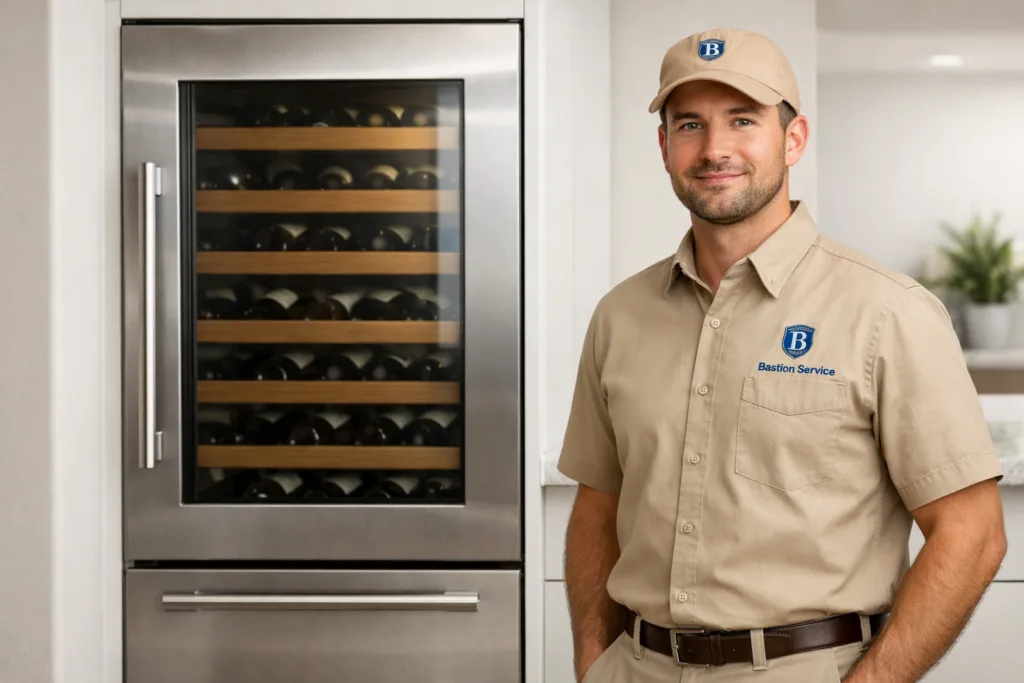
A Sub-Zero wine cooler that stops holding a steady temperature, begins running longer than usual, or leaves bottles warmer than expected can put both the appliance and your collection at risk. In Redondo Beach homes, the most useful first step is to match the repair approach to the exact symptom pattern, because temperature drift, noise, moisture, and control issues can come from very different parts of the system.
Common Sub-Zero wine cooler problems in Redondo Beach homes
Wine storage appliances are designed for consistency. When a Sub-Zero unit starts behaving unpredictably, the issue is rarely something to ignore for long. Even a small change in performance can lead to unstable storage conditions, added wear on cooling components, or recurring moisture inside the cabinet.
Temperature swings or poor cooling
If the interior feels warmer than the display suggests, or if temperatures rise and fall without a clear reason, the problem may involve the temperature sensor, control board, evaporator fan, blocked airflow, or a weakening cooling system. Sometimes the cabinet still cools, but not evenly. That often points to circulation or sensing trouble rather than a simple settings mistake.
Homeowners sometimes notice this first when certain bottles feel noticeably cooler than others, or when the unit struggles after the door has been opened and takes too long to recover. Those are early signs that the cooler may not be managing air movement or temperature feedback correctly.
Constant running or unusual cycling
A wine cooler that seems to run nonstop may be compensating for heat entering through a worn door gasket, a dirty condenser area, restricted ventilation, or a component that is no longer operating efficiently. Short, repeated cycling can also signal a control issue, sensor fault, or compressor-related problem.
Neither pattern should be dismissed. A unit that is always trying to catch up tends to place more stress on major components, and that can turn a manageable repair into a larger one if the cause is left unresolved.
Condensation, water, or excess humidity
Moisture inside a wine cooler can show up as fogging on the glass, damp shelving, water pooling near the bottom, or recurring condensation around the door area. Common causes include a poor door seal, drainage blockage, humidity intrusion, or a cooling issue that prevents the appliance from managing normal moisture levels properly.
Beyond the inconvenience, persistent moisture can affect labels, cork condition, shelf surfaces, and nearby flooring. If the same moisture returns after wiping it up, the problem usually needs more than routine cleaning.
Fan noise, buzzing, clicking, or vibration
Unusual sounds can come from several places, which is why symptom-based diagnosis matters. A rattling noise may be something minor like a leveling issue or a loose panel, while buzzing or repeated clicking can point to fan trouble, compressor strain, or an electrical control problem. If the sound is new, louder than before, or tied to changes in cooling performance, it deserves attention.
Control or display problems
If the display is blank, erratic, inaccurate, or not responding properly, the wine cooler may still appear to run while storing wine at the wrong temperature. In some cases the issue is electronic. In others, the controls are reacting to faulty sensor information. Either way, a display problem should not be treated as cosmetic if the storage conditions are no longer reliable.
What these symptoms often point to
Sub-Zero wine coolers are precise refrigeration systems, so one visible symptom can have several possible causes. A unit that “is not cooling” may actually be affected by airflow, controls, sealing, drainage, fan operation, or a more serious sealed-system fault.
- Thermistors or sensors sending inaccurate temperature readings
- Control board problems affecting cooling response
- Evaporator or condenser fan failure reducing airflow
- Door gasket wear allowing warm air into the cabinet
- Drain issues causing water buildup and humidity problems
- Restricted condenser performance leading to long run times
- Compressor or sealed-system trouble affecting overall cooling ability
Because several failures can create similar symptoms, replacing parts based on guesswork is rarely the best path. The more helpful approach is to confirm how the unit is behaving, whether the display matches the actual temperature, how long the issue has been present, and whether there are related signs such as moisture, frost, or noise.
When to schedule service
Sub-Zero Wine Cooler Repair in Redondo Beach is usually worth scheduling when the unit cannot maintain the set temperature, the cabinet feels inconsistent from shelf to shelf, moisture keeps returning, or the cooler develops new noise or display problems. These are the kinds of changes that tend to worsen with continued use rather than correct themselves.
Prompt service is especially important when:
- The interior is no longer reliably cool
- The compressor seems to run almost continuously
- Water or condensation keeps reappearing
- The door does not close or seal as it should
- The controls are unresponsive or inaccurate
- Clicking, fan noise, or vibration is becoming more frequent
If bottles are warming quickly or the appliance is acting unpredictably, it is usually better to stop guessing and have the system evaluated before additional wear develops.
Simple checks homeowners can make first
Before scheduling a repair, there are a few basic things worth checking. These steps do not solve every problem, but they can help rule out obvious causes and make the symptom pattern clearer.
- Confirm that the temperature setting was not changed accidentally
- Make sure the door closes fully without obstruction
- Look for visible gasket gaps, tears, or areas that no longer seal tightly
- Check for heavy loading that may be blocking interior airflow
- Note whether the display temperature matches how the cabinet actually feels
- Pay attention to whether the noise happens constantly or only during cooling cycles
If these checks do not explain the issue, the next step is usually a direct inspection of the cooling and control components rather than continued trial and error.
Repair or replacement: how the decision is usually made
Not every Sub-Zero wine cooler problem points to replacement. Many issues involving controls, fans, drainage, sensors, door sealing, or accessible electrical components can often be repaired in a practical way. The better question is not simply whether the unit is broken, but what failed and whether that repair restores stable operation.
Replacement becomes more likely when the wine cooler has major sealed-system trouble, repeated cooling failures, or overall wear that makes further investment hard to justify. Age matters, but condition matters more. An older unit with a focused repair path may still be worth fixing, while a newer unit with extensive cooling-system damage may require a different conversation.
What a focused service visit should accomplish
A productive appointment should answer four things clearly: what symptom is confirmed, what component or system is causing it, whether continued use is advisable, and what repair path makes sense for the appliance in its current condition. That matters with wine storage because stable temperature control is the entire purpose of the unit.
For Redondo Beach homeowners, the goal is not just to get the cooler running again for the moment. It is to determine whether the appliance can return to consistent, reliable performance without ongoing guesswork. If your Sub-Zero wine cooler is warming, collecting moisture, making new noises, or showing control problems, a targeted inspection is the most sensible next step.