
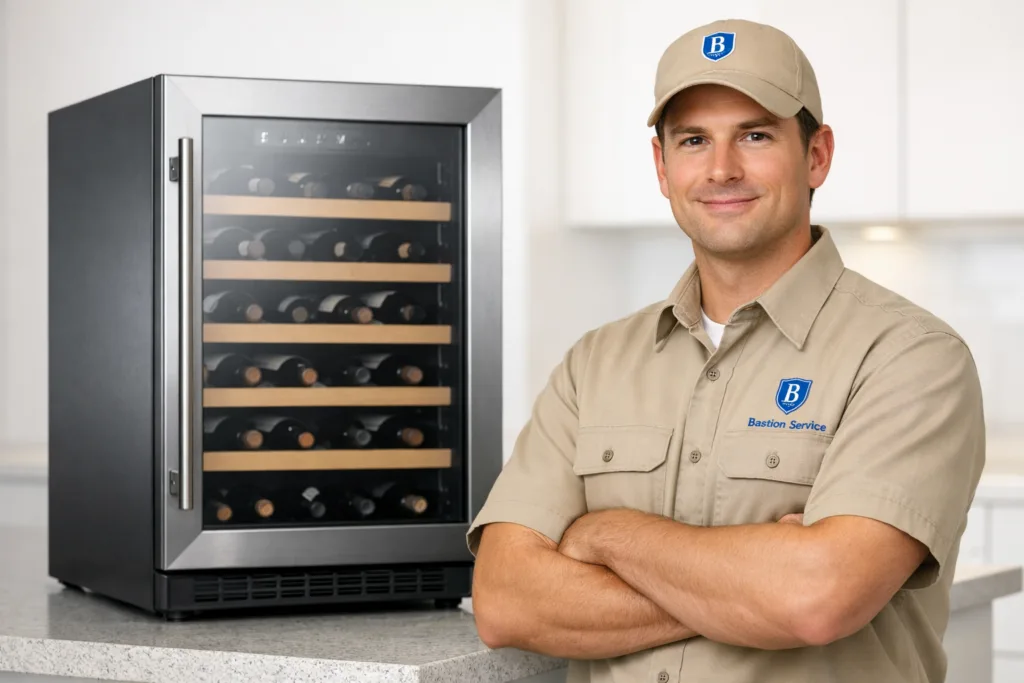




Wine coolers are designed to hold a narrower temperature range than a standard refrigerator, so even small changes in performance can affect storage conditions. When a Summit unit starts running warmer than expected, cycling too often, or building up moisture, the best next step is to look at the exact symptom pattern and what it suggests about the underlying fault.
Related Summit and wine cooler service paths in Cheviot Hills include Summit Appliance Repair in Cheviot Hills, Wine Cooler Repair in Cheviot Hills, and Summit Refrigerator Repair in Cheviot Hills.
How Summit wine cooler problems usually show up
Most household wine cooler failures begin with one or two noticeable changes. The cabinet may feel warmer than the display indicates, bottles may not stay consistently chilled, or the unit may suddenly sound different during normal operation. In many cases, the symptom is caused by airflow, controls, door sealing, drainage, or fan-related issues rather than a single obvious part failure.
A warmer-than-normal cabinet can point to blocked airflow, dirty condenser components, a weak evaporator or condenser fan, thermostat or sensor problems, or a more serious cooling-system issue. If the cooler becomes too cold or starts freezing contents, that often suggests a control problem, a sensor reading issue, or electronic regulation trouble.
Common symptoms homeowners notice
- Temperature drifting above the set point
- Uneven cooling from one shelf area to another
- Frost on interior walls or around vents
- Water collecting at the bottom of the cabinet
- Persistent condensation on glass or door edges
- Long run times or nonstop operation
- Buzzing, clicking, rattling, or loud fan noise
- Display errors or controls that do not respond properly
- A door that does not close or seal tightly
What different symptoms can mean
Not cooling well
If your Summit wine cooler is no longer holding temperature, the problem may be as simple as restricted ventilation or a worn door gasket. It can also come from a failing fan motor, inaccurate temperature sensing, dirty heat-transfer surfaces, or control board issues. In some cases, cooling loss points to compressor or sealed-system trouble, which changes the repair decision significantly.
Too cold or freezing
A wine cooler that overcools is often dealing with regulation rather than a lack of cooling power. That may involve the thermostat, thermistor, sensor placement, or the main control. Because wine storage is sensitive to temperature swings, overcooling is not something to ignore just because the unit still feels cold.
Water, condensation, or frost buildup
Moisture inside the cabinet usually means warm air is getting in, water is not draining properly, or airflow is uneven. A damaged gasket, slight door misalignment, blocked drain path, or circulation issue can all lead to repeated condensation. Frost that returns soon after being cleared usually indicates that the root cause is still active.
Noise that was not there before
Wine coolers are never completely silent, but a new buzzing, rattling, scraping, or repetitive clicking sound often points to a fan problem, vibration issue, panel looseness, or compressor stress. Noise becomes more important when it appears alongside poor cooling or nonstop running, because that combination can signal a unit working harder than it should.
Why the exact cause matters before replacing parts
Several different failures can create the same complaint. A warm cabinet, for example, may come from poor door sealing, a fan issue, a bad sensor, a blocked condenser area, or a refrigerant-related fault. Replacing parts based on guesswork can increase cost without restoring stable performance. The real value of diagnosis is separating a manageable repair from a larger issue that may not be economical to pursue.
This matters especially with wine coolers because temperature inconsistency is often gradual at first. A homeowner may notice only slightly warmer bottles or a little moisture around the door, but the unit may already be overworking itself to compensate.
When to stop waiting and schedule service
Some issues can be monitored briefly, but others should be addressed promptly. If the cooler is no longer protecting the contents reliably, continued operation can add wear to the compressor and other components. Moisture problems can also spread into surrounding cabinetry if left unresolved.
It usually makes sense to schedule service when:
- The temperature no longer stays stable day to day
- The unit runs for unusually long periods
- New noises continue instead of fading away
- Water leakage or condensation keeps returning
- The controls behave erratically or the display is inaccurate
- Frost reappears after manual clearing
- The door does not shut cleanly or feels misaligned
Built-in installation issues that can affect performance
Many residential wine coolers are installed under counters, in bars, or within custom cabinetry. In Cheviot Hills homes, that setup can influence how the unit cools and vents. A built-in model with obstructed airflow may run hot and struggle to maintain temperature even when its core components are still functional. Likewise, a slightly uneven installation can affect door alignment and sealing.
That is why service should account for more than the electrical and mechanical parts alone. Venting conditions, cabinet fit, leveling, and door closure can all change how a Summit wine cooler behaves in everyday use.
Useful checks during evaluation
- Whether the unit has proper ventilation for its installation style
- Condition of the door gasket and hinge alignment
- Air movement inside the cabinet
- Dust buildup around condenser areas
- Accuracy of displayed temperature versus actual interior conditions
- Signs of recurring leaks, frost, or blocked drainage
Repair versus replacement
Whether a Summit wine cooler is worth repairing depends on the confirmed fault, the age of the unit, overall cabinet condition, and the nature of the repair. Fan motors, sensors, controls, gaskets, and drainage issues are often reasonable to address when the cooler is otherwise in good shape. Those repairs can restore normal storage performance without requiring replacement of the entire unit.
Replacement becomes a more serious consideration when the wine cooler has repeated cooling loss, multiple overlapping failures, heavy wear, or a major sealed-system problem. The important point is that the decision should follow diagnosis rather than assumption. A unit that seems beyond repair may only need a targeted correction, while a unit that appears to have a minor temperature issue may actually have a much larger cooling-system fault.
Helpful steps for homeowners before service
Before scheduling repair, avoid making repeated temperature changes in an attempt to force the unit back into range. Constant setting adjustments can make the symptom pattern harder to interpret. Instead, note whether the cabinet is warm all the time, only in certain sections, or only at certain times of day.
It also helps to observe:
- Whether the noise comes from the back, inside, or near the bottom of the unit
- Whether water appears after the door is opened frequently or even when left closed
- Whether the display matches how the contents actually feel
- Whether the problem began gradually or appeared suddenly
If the wine cooler stops cooling entirely, repeatedly trips power, or shows clear electrical irregularities, it is best to discontinue normal use until the cause is identified.
What homeowners in Cheviot Hills usually need from service
For most households, the goal is straightforward: stable storage temperature, normal cycling, and quiet operation without recurring leaks or frost. Summit wine cooler repair in Cheviot Hills is most useful when the visit focuses on the specific failure pattern, the installation conditions in the home, and whether the appliance still makes sense to repair based on its condition. That approach gives homeowners a realistic path forward instead of a guess based only on the symptom they first noticed.


