
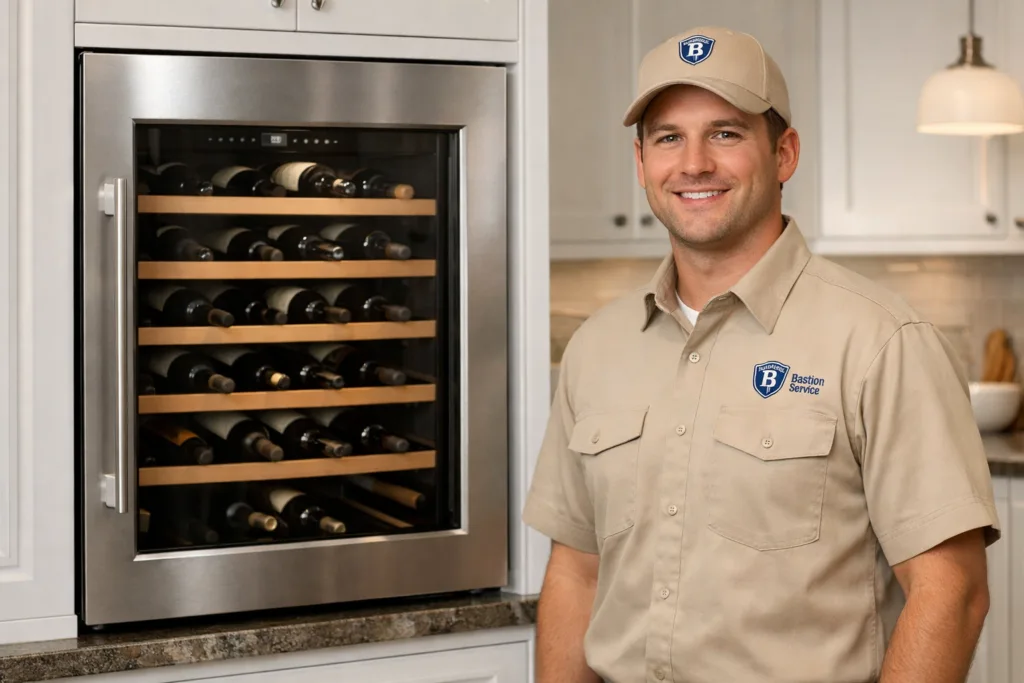




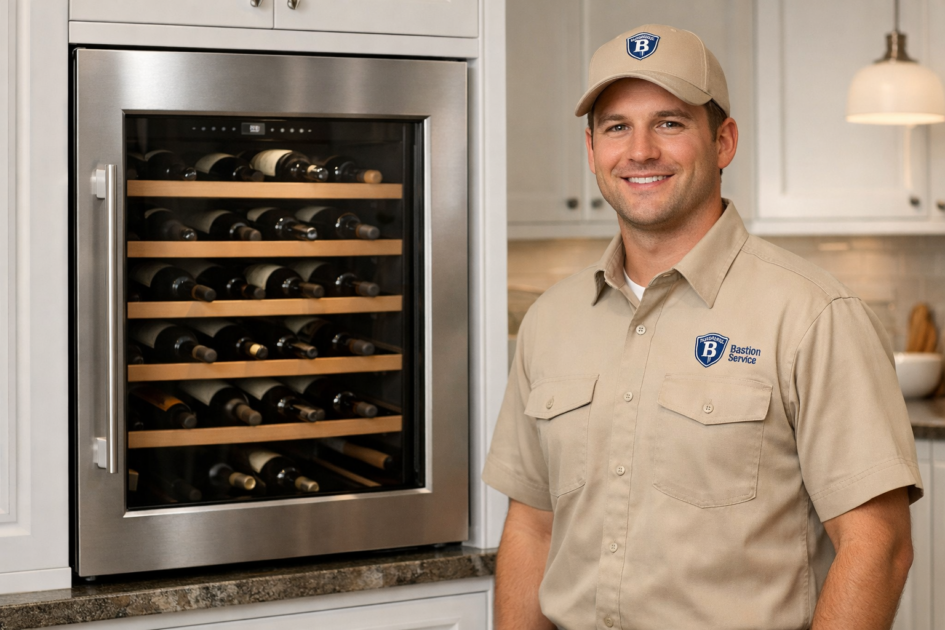
Temperature drift is usually the first sign that a wine cooler needs attention. Bottles may feel warmer than expected, the cabinet may cycle between too cold and too warm, or the display may not match the actual interior temperature. In many homes, this comes down to restricted airflow, dirty condenser coils, a weak fan motor, a failing sensor, or a door gasket that no longer seals evenly. In other cases, the issue is deeper and involves the compressor or sealed cooling system.
For more specific wine cooler help in Cheviot Hills, review Appliance Repair in Cheviot Hills, EdgeStar Wine Cooler Repair in Cheviot Hills, and Fisher & Paykel Wine Cooler Repair in Cheviot Hills.
Common wine cooler problems homeowners notice first
Not every cooling complaint means the same repair. A wine cooler that runs constantly may be struggling to remove heat because of poor ventilation around the cabinet, dust buildup on the coils, or a control problem that keeps it from cycling correctly. A unit that barely runs at all may have a thermostat, start device, control board, or power-related issue. Because these symptoms overlap, the pattern matters just as much as the symptom itself.
Temperature swings and warm storage zones
If one shelf feels noticeably warmer than another, the evaporator fan may not be moving air properly through the compartment. Some units also develop hot spots when vents are blocked or when frost begins to interfere with circulation. If there is heavy frost, slow temperature recovery, or a separate freezing compartment in the home showing similar airflow problems, Freezer Repair in Cheviot Hills may be relevant for comparison.
Noise, vibration, and repeated cycling
A low fan hum is normal, but rattling, clicking, buzzing, or repeated start-stop behavior is not. Those sounds can point to loose panels, a worn fan blade, compressor start trouble, or vibration caused by uneven leveling. When noise appears together with poor cooling, it often suggests the unit is working harder than it should to maintain temperature.
Condensation, leaks, and door seal issues
Water inside the cabinet or on the floor often comes from excess condensation, a blocked drain path, or a door that is not closing fully. Even a small gasket gap can let in humid air, causing moisture, frost, and unstable cabinet conditions. Over time, that extra moisture can affect shelves, labels, and the overall consistency of storage temperatures.
Why wine coolers lose performance
Wine coolers are smaller than full-size kitchen refrigeration, but they rely on many of the same systems: controls, fans, sensors, sealed cooling components, and proper airflow. A failure in any one of those areas can create symptoms that look identical from the outside. For example, “not cooling” could mean dirty coils and poor heat release, or it could mean a weak compressor that is no longer pumping refrigerant effectively.
That is why diagnosis should focus on actual operating behavior. Interior temperature, compressor activity, fan movement, control response, and coil condition all help narrow down whether the problem is maintenance-related, electrical, mechanical, or sealed-system related.
Signs the issue should be checked soon
- The cabinet feels warm even though the display appears normal.
- The unit runs almost nonstop or short-cycles repeatedly.
- New noises appear during startup or while cooling.
- There is standing water, repeated condensation, or visible frost.
- The cooler stops recovering after the door is opened.
- The power trips, the compressor clicks, or the cabinet smells hot.
These symptoms do not always mean a major repair, but they do suggest the appliance is no longer operating efficiently. Continued use in that condition can increase wear on the compressor and related parts.
How wine cooler diagnosis differs from general refrigerator service
Wine coolers are designed for narrower temperature ranges and more stable storage conditions than standard kitchen refrigerators. That makes sensor accuracy, airflow balance, and door sealing especially important. A unit may still feel somewhat cool and yet be storing bottles outside the intended range. If a larger kitchen unit in the same home is also having cooling or control trouble, Refrigerator Repair in Cheviot Hills may help with that separate appliance context.
Some households also notice issues that overlap with other refrigeration systems, such as water supply concerns, dispenser-related behavior, or intermittent ice production from another nearby appliance. When the symptom involves fill problems, leaks around a supply line, or inconsistent ice production, Ice Maker Repair in Cheviot Hills is the more relevant path for that equipment.
Repair versus replacement
Many wine cooler repairs are worthwhile when the issue involves fans, thermostats, sensors, control components, door gaskets, drainage, or accessible electrical parts. These faults can often be corrected without replacing the entire appliance, especially when the cabinet is in good condition and the cooling system is otherwise sound.
Replacement becomes more likely when the cooler has recurring cooling failure, a sealed-system problem, major corrosion, or a compressor issue that is expensive relative to the unit’s age and value. A good decision depends on more than whether the appliance turns on. It should account for temperature stability, repair scope, parts availability, and whether the cooler can return to reliable household use.
What homeowners in Cheviot Hills can expect during service
A useful service visit typically starts with confirming the complaint under real operating conditions. That may include checking actual cabinet temperature, fan operation, condenser condition, drain function, gasket seal, control response, and compressor behavior. Once the cause is isolated, it becomes much easier to determine whether the repair is straightforward, whether further testing is needed, or whether replacement is the more practical next step.
For homeowners in Cheviot Hills, the goal is not just to get the unit running again for a day or two. It is to restore stable cooling, reduce unnecessary strain on the system, and protect the bottles being stored inside. When the problem is identified correctly, the repair decision becomes much simpler and more cost-effective.


