
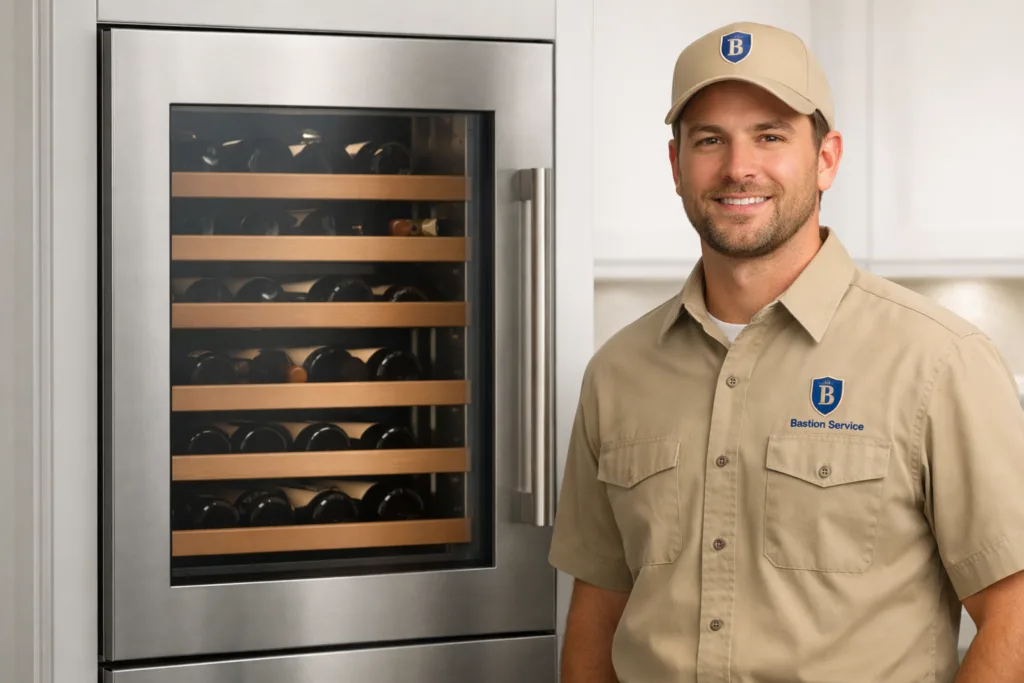




Temperature instability, moisture, and new noises are the warning signs most homeowners notice first when a Monogram wine cooler starts to fall out of normal operation. The challenge is that one symptom can come from several different causes. A unit that seems warm may have an airflow problem, a sensor issue, a weak fan, a door seal problem, or a more serious cooling-system fault, so the next step should be based on how the appliance is actually behaving.
Related Monogram and wine cooler service paths in Cheviot Hills include Monogram Appliance Repair in Cheviot Hills, Wine Cooler Repair in Cheviot Hills, and Monogram Refrigerator Repair in Cheviot Hills.
What changes usually show up first
Wine coolers tend to show trouble gradually before they fail completely. You may notice bottles no longer feel as cool as expected, the cabinet takes longer to recover after the door is opened, or the temperature seems to drift even though the settings have not changed. In some homes, the first sign is not cooling at all, but condensation on glass, water under the unit, or a fan sound that is suddenly much louder than before.
Because Monogram wine coolers are often installed into finished kitchen, dining, or bar areas in Cheviot Hills homes, even a small issue can become more than a convenience problem. Ongoing moisture can affect surrounding cabinetry, and repeated warm cycles can compromise storage conditions long before the appliance stops completely.
Common Monogram wine cooler symptoms and what they may mean
Not cooling enough
If the cooler runs but does not reach the set temperature, possible causes include restricted airflow, a failing evaporator or condenser fan, a temperature sensor problem, a control issue, dirty heat-transfer surfaces, or a sealed-system problem. When the unit stays on for long periods without reaching target temperature, it is usually a sign that the system is compensating for an underlying fault rather than working normally.
Temperature swings
A wine cooler that alternates between acceptable and too-warm conditions may have an intermittent sensor reading, control board issue, airflow restriction, or a door that is allowing warm air in. Temperature swings are especially important to address early because the appliance can appear to recover on its own while the root problem continues to get worse.
Overcooling or freezing
If bottles or shelves are getting too cold, the problem may be related to inaccurate sensing, control failure, or improper cycling. This can be just as important as a not-cooling complaint because wine storage depends on stable conditions, not simply cold air.
Water inside or under the unit
Water can be caused by excess condensation, a drainage problem, a door gasket that is no longer sealing well, or frost melting in the wrong area. If the moisture keeps returning after basic cleaning, it usually points to a service issue rather than a one-time spill or normal humidity.
Frost buildup
Frost on shelves, interior walls, or around vents often means warm air is entering the cabinet or airflow is not moving correctly through the cooler. It can also be related to sensor or control problems that keep the unit from cycling as it should. Frost tends to hide the real cause for a while, so simply defrosting the cabinet may only provide temporary improvement.
Unusual noise
Buzzing, rattling, clicking, vibration, or loud fan noise can come from a loose part, an obstructed fan blade, mounting and leveling issues, or a compressor-related problem. Some sound during startup and normal operation is expected, but a noticeable change in pattern usually means something in the system is no longer running the way it should.
Why the same symptom can lead to very different repairs
Wine cooler problems are often misread because the visible symptom is not always the failed part. For example, long run times might point to poor airflow, a worn gasket, control trouble, or weak cooling performance. Water under the unit might be drainage-related, but it can also start with excess moisture entering through the door. That is why replacing parts based on guesswork often leads to extra cost without solving the underlying issue.
A useful service visit focuses on confirming how the cooler is cycling, whether temperatures are accurate, whether airflow is moving properly, and whether moisture is being created by sealing, cooling, or drainage conditions. That kind of step-by-step evaluation helps determine whether the repair is likely to be straightforward or whether the appliance is showing signs of a larger failure.
Signs you should schedule service soon
- The cooler cannot hold a steady temperature.
- The cabinet feels warm even though the display appears normal.
- The unit runs constantly or cycles in a noticeably different pattern.
- Water keeps appearing inside or beneath the appliance.
- Frost returns after you clear it.
- The control panel is unresponsive or erratic.
- The door does not close, align, or seal properly.
- Fan or compressor noise has changed sharply.
These issues rarely improve on their own. In many cases, early service prevents a smaller airflow, sealing, or control issue from turning into a more expensive cooling failure.
When continued use can make the problem worse
If the cooler is no longer protecting a stable temperature, repeated operation can put extra strain on fans, controls, and the cooling system. Recurring moisture can spread beyond the appliance cavity, and persistent frost can reduce airflow even further. Restarting a struggling unit over and over may also make an intermittent fault harder to evaluate because the cooler briefly recovers before slipping out of range again.
If you notice a burning smell, visible wire damage, sparking, or breaker trips associated with the appliance, stop using it until it has been properly checked.
Repair or replacement: what usually makes sense
Many Monogram wine cooler issues are worth repairing when the fault is limited to a fan motor, sensor, control component, gasket, drainage part, or another accessible service item. Replacement becomes a more realistic discussion when the appliance has a major sealed-system problem, repeated costly failures, or enough overall wear that repair would not restore reliable performance.
The right decision depends on more than whether the cooler can be turned back on. What matters is whether the repair is likely to return stable, consistent operation without leading to another major issue soon after. For homeowners in Cheviot Hills, that usually means weighing the exact fault, the condition of the unit as a whole, and the value of restoring dependable wine storage in the existing built-in space.
What a focused repair approach should accomplish
Good Monogram wine cooler service should do more than address the immediate complaint. It should identify whether the issue is primarily related to cooling, airflow, moisture management, controls, or door sealing, then match the repair path to that finding. That helps avoid unnecessary part replacement and gives you a better basis for deciding whether to proceed with repair or consider replacement.
For households dealing with inconsistent temperatures, recurring condensation, or a cooler that simply no longer sounds or performs the way it used to, Monogram Wine Cooler Repair in Cheviot Hills is most useful when it leads to clear answers, realistic next steps, and restored confidence in how the appliance will perform day to day.


