
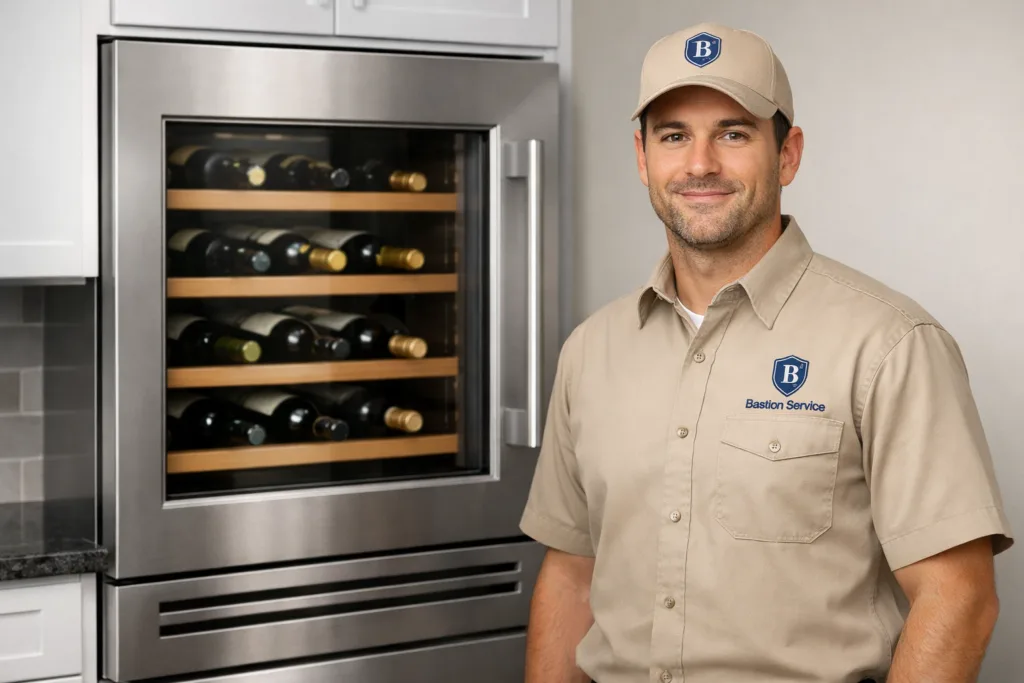




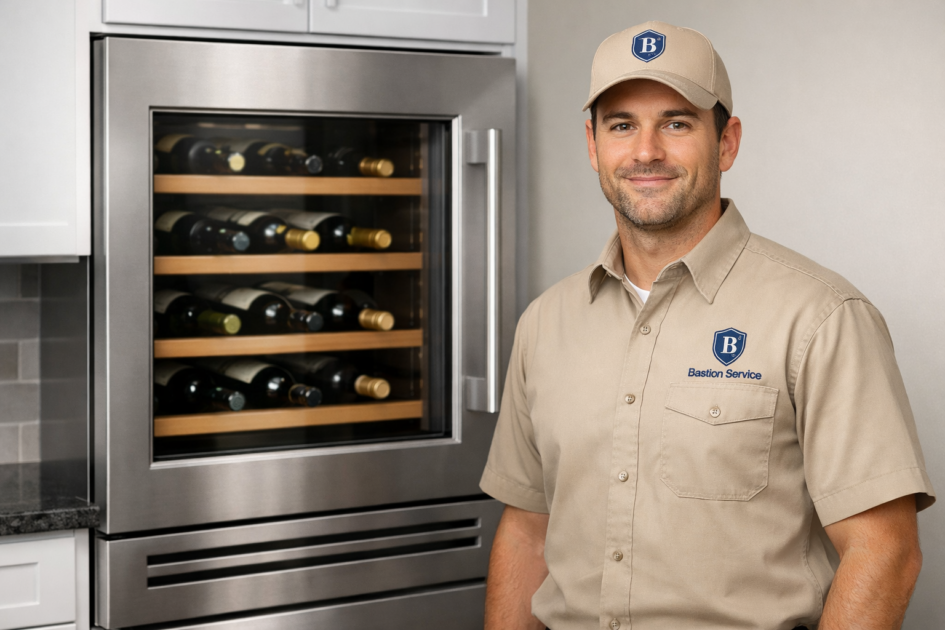
A KitchenAid wine cooler that stops holding temperature, starts cycling oddly, or leaves moisture around the door can put a collection at risk fast. In Cheviot Hills homes, the most useful next step is identifying the actual cause before deciding on repair, because the same symptom can come from very different failures such as restricted airflow, sensor errors, fan problems, control issues, or sealed-system trouble.
Related KitchenAid and wine cooler service paths in Cheviot Hills include KitchenAid Appliance Repair in Cheviot Hills, Wine Cooler Repair in Cheviot Hills, and KitchenAid Refrigerator Repair in Cheviot Hills.
How KitchenAid wine cooler problems usually show up
Wine coolers are designed for steady storage conditions, so even mild temperature drift matters more than it would in a standard kitchen refrigerator. Small changes can be a sign that the unit is struggling to move air properly, read temperature accurately, or remove heat efficiently. Built-in installations can be especially sensitive if ventilation is limited or the cooler sits in a warmer part of the home.
On many service calls, the first step is separating a true cooling problem from a display problem. A unit may show the selected setting while the actual cabinet temperature is noticeably higher or lower. That difference often points toward a sensor, control, or airflow issue rather than a simple settings mistake.
Common symptoms and what they may indicate
Not cooling enough
If bottles feel warmer than expected, several faults are possible. A weak evaporator fan can reduce air circulation inside the cabinet. A dirty condenser area can make it harder for the system to shed heat. A failing thermistor or thermostat may cause inaccurate temperature control, while some units develop control board issues that disrupt normal cycling.
Door sealing problems also matter. If warm air keeps entering the cabinet, the cooler may run longer without ever reaching the target temperature. In more serious cases, reduced cooling can point to compressor or sealed-system problems.
Running constantly or cycling too often
A KitchenAid wine cooler that seems to run all day is often compensating for heat buildup, poor ventilation, a worn gasket, or inaccurate temperature feedback. Short cycling can also be linked to electronic control faults or start-component problems. When a unit keeps trying to cool without stabilizing, the extra runtime can increase wear on the compressor and fans.
Too cold or freezing near the back
Overcooling usually means the appliance is no longer regulating temperature correctly. That can happen because of a faulty sensor, a control issue, or an airflow imbalance that sends too much cold air to one section of the cabinet. Homeowners sometimes notice bottles nearest the rear wall getting much colder than the rest of the cooler, which is a useful clue during diagnosis.
Condensation, water, or frost
Moisture around the door or visible condensation inside the cabinet usually means warm air is getting in or humidity is not being managed correctly. A loose gasket, drainage issue, or defrost-related fault can all contribute. Frost buildup suggests the unit may be pulling in outside air repeatedly or that airflow and temperature regulation are off enough to create cold spots.
When this continues, the problem can affect labels, shelving, nearby cabinetry, and interior cleanliness. It can also lead to musty odors if moisture lingers.
Fan noise, buzzing, clicking, or rattling
Some operating noise is normal, but a new or suddenly louder sound pattern deserves attention. Rattling may come from vibration or a loose component. Buzzing can point to fan motor strain or compressor-related trouble. Repeated clicking, especially if cooling is weak, may indicate a hard-start problem or an electrical fault that keeps the compressor from starting properly.
Why symptom-based diagnosis matters
KitchenAid wine coolers can produce the same complaint for different reasons. For example, “not cooling” might be caused by a fan motor, a thermistor, a control problem, poor ventilation, or a more expensive refrigeration failure. Replacing parts based only on a guess can add cost without solving the issue.
A proper assessment should explain what failed, whether continued operation could worsen the condition, and whether repair makes sense for the age and overall condition of the unit. That information helps Cheviot Hills homeowners make a better decision instead of treating each symptom as a separate problem.
Signs the issue is getting more serious
- The cabinet temperature keeps drifting even after adjusting settings.
- The display responds, but actual cooling does not improve.
- The compressor runs for long periods with little temperature change.
- The interior fan is silent or air movement feels weak.
- Condensation returns soon after wiping it away.
- Clicking or buzzing repeats over multiple cycles.
- The unit only works temporarily after being unplugged and reset.
Intermittent behavior is easy to dismiss, but it often means a component is failing under load or an electronic control issue is becoming less consistent before a full breakdown.
When to stop using the wine cooler
If the appliance is making repeated hard-start clicking noises, struggling to start, or running nonstop while staying warm inside, shutting it down is often the safer choice. Continued use in that condition can put added stress on the compressor and other components.
The same is true when moisture buildup becomes persistent. Letting condensation continue can affect the interior, surrounding surfaces, and the condition of anything stored inside. In built-in installations, overheating around the cabinet is also a warning sign that the system may be working harder than it should.
Repair or replace?
Repair is often the better option when the problem is limited to an isolated part such as a fan motor, sensor, thermostat, gasket, or control-related component and the rest of the unit is in good shape. Those repairs can restore normal temperature stability without replacing the entire cooler.
Replacement becomes more likely when the appliance has major sealed-system trouble, repeated cooling failures, significant age-related wear, or repair costs that approach the value of the unit. The key question is not just whether the cooler can be made to run again, but whether it can return to reliable storage conditions.
What homeowners in Cheviot Hills usually want to know
Most people want straightforward answers: why the cooler is acting up, whether the problem is likely to worsen, and what the repair path looks like. That is especially true when the issue seems minor at first, such as occasional fan noise or a small amount of condensation, because those early signs can point to a larger failure developing in the background.
For residential KitchenAid wine cooler service in Cheviot Hills, the goal is simple: identify the fault accurately, avoid unnecessary part replacement, and restore stable cooling for everyday home use.


