
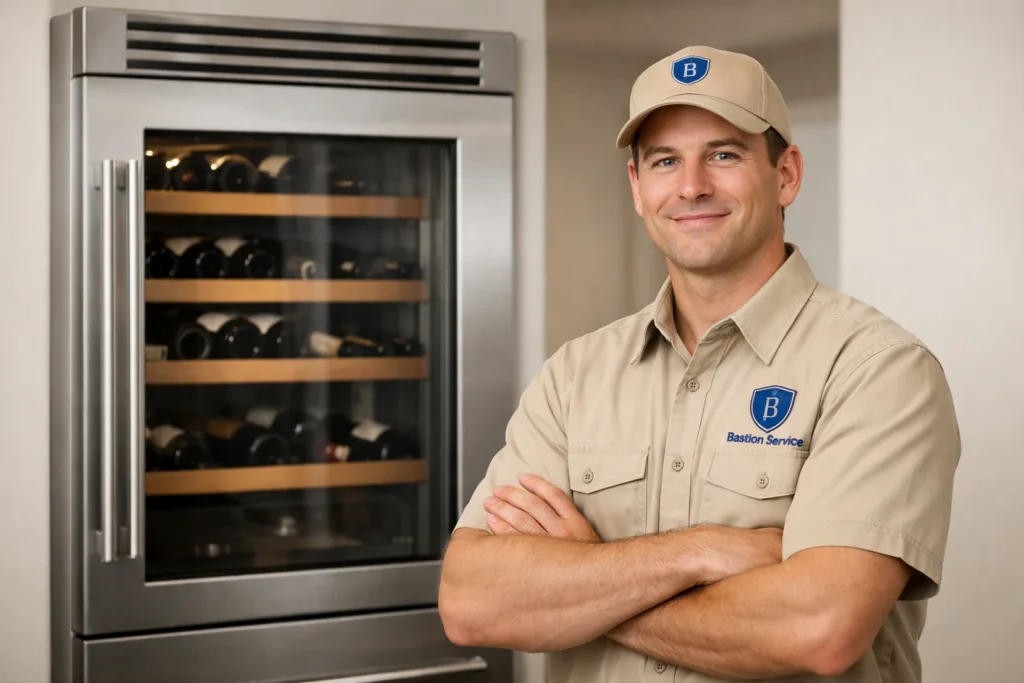




A Sub-Zero wine cooler that starts running warm, collecting moisture, or changing its normal sound can affect both storage conditions and the appliance itself. Before adjusting settings over and over, it helps to look at the exact pattern: whether the temperature is drifting, the fan sounds different, the door is not sealing well, or condensation is showing up in places it did not before. Those details usually point to very different repair paths.
Related Sub-Zero and wine cooler service paths in Cheviot Hills include Sub-Zero Appliance Repair in Cheviot Hills, Wine Cooler Repair in Cheviot Hills, and Sub-Zero Refrigerator Repair in Cheviot Hills.
What common wine cooler symptoms usually mean
Wine coolers tend to fail in recognizable ways. Paying attention to when the problem started, whether it is constant or intermittent, and whether cooling changed along with noise or moisture can make diagnosis much more accurate.
Temperature running too warm
If bottles feel warmer than expected or the cabinet struggles to reach the set temperature, the cause may be as simple as restricted airflow or as involved as a cooling system issue. Other possibilities include a failing fan motor, sensor problems, control faults, or a door gasket that is allowing warm air to enter the cabinet. Even mild temperature drift matters with wine storage because consistency is often more important than getting extremely cold.
Uneven cooling from shelf to shelf
When one area cools properly and another does not, airflow is often part of the story. A weak evaporator fan, blocked vents, frost affecting circulation, or sensor misreadings can all create hot and cold spots. This symptom is easy to overlook because the unit may still appear to be working, but uneven storage conditions usually mean something is already starting to go wrong.
Constant running or frequent cycling
A wine cooler that seems to run almost nonstop may be fighting heat infiltration, dirty condenser components, weak airflow, or a cooling problem that makes it work harder than normal. Short cycling, where it starts and stops too frequently, can point more toward control, sensor, or electrical issues. Either pattern increases wear and is worth checking before it turns into a complete loss of cooling.
Condensation, water, or frost
Moisture on the glass, water inside the cabinet, or frost where it should not be can indicate a door seal problem, a drain issue, improper door closure, or an internal temperature imbalance. In a residential kitchen, bar area, or built-in cabinet setting, that moisture can also affect nearby woodwork, flooring, and wall finishes if it continues long enough.
Buzzing, rattling, clicking, or fan noise
Some operating sound is normal, but a clear change in sound usually means something has shifted. Rattling may come from loose hardware or vibration. Buzzing can be related to a fan or compressor under strain. Clicking may reflect a control or start issue. If sound changes happen at the same time as weaker cooling, that combination is especially important to have inspected.
Why symptom-based diagnosis matters
Two Sub-Zero wine coolers can show the same problem for completely different reasons. A unit that is too warm might have a blocked airflow path, a failed fan, a bad sensor, a control problem, or a sealed-system issue. A cooler with condensation might need a gasket correction, drain work, or temperature-related testing. Without proper diagnosis, it is easy to replace the wrong part while the actual problem continues.
That is why a practical repair recommendation should be based on what the unit is actually doing under operating conditions, not just on the most common part failure. For homeowners in Cheviot Hills, this helps avoid wasted time, unnecessary part changes, and avoidable risk to a wine collection.
Signs it is time to schedule service
It is usually time to schedule Sub-Zero wine cooler repair in Cheviot Hills when you notice one or more of the following:
- The displayed temperature does not match actual storage conditions
- The cabinet feels warm even after settings are adjusted
- The unit runs much longer than it used to
- There is recurring moisture on the door or inside the cabinet
- You hear new fan noise, clicking, buzzing, or rattling
- The door does not close or seal as firmly as before
- Cooling performance drops after seeming normal for part of the day
These symptoms do not always mean a major failure, but they do suggest that the cooler is no longer operating the way it should. Addressing the issue earlier often gives you more repair options than waiting for a complete no-cool condition.
When continued use can lead to bigger problems
If the appliance is obviously warming, building heavy condensation, or making sharp mechanical noise, continued operation can add stress to the system. A poor door seal or airflow problem may force the cooler to run longer and hotter than normal. Persistent moisture can affect shelving, labels, surrounding cabinetry, and nearby surfaces. If a fan is failing or a cooling component is struggling, prolonged operation can sometimes turn a smaller repair into a larger one.
If the cooler still powers on but is no longer holding a stable temperature, it is usually better to minimize door openings and have the symptom checked rather than continuing to reset controls and hoping the problem settles down.
Repair versus replacement
Many wine cooler issues are still reasonable to repair, especially when the problem is limited to a fan motor, sensor, control component, door gasket, drainage issue, or another isolated part. In those cases, the cabinet and core structure of the unit may still be in good shape, making repair the sensible option.
Replacement becomes more likely when the cooler has severe wear, repeated major failures, physical deterioration that affects reliability, or a high-cost cooling system problem that does not make sense compared with the condition of the appliance overall. The right decision depends on the exact failure, the age and condition of the unit, and whether the repair is likely to restore stable long-term operation.
What to watch for before a full breakdown
Wine coolers often show early warning signs before they stop cooling altogether. Homeowners in Cheviot Hills should keep an eye on:
- Longer run times than normal
- Subtle warmth near certain shelves
- Light but repeated condensation on glass
- A door that needs extra pressure to close fully
- A soft fan hum that becomes rougher or louder
- Temperature fluctuations that seem to come and go
These smaller changes are often the best time to act. They can provide helpful clues, and they may allow a narrower repair before additional components are affected.
Sub-Zero wine cooler issues in built-in home installations
Many Sub-Zero wine coolers are installed in finished residential spaces where ventilation, door alignment, and surrounding cabinetry all influence performance. In a built-in setup, even a modest airflow issue or sealing problem can show up as temperature inconsistency, excess run time, or condensation around the opening. That makes symptom tracking especially useful in homes where the appliance is integrated into a kitchen, entertaining area, or custom storage wall.
If your cooler has started behaving differently, the most useful next step is to evaluate the symptom pattern carefully and match the repair approach to the actual cause. That gives you a better basis for deciding whether the issue is straightforward, whether the unit should be taken out of regular use for now, and whether repair remains the practical path.


